Many investors fear that the Fed’s impending exit from QE2 will have a very damaging effect on the financial markets. Whether they are right will depend on the nature of the exit, and its impact on bond yields. An end to the Fed’s programme of bond purchases, without any increase in short rates, is unlikely to be sufficient, on its own, to trigger a major bear market in bonds and equities. But an end to the Fed’s “extended period” language on interest rates would be a much greater threat. I still do not expect this to happen soon.
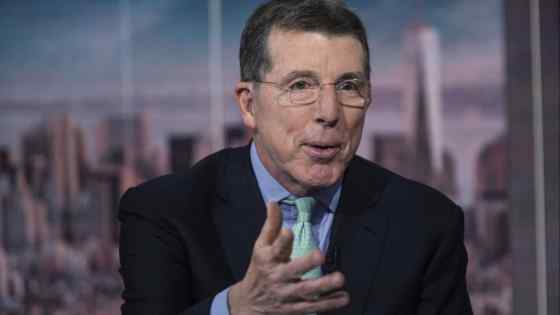
Recently, the Fed has purchased 60-70 per cent of all the bonds which have been issued to finance the US budget deficit. Some influential analysts (Bill Gross of Pimco among them) argue that bond yields will rise sharply when the Fed withdraws its life support from the bond market. But there are some powerful advocates, including the Fed chairman himself, for an entirely contrary point of view. Ben Bernanke told Congress in February that he did not expect to see “a big impact” on bond yields when the Fed ended its asset purchases.
The Fed has hardened its thinking on this question in the past couple of years. It has decided that QE reduces bond yields via its effect on the total stock of outstanding bonds, and not via its impact on the flow of bonds purchased in any given period. If this is the case, then the effect of the Fed’s asset purchases will be best measured by the size of the Fed’s total balance sheet (or anyway its holdings of bonds), and not by the amount of bonds purchased in any month or quarter. When QE ends, the flow of bond purchases will drop to zero, but the stock of bonds held by the Fed will stay broadly the same. Consequently, on this argument, the immediate effect on bond yields will not be large.
The Fed’s thesis is based on portfolio balance theory, which can be traced back to James Tobin in the 1950s. In this context, it argues that the private sector needs to be compensated for bearing the duration risk on long bonds (i.e. the risk that bond prices will fall if interest rates rise), and that this compensation takes the form of a premium in the bond yield over the interest rate paid on cash.
This premium rises as the stock of bonds held by the public increases, since more people need to be induced to accept the risk. Therefore, when the Fed buys bonds, and reduces the stock held by the public, the risk premium can decline. (There are second order factors to consider, such as whether the public is far-sighted enough to recognise that Fed holdings will eventually be sold back to them, and may demand compensation for this in advance, but these can be safely ignored for now.)
This may all sound somewhat arcane, but it is a crucial argument for the financial market outlook. The evidence has generally been in favour of the portfolio balance approach, rather than the alternative view which emphasises the balance of flows in the bond market. See, for example, this piece of New York Fed research by Brian Sack and colleagues, which suggests that bond yields are reduced by 4.4 basis points for every 1 per cent of gross domestic product’s worth of bonds purchased by the Fed, instead of by the public. This suggests that the total programme of Fed asset purchases under QE1 and QE2 has reduced the bond yield, relative to what it otherwise would have been, by about 70 basis points.
Research published by Sven Jari Stehn of Goldman Sachs a year ago also suggests that stock effects are much larger than flow effects, and this view was strongly supported by what actually happened when QE1 subsequently ended last summer.
The Fed’s balance sheet assets are shown in the top half of the graph, and the 10 year Treasury bond yield is shown in the bottom half. However one chooses to define the Fed’s asset purchases (whether from its overall balance sheet, or its total asset holdings, or its direct Treasury purchases), there seems to have been no consistent relationship between the flow of its activities and the behaviour of the bond yield.
True, the initial collapse in bond yields in 2008 Q4 coincided with the surge in the Fed’s provision of liquidity to the financial sector. But the rise in bond yields in the first half of 2009 occurred in the face of the the Fed’s first programme of bond (mainly mortgage bond) purchases. The collapse in bond yields in 2010 Q2 and Q3 occurred after the Fed had temporarily stopped its bond purchases. And then the rise in bond yields in 2010 Q4 occurred just as the Fed was resuming its bond purchase under QE2.
The conclusion of all this is that variations in the flow of Fed purchases of bonds has not had a visible effect on long bond yields. Other factors, especially variations in economic activity and in short rate expectations, have mattered more.
When the Fed changes its “extended period” language on short rates, the bond market could indeed be in serious trouble. But that still seems unlikely to happen immediately when QE2 ends. Taken in isolation, the cessation of Fed bond purchases should not have a dramatic effect on the level of yields.
Related reading:
Money Supply – FT blog on central banks