Tag: Karl Lagerfeld

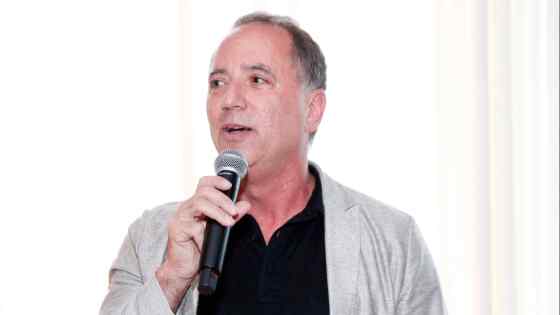
François Lesage, widely acknowledged as the greatest couture embroiderer and an iconic figure inside the fashion world, died on Wednesday night at age 82. Though he had been ill for a number of years, he remained active in his eponymous business until recently.

Getty Images

The company, which has been owned by Chanel since 2002, will continue under the leadership of Hubert Barrère, recently appointed artistic director. However, Lesage’s death marks the loss of yet another building block of the haute couture. As Karl Lagerfeld, Chanel’s creative director, said at the time of the Lesage purchase in 2002: “There is no couture without embroidery and no embroidery without Lesage.” (That’s Lesage embroidery on the left on a Chanel ”Metiers d’Art” dress shown last year. )

Despite the additions of names like Armani and Versace, the haute couture collections have shrunk to a mere three days, and M Lesage’s death will reignite the debate about the purpose of the sartorial art form, and its role as an expression of French culture.

Facebook

Facebook website. Martin Keene/PA Wire.

By now it’s a truism of the Facebook age that social media allows relatively small brands or individuals to attain audiences far larger than they would traditionally have reached; the barriers to entry are so low, and the potential users so high. So it’s a bit of a shocker to see the latest study from L2, the digital think tank, which looked at small-to-mid-size European luxury fashion brands and their “digital IQ” (ie, how well they use the digital space for etail/communication/marketing) and discover they pretty much … suck.

Of the 46 brands with revenues estimated at between €25-250m, not one - NOT ONE - attained the level of “genius” (to put this in perspective, in all the other studies L2 has done in this space - of larger luxury brands, beauty brands, car brands - this has never happened), and 70 per cent are actually what they term “challenged” and “feeble”. These include names like Balmain, Celine, Nina Ricci and Berluti. The top spot got seized by Agent Provocateur, thanks to their sexy short films.

More details are emerging about Karl Lagerfeld — aka “Kaiser Karl,” he of the white-powdered ponytail, high-necked white shirt, leather gloves, and Chanel fame — and his new business, which for the past year has been code-named “Masstige.” It has now been christened…wait for it!…Karl. But there’s more.

Karl Lagerfeld

Karl Lagerfeld --Getty Images

Funded by Apax, the private equity firm that bought the old Karl Lagerfeld ready-to-wear line from Tommy Hilfiger, it will launch on January 25 on the Net-a-Porter website, followed by its own e-commerce site. This is being billed as: “For the first time ever a global fashion brand will launch exclusively via digital platforms.” Translation: No store investment (a select few wholesale accounts and pop-up stores will follow later).

Later there will be ”a new main prêt-a-porter line named « KARL LAGERFELD PARIS »” (presumably this is a high-end line) as well as “a number of important strategic partnerships and licencing relationships which are in the process of being finalized.” Translation: Manufacturing and distribution costs may be born by partners.

Clever that. But I feel I’ve seen it before. Where could it have been? Oh – I know: Tom Ford.

Chanel shows are about maintaining the myth that the surrounds the brand as much as revealing the clothes, so it was appropriate that the venue for this season’s cruise collection on Monday night was immortalised in F. Scott Fitzgerald’s Tender is the Night.

The Hotel Du Cap-Eden-Roc provided the inspiration for the Hotel des Etrangers in the novel depicting the riviera of the 1930s. That glamorous era in the south of France’s history could be felt throughout Chanel’s 2011/2012 cruise collection, but the show made a convincing argument that the beau monde of 2011 can, if not quite rival the gilded glitz of the 1930s set, at least give it their best shot.


Despite cars arriving at the show becoming stuck in a Chanel traffic jam in the winding road leading up to the hotel, the details were chic, from the waiters/ushers in their white trousers and tennis shoes to the parasolled picnic tables. There, guests — Chanel clients, press and celebrities (faces of the brand Vanessa Paradis in a black lace Chanel jumpsuit with 1970′s style curled hair and Blake Lively from the TV show Gossip Girl in an astonishingly short skirt and sequinned blazer, along with model/“it” girl and current UK Vogue cover star Alexa Chung, in a pale pink ballerina dress) — watched the show unfold.

Something interesting is percolating up in Milanese fashion, and it has nothing to do with runways.

It has to do with things like “sustainability” and “long-term thinking” and “self-preservation” – also “procreation”, with emphasis on the latter part of the word.

To be specific, it has to do with the industry finally thinking about its own future, and the fact that if it’s going to have one, it has to start working on the logistics. Which means, at its most basic level, supporting young designers.

Fashion, especially during show time, is not politically correct. This we know. It is, despite momentary urges to prove itself otherwise, sexist (when it comes to models, there’s a big gender imbalance in pay, though not necessarily the way you think); ageist; and size-ist (the latter two do not really need explanation).

And the occasional exception to the rule, like plus-size model Crystal Renn and old mannequin Carmen Dell’Orefice, do not a convincing counter-argument make. As a result, fashion spends a lot of time on the defensive. Which makes me wonder why they want to add to their list of Offended Special Interest Groups by scheduling collections during the most important Jewish holidays of the year.

The Vanity Fair New Establishment 100 list has just been unveiled, and its criteria for picking “the 100 most influential” are increasingly impenetrable. I feel I can say this because it was sent to me with the proud announcement that “13 of the fashion industry’s top moguls and designers were named to the list.”

But while I understand the reasons behind, for example, choosing Facebook‘s Mark Zuckerberg and Steve Jobs to top the thing off, and even why Jamie Dimon and Lloyd Blankfein might make it on, the fact that John Galliano and Karl Lagerfeld are included, but Alber Elbaz of Lanvin (a brand that has just inked a deal to do a capsule collection with H&M, who hailed it as “one of the most influential brands of the 21st century) is not, has left me tangled up in my sleeves.

Material World

with Vanessa Friedman

About this blog About Vanessa Blog guide
Vanessa Friedman's blog deals with the fashion/luxury industry from both a corporate and consumer point of view, as well as the subject of dress.


Vanessa FriedmanVanessa has been the FT’s fashion editor since 2003, and is based in New York, though she lived in London for 12 years.
To comment, please register for free with FT.com and read our policy on submitting comments.

All posts are published in UK time.

Contact vanessa.friedman@ft.com about the Material World blog.

See the full list of FT blogs.

Luxury 360

Visit Luxury 360, the FT's new online hub for creative and commercial coverage of the luxury goods industry, featuring news, views and special reports.

Luxury 360

Archive

« AprMay 2012
M T W T F S S
 123456
78910111213
14151617181920
21222324252627
28293031