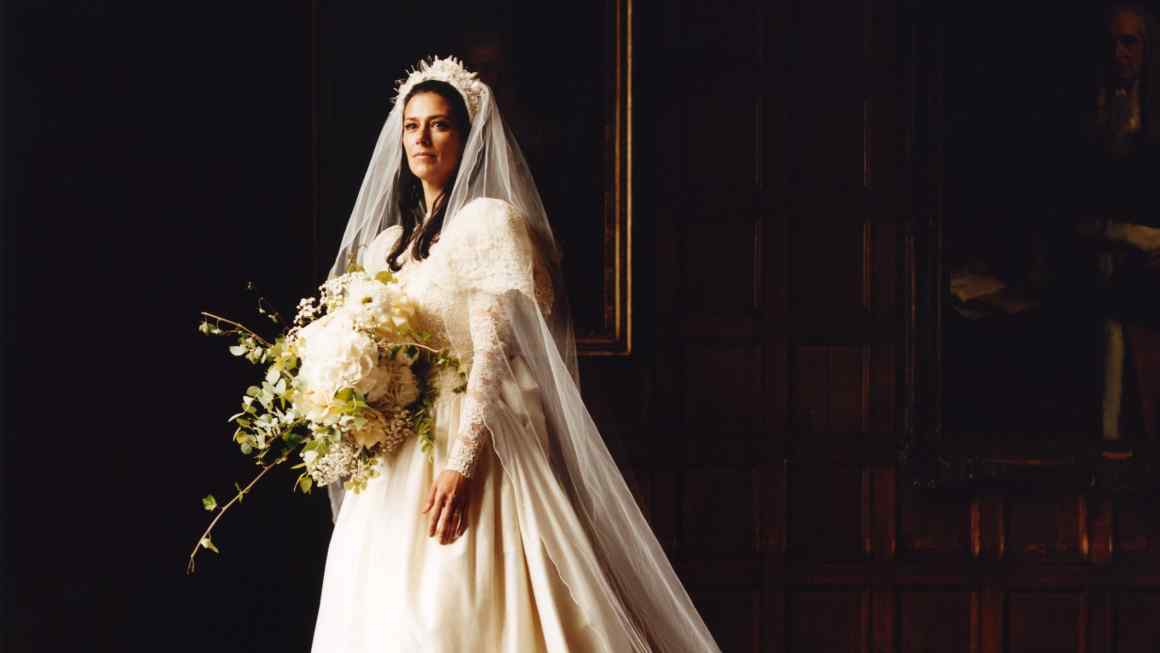





Spring-summer collection 2012. Credit: Catwalking.com
Before his pre-fall collection for Lanvin today designer Alber Elbaz told a funny story. He was in NYC a few months ago for a meeting about the new Lanvin Men’s store, he said, and took a cab ride down Fifth Avenue. He passed megastore after superstore (he didn’t name them but the new, airplane-hangar-sized Uniqlo and H&M come to mind) and by the time he got to his new store he was in a tizzy. “We have to be bigger!” He told his architect. “New York is all about big!”
His architect looked at him. “And then I realised,” said Elbaz, “maybe what was good about us was we were small. Maybe that is why we had been successful for so long. And we should just be who we are.”
There is nothing small about Elbaz’s clothes, of course (metaphorically speaking); they are full of volume and big thinking about how fabric technology (polyester duchesses, rubberised wool) works with traditional sewing techniques to create dresses that are more than the sum of their parts.
But this idea that a high luxury company, which Lanvin is, can stay at a certain, relatively small size — can be happy being hard-to-find and exclusive — that’s kind of radical. In fact, the only other time I ever heard the same idea voiced in this age of globalisation (where conventional luxury wisdom is: “the world is big; a few hundred stores is just the beginning”) was in a recent conversation with Frederic de Narp, chief executive of Harry Winston, who told me he had an ideal number of stores worldwide in mind for his brand and it was … 50.
He was the first luxury CEO to ever give me a number beyond which he didn’t want to grow, and I was gobsmacked.
But now we have Lanvin thinking the same way. When I was talking to Thierry Andretta, Lanvin CEO, before the show, he pointed out that the best-selling pieces for the brand were always the most complicated, ornate and expensive dresses, not the entry-level accessible stuff, and you only need to sell about three of the former to make the same profits as you do from ten of the latter (or more).
There’s something important here, I think.