Friday May 16 2008
All times are London time

Search Quotes in the FT.com site
FT Logo

May 12, 2008

Myanmar and the irrelevance of national sovereignty

I attach no intrinsic value to national sovereignty or to any group rights whatsoever. Whatever significance or value is attributed to national rights (and group rights, minority rights, majority rights, gender rights, linguistic group rights, religious rights, ethnic rights or whatever rights) are derived significance or value - significance or value derived from human rights, that is, rights of individuals.

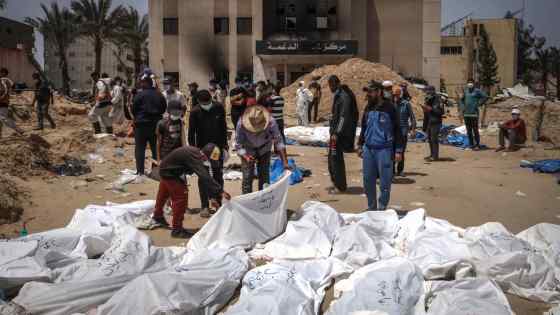
Given that starting point, it will come as no surprise that I support immediate outside intervention in the human tragedy that is unfolding in Myanmar/Burma. The deeply evil military regime that has ruled and destroyed that country for the past 46 years must be overthrown to safeguard the fundamental and inalienable rights of its people to life, liberty and the pursuit of happiness. This wicked junta now intends to prolong its miserable existence by preventing and subverting the efficient distribution of aid to the countless victims of the cyclone that struck the country on May 2.

Where are the United Nations when we need it? Why does it not condemn utterly and declare illegimate the Burmise regime - this Pol Pottish collection of murderous incompetents?

And where are the significant neighbours - China and India - when humanity needs them (I absolve Bangladesh, Laos and Thailand, because they are not in a position to intervene with force and effectiveness)? These countries talk a good game about the need for the old order to recognise that times have changed, and that a place at the top tables of global political and economic governance has to be reserved for both China and India (and possible for some of the other BRICs as well). I support that claim. But with power and status comes responsibility.

Neither China nor India have done more than tut-tut cautiously in response to the outrageous human rights violations of the Burmese military regime. This pathetic abdication of responsibility may not be surprising in the case of China, a country that engages routinely in the large-scale violation of human rights - in Tibet, in its suppression of independent religious worship and in its denial of freedom of speech and freedom of association to all its people. It is surprising in the case of India, a beacon of democracy on the Asian continent.

Why cannot the UN authorise a joint intervention by China and India in Burma, to neutralise/eliminate the collective of goblins that currently rule the country and to oversee the effective distribution of humanitarian relief? The legitimate political authority in Myanmar, in the person of Ms. Aung San Suu Kyi, is right there to establish a representative structure of government.
Surely, even if you believe that national sovereignty has a deep legitimacy of its own, rather than (as I believe) a purely instrumental, derived legitimacy, there has to be a point at which the cost of respecting and sustaining national sovereignty becomes grossly excessive? Of course, the effectiveness and costs of external intervention have to be evaluated carefully. But in Myanmar (and in Sudan (Darfur) and Zimbabwe) the point of no return for national sovereignty was reached long ago. If the international community sits on its hands despite the self-evident case for external intervention and for the overthrow of the ruling regime, it is a confirmation of moral cowardice or incompetence, or both.

9 Responses to “Myanmar and the irrelevance of national sovereignty”

Comments

  1. The parallel tragedy is that the UN is going to be wholly ineffective in this matter as it is in so many others. It will remain so simply because that many of its members have things in common with the principles of the military junta in Burma. Either the democracies continue to accept this or they look outside of the UN to engineer solutions by force of arms. Quite apart from the practical impossibility of doing this at present, such an approach would be a terrifying leap into the unknown. Perhaps the fact that so much of the West’s military strength is currently heavily engaged in Iraq and Afghanistan may come to be seen by historians as having been a blessing in disguise.

    Posted by: figurewizard | May 12th, 2008 at 9:31 am | Report this comment
  2. Realistically there’s simply not enough at stake.

    They don’t have any / enough oil to justify military intervention.

    Posted by: London calling | May 12th, 2008 at 11:19 am | Report this comment
  3. In an ideal world, Prof. Buiter’s criticism would be followed by quick and decisive action to remove the Burmese military junta and begin the process of regime change. In an ideal world, such regime change would come about with massive political support from the people, who would intrinsically see that this change would be for their own benefit.

    Unfortunately, Prof. Buiter’s piece runs completely counter to that of the realities of power. It is odd that such a distinguished political theorist cannot see the complexities of establishing new regimes that are purported as “democratic” and inherently good. Essentially, the distinguished professor’s piece is completely written outside of reality, with no grounding in historical events or contemporary accomplished facts.

    The fact remains that Burma did indeed have a representative, democratic government prior to the military coup of 1962. From 1948 until 1958 and then from 1960 until 1962, Prime Minister U Nu attempted to forge a viable Union of Burma based on a democratic system, but was undermined in the process by massive insurrections among Communists, Karens, KMT rebels, and finally Shans around the Burmese countryside. In an attempt to preserve his regime, U Nu appealed to the United States for aid but was not only rebuffed but also undermined through US support of KMT rebels in 1951 during their failed invasion of Yunnan province.

    Thus the finger must be pointed squarely at the West for not allowing the central government to survive. If “human rights” are best secured through democracy, then how come the west did not move to support the Burmese democratic regime, which by the way played an active role in the UN, with Burma’s own U Thant serving as Secy General from 1961 - 1971.

    One must place the Burmese situation in the political context to see that in fact, human rights are consistently trumped by political realities, not just in Burma but also in the West. Hence Prof. Buiter’s piece, while an interesting mental exercise, cannot be seen as a viable world policy.

    Posted by: Sunjay Chandiramani | May 12th, 2008 at 1:20 pm | Report this comment
  4. The usual,sinister puritan litany. When the next US military and social disaster export? Myanmar is an easier bite than Iran, and next door to China and India. Seems ideal. The military government there is disgusting; but was the US administration so much better in Louisiana ? Why didn’t we hear comments on the relevance of its sovereignty?

    Posted by: paolo - milan | May 12th, 2008 at 3:26 pm | Report this comment
  5. Finally, someone is raising the important issue concerning Burma. How long does one permit a government to kill off large nunmbers of its people? A comment above quite rightly states that in a perfect world an almost unanimous coalition of nations would tell the Myanmar government to either allow foreign aid workers in - or else. Unfortunately moral gumption is sadly lacking in this world.

    Here is a situation where hundreds of thousands will die without assistance. There is no need necessarily to change the government of Burma. The immdiate need is to help those in peril. Leave the government in office if possible, but if it gives the world no other choice ….

    A few warships off the coast to supplement pleas to accept help would be a start.

    Posted by: Dan Krohn | May 12th, 2008 at 3:56 pm | Report this comment
  6. Is the FT calling for a boycott of all the British companies that help prop up the “deeply evil military regime”?

    Because if it isn’t then it’s really part of the problem.

    Posted by: Rob D | May 12th, 2008 at 4:14 pm | Report this comment
  7. Dear Willem,

    While I sympathise with your moral outrage, there are several obvious answers to the questions you pose.

    You ask:
    Why cannot the UN authorise a joint intervention by China and India in Burma, to neutralise/eliminate the collective of goblins that currently rule the country and to oversee the effective distribution of humanitarian relief?

    The answer to this is that there is no evidence that China would authorise - let alone participate - in such an action. You may not believe in national sovereignty, but I can assure you that the Chinese do.

    So that leaves the possibility of western military intervention without the authorisation of the UN.

    I seem to remember this did not work out too well in Iraq. And, in fact, Burma has some unfortunate similaraties to Iraq: in particular long-suppressed ethnic conflicts which might well explode if military authority was suddenly displaced, without a negotiated transition.
    Iraq also demonstrates that just because a government is vicious and oppressive, it does not follow that a foreign army of liberation will automatically be welcomed with rose petals.

    And finally, as you point out, Burma’s immediate neighbours are China and India. The Chinese in particular would regard western military intervention on their borders with great hostility.

    It’s not going to happen. And I’m afraid to say that it’s probably a good thing that it is not going to happen.

    Posted by: Gideon Rachman | May 12th, 2008 at 4:29 pm | Report this comment
  8. I agree with ‘London Calling’, and I nominate China, Russia, India, and the Arab League as the Appointed Saviors in this particular instance. How, oh how, can anyone trust the US?

    Posted by: DMO | May 12th, 2008 at 5:25 pm | Report this comment
  9. I subscribe wholly to the view of W.Buiter on the irrelevance of “national sovereignty” at these times; however, was it not the same concept/value set, that led to the rejection of the EU Constitution even by nations like the Dutch, leaving the French attitude to the philosophers of quatier Latin even after 219 years after the French revolution? Didn’t the Dutch vote no, because they considered equal rights to other sovereign nations to consitute potential violation of their privileged sovereignty? Nevertheless, we should never give up striving towards the utopia, in whose absence individual rights would never improve.

    Posted by: Celik Kurtoglu | May 13th, 2008 at 8:01 am | Report this comment

Post a comment

Comment Policy


As a final step before posting the comment, please type the two words you see in the image beloweight numbers in the audio clip; this test is to prevent automated robots from posting comments.


More FT Blogs and Forums

  • Economists' Forum Leading economists and the FT's chief economics commentator, Martin Wolf, debate the big issues

  • Clive Crook's blog The FT's chief Washington commentator blogs about intersection of politics and economics

  • Gideon Rachman's blog The FT's chief foreign affairs commentator on world issues and his travels

  • The Undercover Economist Tim Harford's blog on economics in everyday life

  • John Gapper's blog FT chief business commentator talks about business, finance, media and technology

  • Management Blog A forum for the latest thinking about the issues that preoccupy managers around the world

  • FT Alphaville Instant market news and commentary for finance professionals

  • Westminster Blog By our UK Parliament writers

  • Brussels Blog By our Brussels writers

  • Dear Lucy Columnist Lucy Kellaway and readers solve your workplace woes

  • FT Tech Blog Our San Francisco and world correspondents look at the intersection of technology and business