Tuesday Oct 7 2008
All times are London time

Search Quotes in the FT.com site
FT Logo

July 9, 2008

Welcome to a world with $500 oil

How far will the real price of oil and other carbon-based resources rise? Experts (I am not one of them) differ widely in their medium-term and long-term predictions, but my reading of the evidence suggests that there is a fair chance that the sky is the limit. In the short run (the next 2 or 3 years) a global cyclical slowdown may provide some temporary relief from rising commodity prices in general and rising oil prices in particular. This temporary cyclical energy price comfort will be deeper and longer-lived if the key emerging markets that have let inflation get out of control (effectively all of them except for Brazil) tighten monetary and fiscal policies to bring inflation down to politically tolerable levels. The resulting cyclical slowdown in emerging market growth will be bad news for economic activity in the industrial world, but will put downward pressure on commodity prices. We will be unemployed but able to afford petrol.

Once global growth returns to its underlying trend, however, say three or four years from now, I expect the relentless upward march of commodity prices, including oil, gas and agricultural commodities, to continue. The reason is simple. Global demand growth is heavily biased towards energy-intensive production and consumption in emerging markets. Even if common sense breaks out in India, China (perhaps even in the Middle East and other oil and gas producers) and domestic oil and energy use is priced at its global opportunity cost, the energy-intensity of global production and demand will be rising for quite a while. At a horizon of a decade or more, high energy costs may reduce the energy intensity of production, investment and consumption, but total energy demand is still likely to rise even if global real GDP growth averages only 3 or 4 percent per annum.

With existing technology, the supply of energy from all sources appears to be quite steeply upward-sloping. Even if relatively easily remediable bottlenecks like limited refining capacity are removed over the next 5 to ten years, the social marginal cost of conventional energy production (carbon-based, nuclear, renewable) will rise (even at existing levels of energy production) as existing non-renewable resources are depleted and as the environmental and other external costs of alternative energy sources (solar, wind, wave, tidal, biofuel) become more apparent.

Fission-based nuclear power will no doubt play a greater role in future electricity generation, but it should be recognised that this is only because the currently available alternatives have become more expensive, not because nuclear energy has become cheaper or safer. We still don’t know the long-run cost of decommissioning nuclear power plants and of safely storing nuclear waste products for thousands of years. The risk of accidents, the risk of sabotage by terrorists and the risk of weapons-quality nuclear material falling into the wrong hands have not gone down. I support increased use of nuclear energy, but recognise that this is faute de mieux.

Innovation and technological change may come to the rescue and bring us infinite amounts of environmentally friendly energy at the equivalent price of $100 a barrel of oil, but counting on that to help us out over the next two or three decades seems rather Pollyanna-ish, and not a basis for policy, planning and risk management.

So how high are oil prices likely to go once we get through the cyclical global slowdown that is now under way. Arjun N Murti, a Goldman Sachs expert believes we will soon hit $200 a barrel (up from the current $146 level). The CEO of Gazprom has predicted a $250 barrel of oil before long. Dr. Robert Hirsch, a Senior Energy Advisor at MISI and a consultant in energy, technology, and managemen, says that oil will peak at $500 within the next 3 to 5 years. While your guess is as good as mine (likely better), none of these figures seem outlandish.

Fundamentally, this means that the most effective energy policy (including the most effective energy security policy) is conservation. The only way to encourage conservation is higher prices for the user, that is prices that fully reflect the long-run social marginal cost of energy. We are just beginning to see more realistic prices for energy, even in parts of the world where low-cost energy is seen as a social entitlement.

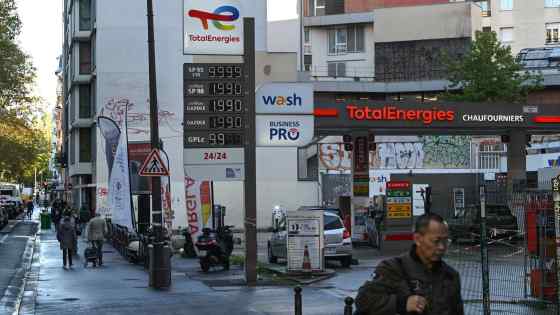
Europe is fortunate in having lived with high energy prices, especially for fuel, for decades because of high excise taxes. While Americans are groaning at the sight of petrol/gas prices of just of $4 an US gallon, equivalent UK prices are above $8 dollars. Petrol/gas reach $10 dollars per US gallon in the Netherlands. In an emerging market like Turkey they are at above $8 per US gallon.

When I hear former US Treasury Secretary Robert E. Rubin state publicly, as I did a couple of weeks ago, that the current ($146) level of oil prices is a disaster for the US economy and that even a (real) oil price of $100 is unsustainable, it is clear that the leadership of the US is in urgent need of a reality check. His statement that the increase to current levels was too quick to allow the country to adapt is also unconvincing. If the same real increase in the price of oil had been achieved over a 10-year rather than a two or three-year period, the need for a radical change in life styles and patterns of production and consumption would not have been recognised to anything like the same extent. The US, in its approach to energy use, is rather like the frog who jumps out of a pan of boiling water if dropped in it, but who allows himself to be boiled alive if put in the pan while the water is cool, wit the water subsequently brought to its boiling point gradually.

None of this means a disaster for the US or any other part of the developed world. Even a $500 barrel of oil (in real terms) would reduce US real income (as conventionally measured) by no more than 10 or 11 percent compared to where it would have been otherwise. That’s 3 or 4 years of trend growth - nasty, but no disaster, if properly managed. And there would be considerable environmental benefits from a more energy-efficient lifestyle, which are not captured by conventional GDP- or consumption-based measures of real income.

Certainly, truck drivers and taxi cab drivers will be hard hit. Their industries will have to contract. Mass long-distance travel will become seriously more expensive, hurting the low-budget end of the tourism- and travel-related industries hard. The airlines will have to contract. Automobile construction will have to retool and contract (not necessarily in absolute terms, with demand in emerging markets growing rapidly despite the high fuel costs, but certainly compared to the counterfactual with constant real oil prices). All these adaptations are necessary and, in some countries, long overdue. There is no case for subsidising energy-intensive life-styles or industries through tax breaks, subsidies, selective price caps or other stratagems.

The impact on real standards of living in Europe would be much smaller - in Western Europe probably less than half the loss in real income in the US. This is both because of the lower energy-intensity of European consumption and production and because outside Russia, the accidents of geography and history have made high-density living the rule in most of Europe.

The increase in energy costs and the associated increase in transportation costs will make high-density living an economic necessity. The depopulation of the American and Canadian Mid West and part of the Far West will accelerate. Commuting by private car will give way to commuting by public transport. People will rediscover the art of wearing sweaters indoors during the winter and of opening windows in the summer. Smaller, more energy-efficient cars and appliances will become the norm.

Real oil prices between $200 and $500 would accelerate the shift in wealth, financial power, economic clout and political influence towards the energy exporting countries, especially the Middle East and Russia. Because occupying Saudi Arabia and exploiting its oil resources for the benefit of the American consumer and the Teamsters is not an option, there is really nothing that can be done to resist this shift in the financial, economic and political centre of gravity.

The real problem will be the fate of the energy-poor, those who, even at current energy prices, spend 20 percent or more of their income on energy. The way to deal with this problem is not to subsidise the energy consumption of the poor, unless there truly is no other way. In advanced countries, and wherever the government knows who the energy-poor are and knows how to reach them, the answer is cash transfers to the poor financed out of general tax revenues. Both poor and rich should, wherever possible, pay the full marginal social cost of their energy use.

If you don’t know who or where the poor are, cash transfers to alleviate poverty are not an option. In that case subsidies targeted at energy sources consumed disproportionately by the poor may be the best that can be done. That would mean, in India, subsidies on kerosine used for home cooking, but not on kerosine used by airlines. It would not mean subsidies on fuel used by cabs, trucks or other vehicles. If a country has electricity or gas metering, a life-line tariff could be created, with a subsistence level of consumption provided free or at very low marginal cost, but with consumption above the subsistence level charged the full long-run marginal social cost (and possibly an extra dollop to pay the subsidy on the subsistence consumption level).

Because the increase in energy prices coincides with a large increase in food prices (and is partly responsible for it), the challenges of addressing poverty effectively will become more acute in the overdeveloped world. They will become near-overwhelming in poor developing countries. Much of the progress towards the Millennium Goal of halving extreme poverty by 2015 could be undone unless governments in developing countries and emerging markets adopt the right domestic policies to deal with this double crisis, and unless governments in the advanced industrial countries and half-emerged emerging markets create a global trading environment that allows the poorest countries to make the best use of whatever resources they have.

Increased aid from the rich countries can, in principle, help alleviate the new poverty crisis in the developing countries. In practice, aid has often done more harm than good. Sub-Saharan Africa has a near-endless list of examples of aid-gone-wrong. The political economy of the transfer of resources from the governments of rich countries to the governments of poor countries is so warped at both ends, that the poor in poor countries have frequently ended up worse off than they would have been without the aid. Aid routed through the governments of countries with a lot of very poor people is not the same as aid to poor people. When aid strengthens an unrepresentative/despotic/oppressive/corrupt/incompetent regime, the intended beneficiaries can end up the losers. ‘Do no harm’ should be the first commandment for all those who see aid as a key part of the solution to the looming food and energy crisis in the developing world.

62 Responses to “Welcome to a world with $500 oil”

Comments

  1. agreed

    Posted by: pat | July 9th, 2008 at 5:06 am | Report this comment
  2. You succeed in introducing optimism to what is at face value very dismal and bleak.

    Over the centuries there has been one God-given which has repeatedly come to our rescue: the market. In Smith vs. Malthus, Smith has always ultimately prevailed.

    Posted by: RCS | July 9th, 2008 at 11:23 am | Report this comment
  3. Professors often seem to have very abstract opinions.

    In principle you are correct but the stark reality seems to miss you bye. Sure Industry, and GDP, and Commerce, and etc will move along with what is available.

    The First World will manage to absorb very high oil prices. The Third World will go into instant revolution.

    The First World’s problem will be that the falsely created “Middle Class” is purely the product of free energy. Take away the free energy and the stable middle class is removed. I think Anarchy is guaranteed as the middle class is relegated back to its historical human condition of poverty.

    The absolute human condition for the majority of citizens before the mass exploitation of free energy (Olduvai Theory uses Circa 1930)was poverty. Even now, China prior to mass consumption of oil energy, was a land of poverty.

    All industrial populations will retrogress back to poverty in direct proportion to the decline (rise in price) of available free energy.

    To think that our industrial complex will somehow keep marching forward as the price of oil reflects the availability of the product is but a dream.

    Posted by: Graham Reinders. | July 9th, 2008 at 11:38 am | Report this comment
  4. Professor Buiter has written about a very realistic scenario, and all governments of the world should be concerned and take note. Apparently, they are not. Oil is a non-renewable and depleteable energy resource. It won’t always be around. Instead of focusing on how to reduce consumption of oil, measures should be implemented to actually halt usage of it for leisure purposes. More focus should be on utilizing public transport and expanding it. The USA can learn a great deal on how efficient public transport is in Europe. Meanwhile, we must develop an alternative mode of transport and energy source for it. Americans should also realize how pampered they are and stop complaining about the high price of gasoline. In most of Europe, the price of gasoline is more than double of that in the USA. Well written piece and congratulations!

    Posted by: Eugene J. Markow | July 9th, 2008 at 11:54 am | Report this comment
  5. The beauty of ‘bubbles’ is that so called ‘experts’ trained in statistics, but lacking common sense, extrapolate growth to project irrational numbers. Remember when allegedly sane people sold houses to buy tulips? Even today, our dear experts haven’t worked out that the house price bubble has burst and that prices will have to fall 20% to 25% to get the market moving again. With regard to oil, we are getting near to the end of the bubble; it will burst this year. $500 per barrel is sheer fantasy.

    Posted by: Malcolm Howard | July 9th, 2008 at 11:59 am | Report this comment
  6. In the American mind, the problem is still the cost of transport, rather than,
    as you correctly point out, the space between destinations. The prospect of
    high density living, which must inevitably be the long term goal, is mentally
    too daunting for a nation (the US) whose post WW2 infrastructure has been
    built on $2 oil. The thought that much of that physical plant WILL become obsolete by virtue of its location is just too hard to accept, until the fact is staring us in the face.

    Posted by: RK | July 9th, 2008 at 1:00 pm | Report this comment
  7. Dear Willem; such predictions are to be taken only as such, for no one can anticipate the future. But there is a sad point in your assessment: “Innovation and technological change may come to the rescue and bring us infinite amounts of environmentally friendly energy at the equivalent price of $100 a barrel of oil, but counting on that to help us out over the next two or three decades seems rather Pollyanna-ish, and not a basis for policy, planning and risk management” This is very short sighted and evades the long term solution; to say that this is - Pollyanna ish - is not a matter of poor foresight and should I would suggest be condemned, for you argue that we must continue to rely non renewable resources as if indeed they were infite. Very short sighted. One of your readers has commented: “The First World will manage to absorb very high oil prices. The Third World will go into instant revolution.” This is I am afraid the path we can foresee if the Pollyanna solution is not pursued. It is already happening, riots across the globe, world leaders unable to address long term solutions to rising oil and food prices, et al mon ami. We should start thinking in terms of about future generations, rather than our own foreseeable one. Perhaps we should revisit “The First Global Revolution” by Alex King and Scheider, which by the way, have you read? Sincerely, Ian

    Posted by: Ian Cairncross | July 9th, 2008 at 1:09 pm | Report this comment
  8. What a nonsense article from an economist!
    Not a single argument why petrol will reach 500 dollars apart from “comments” of “experts”.
    Another opinion from another “expert”, in this case, mine.

    Oil prices in two years will be around twenty dollars per barrel, which is a fairly overvalued long term price of oil, more or less what the owners of oil (governments) think is valued according to what they do (not say).

    If they thought oil would be at 70 dollars in few years they would investing now like mad. They don’t. The oil industry cannot do anything because they are not the owners of the resources. Oil resources are not capitalized -nobody can buy and oil field-, a very clever trick to hide the real value of a resource.

    At 70 dollars per barrel -if the investment community believes this price; they don’t- oil is a losing proposition. At that inflated price world oil consumption will not increase from the actual levels (yes, oil has price elasticity of demand, and not so small in one year terms), and there are many alternatives, all of them getting better at an accelerated pace.

    Anyway, like the oil producers, it is easy to talk and do nothing. Oil producer’s commentaries remain me of real estate developers nowadays, giving a lot of reasons why the prices are not going to fall much. A proof of their predicament.

    Better follow the money; Professor Buiter will have to tell us what he is doing now to benefit from such a valuable investment proposition. Then, perhaps, we will pay a little more attention to his opinion. It is easy to know what I am doing.

    Posted by: Felix Lopez | July 9th, 2008 at 1:33 pm | Report this comment
  9. Lord John Brown, or is that Mr. Brown now? ex head of BP once famously stated, in about these words, that he did not try to estimate the future price of oil and called that a fools game, or words to that effect. In 1985, when the oil price was nudging $40 per barrel, the experts were predicting oil prices over $100 by the year 2000. In 1986, the price dropped to $15 or thereabouts. Only after the price dropped was it obvious why it had dropped, which I seem to recall was related to supply concerns, which, the market suddenly realized, were unfoundered.
    The oil market has never used the same complex tools as quoted by the professor above. Neither have politicians.
    Simple greed and fear has been as sophisticated as it has ever been.
    The oil market has always been cyclic. During every cycle there are always those that say “Its different this time”. Because “oils running out” or the China story or whatever.
    Also during this time, typically there are many experts who extrapolate a straight recent trend line to infinity.
    Seems to me that experts mostly forecast a continuation of recent past to extremes, in order to get some publicity.
    Also seems to me that many insiders make forecasts in order to keep the “greater fool” game going, condition the market to higher prices and keep the money rolling in.
    This bubble will burst. Why? Dunno. When? Dunno. But the reasons will be obvious to all experts, in hindsight only.
    For a better insight read “The Prize”, Daniel Yergan (author name spelling not guaranteed) . Not much changes in this industry..
    Also your views don’t seem to take account of a couple of things;
    - innovation spurred by high oil prices causing cheaper alternatives to oil, thus capping demand and prices, and,
    - Political steps that will eventually need to be taken to curb usage of oil for environmental reasons and subsequent forced reductions in demand.
    The future, I suggest contains events and factors that will invalidate your models in practice.

    Posted by: Shane Jak | July 9th, 2008 at 2:42 pm | Report this comment
  10. In Power and Plenty the authors note that industrialization’s productivity gains were a function of the utilization of carbon fuels to improve productivity - leading to the increase in living standards. The $500 price point may entail a 10 fold drop in living standards over a $50 price point. I’m not sure I want to be anywhere near the social unrest that change would create.

    Posted by: Matt | July 9th, 2008 at 3:17 pm | Report this comment
  11. I can’t help feel that there are two separate things going on (in the comments.)

    1: Oil prices will, indeed, go up. While higher oil prices bring marginal sources (eg tar sands) into use, the consumption curve is headed upwards, and the most economical sources have hit peak.

    2: In the medium term, there is a huge amount of volatility going on. Oil prices may well come down a fair bit in the next 1-2 years, but to expect them to be at 2008 levels in 20 years time strikes me as unrealistic.

    However, I always feel that measuring the “Price of Oil” is focusing on the wrong thing. What people actually want is Transport/Heating.

    It would be interesting to see a graph that showed “average miles / gallon” * “$ / barrel” over time… to see whether “getting around” had genuinely become so much more expensive.

    I know that the car I currently drive does about FOUR TIMES as many miles to the GBP as does the (20-year old) thing I replaced. Part of this is the fact that I now drive an LPG car, and part is the fact I’ve gone for a smaller engine, but part must be efficiency!

    Posted by: Mark Harrison | July 9th, 2008 at 3:20 pm | Report this comment
  12. Oh woe to us! Everything discoverable has been already discovered! Everything inventable has been already invented! The patent offices should be abolished! Have we not heard these jeremiads before?

    Posted by: Thomas T. Schweitzer | July 9th, 2008 at 4:22 pm | Report this comment
  13. Long ago (in another country, and besides that Government is dead) when first writing a proposal for annual rises in road fuel duty, the question came to mind of what to do if the market price of fuel shot up. I concluded that since the objective was to build in the expectation of a long term rise in the relative price of fuel, the best alternative was probably to say that the Government intended the rise in the price of fuel to lie in a certain band, and that the Government would vary the duty to try and achieve that result. I.e., if the price shot way up the duty should go down to partly compensate.

    Selling anything as novel as that looked over ambitious at the time. Now we are faced with prices that have shot up, may shoot further up, and may well gyrate for a while as recession bites, it seems to me that there is a political and economic case for setting such a band (though incorporating a steeper long-term price rise than I dreamt of in the 1980s). The economic case is that the long-term price elasticity of demand for road fuel is much greater than the short term elasticity; and that it is the firm expectation of paying high prices in future which will change investment and consumption behaviour. The political case is that the screams from powerful transport special interests when prices shoot up will have been anticipated and provided for in advance.

    Posted by: David Heigham | July 9th, 2008 at 5:18 pm | Report this comment
  14. Instead of talking about the price of oil and its economic consequences, it would be more realistic to talk about the prediction that world oil production will decline by 50% within the next 25 years. That (credible) prediction could perhaps have a more profound impact on people. After all prices seem to be arbitrary, but oil production follows laws of nature (geology). The very fact that we have exhausted a supply of fossil fuels within 150 years what took nature hundred of millions of years to accumulate, shows that the problem we face is not a problem of prices. It is a problem of life or death.

    Posted by: Robert Sczech | July 9th, 2008 at 7:36 pm | Report this comment
  15. Prof. Buiter makes some relevant comments. Prices are set by pure supply and demand concerns. The fact that the $ is not holding its ground is adding to this increase. So long as the US and European trade and current account deficits continue to build up, we can expect the oil prices to keep going up. That is a macroeconomic fact. Note also that Oil companies have not spent a whole lot of money on exploration of new sites (CapEx) and that is bound to increase the price of oil as well. In the past, the price of oil fell after so called bubbles becuase the investment was there. Also, the growth in demand was not there, i.e. China and India were not power hungry 20 years ago.

    Note that a price of around $3.50/gallon of petrol in the US can be explained on pure inflation growth alone over the last 25 years. The fact that it never happened was because money was not chasing a scarce commodity. Now it is. Period.

    Stop emotional outbursts and apply some measure of rationality. You will be explain most things using economics.

    Posted by: Chaitra Nailadi | July 9th, 2008 at 7:56 pm | Report this comment
  16. Finally we may find vested energy interests taking a little more seriously and helping to bring to birth a little sooner than they had wanted, the H2 economy. An UK company is already very advanced in producing reliable PEM fuel cells that can be used and have already been extensively tested in automotive and CHP power generation. All that is needed now is to get cracking on cheap and minimally polluting H2 production and distribution. I do not believe that this is too complicated a problem to solve. Frankly the OEMs could be producing and bringing fuel cell cars to market now but I imagine they have too much invested in internal combustion and recently, hybrid, technology (a stop gap solution if ever there was one), which they want to amortize first. $500 p/b oil may make them move a little faster. The technology is there.

    Posted by: Alexander Harper | July 9th, 2008 at 10:38 pm | Report this comment
  17. I would assume that the large oil-producing countries want to keep the large oil-consuming countries addicted to oil for as long as possible. Consequently, they will want to avoid sudden, large, long-lasting oil price increases. To use Professor Buiter’s frog metaphor, they have reason to opt for the gradually boiling water scenario.

    I would also assume that in the short-term, the oil producers do not want to deepen global recessionary tendencies, and are likely to take that into account in their near-term production and pricing decisions.

    On the basis of those two considerations, oil prices would decline in the short-term. In the long term, they would rise gradually, with price surges and price declines occurring from time to time. The underlying price increase would be less rapid than predicted.

    But those are obviously just my guesses. More attention needs to be paid to supply-side politics. Could someone shed some light on the strategic assumptions of the large oil producers, Saudi Arabia, Russia, etc?

    Posted by: Edward S | July 9th, 2008 at 11:15 pm | Report this comment
  18. Buiter is right that prices are high because future prices are expected to be even higher.

    Oil traders are pricing in a near term future in which there is about a 40% chance that Israel or the United States will bomb Iran before year end. Add to that about a 60% chance that the US will elect John McCain, who has made launching or supporting an attack on Iran a thinly veiled campaign promise. Even if Obama wins, Bush could launch a few missiles just to make an impossible mess for the opponent party, as his father did for Clinton with Somalia.

    The consequence of such an attack would be the immediate sinking of tankers by Iranian gunboats, aircraft, mines, and anti-ship missiles and the effective closure of the Straits of Hormuz for months. That’s when we could see $500 oil. Republican donors in the oil business would only benefit, as they currently are.

    Expect Iran to continue to drive up the price of oil with warlike rhetoric, but not with actions. After all, as the 2nd largest OPEC producer, they profit from driving up prices! Expect Bush/McCain to reply in turn, as their financial supporters also profit. But only the Republicans, not Iran, could profit from an actual war. The danger will not end until Obama is sworn in.

    Posted by: Chris B | July 10th, 2008 at 1:09 am | Report this comment
  19. The problem with the analysis is that it assumes that the world will return to trend growth even as resources deplete. This is a highly unlikely scenerio. If you have less resources to produce things (ie less oil, gas, coal, iron ore, agricultural land, water, copper) you are not going to produce more, you are clearly going to produce less, you are going to have trend de-growth. In that scenario everything is likely to cost less except the absolute necessities - food, water and agricultural land.

    Posted by: James | July 10th, 2008 at 2:57 am | Report this comment
  20. The world HAS changed. Billions of previously poor people have now seen capitalism through the media and in action. Their governments have unleashed them to pursue the dream. The problem is that unbridled capitalism cannot be reached by all the worlds population. The population of the G8 is less then 1 Billion. Close to 5 Billion people have been unleashed to pursue unbridled consumption. What we are seeing now with high inflation and the resulting mahem is the first correction of demand and supply to take place. This is when only a few hundred million have managed to actually join the consumption game. After the correction, the next stage will be far worse as many more get onto the consumption bandwaggon. What will happen is a global rebalancing of wealth and consumption. The west will have to reduce their standard of living (high prices will cause this) as the poor increase theirs. The professor is simply stating the obvious when the world population is considered coupled with the new world order of capitalism available to all.

    Posted by: Ismail Sola | July 10th, 2008 at 6:28 am | Report this comment
  21. I like scenarios - they help cristallising on possible outcomes; in this case, I very much appreciate the idea that a 500$/bbl might simply accelerate an unavoidable behaviour change in the way we treat energy; indeed, technological revolution will not replace the need for carbon based fuels in the next generation; on the other hand, Europe (I am european) is an example that society is relatively insensitive to a very high price of oil - carbon based energy has become such a basic need that other things around will change or give: high density living, energy conservation, more fuel efficent cars - isn’t the latest Porsche more fuel efficient than most family cars in US? Adaptation is the most likely outcome of high oil price therefore; speed of change is the only real unknown, with may be a few cycled in-between;

    The big problem lies somewhere else, isn’t it? - GHGs and their long term impact is in my view the real issue that will need a revolution in the world population behaviour towards energy.

    Posted by: Yvon | July 10th, 2008 at 7:19 am | Report this comment
  22. $500 Oil??!! Ain’t gonna happen!!

    Posted by: Kevin Churchill | July 10th, 2008 at 8:39 am | Report this comment
  23. It amazes me how all of a sudden experts appear to tell us how short of oil we are and how high the price will go. Peak Oil is a topic I have been reading about since 2001, mainly in alternative media. Oil will rise until exponential demand for it is destroyed. The prof is right in that localization and re-education in simple living skills will become essential but we live in dangerous times as the paradigm of the free market and globalisation has no future. What happens during the transition could be very ugly indeed.

    Posted by: Dean Moriarty | July 10th, 2008 at 8:58 am | Report this comment
  24. I don’t think professor Buiter has said that oil **will** reach $ 500 (or intended to say so), but rather would like the reader to try to imagine what it would mean (for each of us) if it did reach that level. One thing that might be helpful, to some extend, is missing in his column, so I would like to suggest it here: try to organise your life in such a way that you can do as much of your transport by bike. I don’t think this is an omission on Buiter’s part: having grown up in the Netherlands (as I understand he has) he no doubt has found this self-evident.

    Posted by: Martin, the Netherlands | July 10th, 2008 at 9:12 am | Report this comment
  25. Oil at 500 would imply a 4(ish) fold increase in demand relative to stable production(which is likely in the timeframe - war aside). If we assume that Euro And US remain stable in their consumption, then we would be bringing up 3×600M additional people(combined population of Eur & US) to the level of consumption in the 1st world. Thats 1.8Billion people - in the space of a few years. Ofcourse the dollar devaluation is a related story, but unless the productivity differential of the western economies and the emerging economies closes by a massive degree, I still think the west can outbid the emerging economies for oil with little difficulty. In short, demand destruction will ensure this doesnt happen. The emerging economies would be destroyed at 250USD oil. We would go into a depression, which would cause further demand destruction. At 500dollars of todays money, we would be riding our bikes, and putting on our thermals. The true non discretionary demand would become visible at this stage.

    Posted by: Roger | July 10th, 2008 at 9:53 am | Report this comment
  26. Assured demand will definitely pull up the prices. It is sheer optimism which will keep demand assured. Large scale confrontations will further have impact. Oil is definitely going to be the leader. West can not survive without oil.

    Generations will change in OPEC which may not be easily tamed by West. Three to four more Iraqs are needed to control oil. It seems impossible.

    Posted by: vineet sharma | July 10th, 2008 at 10:32 am | Report this comment
  27. The environmental left has been warning of these very conditions for a very long time - see Holmgren scenarios, for example - but the elites of the world still refuse to entertain the solutions proposed by the most accurate predictors of our common plight. There is no pretty answer, no easy way down. The scramble for easy wealth has seen to it that it is too late for that. The G8 fail to act seriously on climate change whilst pushing hard for Doha which is an oil dependent solution to an oil crisis. As long as this sort of economic logic dominates, the realities of resource depletion will multiply beyond our ability to manage a safe descent. It’s going to get very very ugly not far down the road. Malthus will always trump Smith over any serious time-frame.

    Posted by: Marc Roberts | July 10th, 2008 at 11:37 am | Report this comment
  28. Lets hope Oil rises to $2000 dollars a barrel very quickly. Cos you can bet your bottom dollar that a cheap alternative will suddenly appear. Then cwe kick these oil heads into touch !

    I’d like to bet that oil will be below $7 a barrel within 10 years !

    Posted by: Chris S | July 10th, 2008 at 1:13 pm | Report this comment
  29. Lets hope Oil rises to $2000 dollars a barrel very quickly. Cos you can bet your bottom dollar that a cheap alternative will suddenly appear. Then we can kick these oil heads into touch !

    I’d like to bet that oil will be below $7 a barrel within 10 years !

    Posted by: Chris S | July 10th, 2008 at 1:14 pm | Report this comment
  30. Very realistic view. I agree that people should be more realistic too and start adapting to the new reality. We cannot accept any longer to be fooled by our governments and leaders that there will be oil, and cheap oil, in the next 100-150 years. But, in reality it will be hard to adapt to the newly created world, because we have done nothing to prepare for this situation. But better start now than never. If cars are still running and people still driving it means that oil is still cheap. However, we should not allow disaster, especially for the poor people and the poor countries, because they will be hit the hardest.

    Posted by: Bojan | July 10th, 2008 at 3:12 pm | Report this comment
  31. For the person who wrote “$500 Oil??!! Ain’t gonna happen!!”, …. few months ago Bush was saying “$4 dollars per gallon!!! you gotta be kidding me”. Somebody is playing with this and is doing a lot of money, everything is possible.

    Posted by: Juan | July 10th, 2008 at 4:15 pm | Report this comment
  32. I think you make some fine points on the possible scenarios that could occur. However, I would like to point out that an 11% change in real income to a consumption driven and hedonistic society is going to be a disaster. We just have to look at how the media portrays the credit crisis and the rise in food prices. If someone had woken up from a coma they would think the world was about to end. The tectonic shift that we are witnessing in the rise of energy, the rise of authoritarian regimes and the demographic shift in the form of immigration and an ageing population is going to lead to reactionary politics both in the developed and developing world. Once reactionary politics takes hold in any political system; democratic or authoritarian. We will have a significant crisis on our hands. The real challenge lies in the public relations of communicating this shift to the public. Without clear dialogue and understanding of the path ahead opportunistic regimes will create havoc. Anarchy is something not to be wished for. I really enjoyed some of the comments that Ismail sola made an interesting way of viewing things. Also Felix Lopez; if oil will drop to $20 in 2 years what will the value of the $ be in relation

    Posted by: KWM | July 10th, 2008 at 4:26 pm | Report this comment
  33. Even as this article was published the U.S. Congress was promising legislation to lower the price of gas so the consumer can keep driving his Hummer or his pickup truck around town.When will the U.S. leadership recognize the need for conservation?Tougher Cafe standards for autos and energy efficient building codes would be a start.The latter can be done locally.Nationalizing the airlines and a single payer medical system will be neccesities soon.Railroads can play a big role too.These and other changes will begin to take hold after January 20,2009!The political will is coming.

    Posted by: malcolm smith | July 10th, 2008 at 7:32 pm | Report this comment
  34. U.S. Congress has to promise to lower the price, it is the nature of our representative government. No one wants to hear that his/her way of living is unsustainable. As reality set in people will vote by abandoning suburbs, and ditch gas guzzling SUVs.

    Besides, nothing wrong with government providing a momentary cushion (all it can do anyways) to ease the transition. Hopefully the economic cost of the cushion is more then made up elsewhere, alt fuel, mass transit in population center.

    Posted by: C ln | July 10th, 2008 at 8:06 pm | Report this comment
  35. […] Buiter has written a provocative piece in his Financial Times blog on what might happen if the price of oil reaches US$500 per […]

    Posted by: Oil at US$500 per barrel? « The Inquiring Mind | July 11th, 2008 at 3:36 am | Report this comment
  36. […] Maverecon - could we reach $500/bbl? […]

    Posted by: Oil! « Qmceconomics | July 11th, 2008 at 11:36 am | Report this comment
  37. I think this post goes way too far. While I agree in the short run we are looking at $500 a barrel, maybe even $750 that does not mean it will stay there for very long. The price incentive to come up with either viable hydrogen or electric cars will mean that within 5 years of oil prices above $300 they will be widely available in the developed world. Similarly, the demand for heating oil would plummet and be replaced by electricity or natural gas. In the very short term power stations can use coal to provide the additionally electricity required. Over the medium term nuclear power and renewables can do that (unless the environmentalists successfully prevent new renewable projects – ironic isn’t it?).

    This does not mean we have to stop driving as much. It may mean that between 2007 and 2012 the number of miles per vehicle in the US decreases by perhaps 40%. However after 2012 when new technology comes on line it will go up again. People can live far away from their jobs and life goes back to normal.

    As to the ‘long-run social marginal cost of energy’ – this is only half the equation. What about the benefit from living in large homes and having the freedom to drive wherever and whenever one wants. This is huge. What about the long-run social marginal cost of energy in Europe of being so squashed? I fail to see why it is a good idea to force people to live in high density housing when given the choice (ceteras parabas) they choose not to do so. There is a cost of traffic in low density cities. The cost is born by those living there who prefer there ritzy suburbs to less traffic.

    Mr. Buiter is concerned about the shift in wealth, financial power, economic clout and political influence towards the energy exporting countries. He need not be. In the immediate future that will be the case. (I think Europe should be concerned about a Russia with triple its current total GDP. It may be able to run roughshod over the rest of Europe economically and perhaps even militarily.) However once the world switches running its cars to alternative fuels the price of oil will crash. I would assume this to happen between 2018 and 2028. The US and Europe will be able to ignore the Middle East and breathe easy again.

    Posted by: lobster19 | July 11th, 2008 at 2:27 pm | Report this comment
  38. Never say the west will not walk into the Middle East and take the oil. It could happen as what country would stop us Russia or China, I don’t think so. War as always been fought over commodities and the Middle East better watch how much they push us?

    Posted by: bill | July 11th, 2008 at 2:43 pm | Report this comment
  39. interesting article BUT before it reaches$500/- a barrel economies in europe and the americas will grind to a halt or very nearly so.demand will plummet/CRASH WORLDWIDE and the OPEC can then decide what they want to do with their overpriced asset.India will go for thorium nuclear power(electrcity)in a hurry and with assets available for a thousand years the demand will decrease remarkably.France and Russia will lead the nuclear power industry and maybe the H2 economy will become a reality. The arabs will go back to their bedouin ways and global terrorism will die a natural death as the cash spigot would have been turned off!!great!!global warming will cool off as the hydrocarbon economies will wilt.thats even better!!Hell why don’t we do this even earlier??? its a win win solution to get deaddicted from OIL.

    Posted by: devindra sethi | July 11th, 2008 at 2:45 pm | Report this comment
  40. The Middle East needs sorting out and let’s start with Iran and the other extremist countries. They need Christian values out there like it or not and better education.

    Posted by: Joe Liverpool | July 11th, 2008 at 2:46 pm | Report this comment
  41. A good article…I also thank you for the hopeful perspective, but I fear that society’s complex systems cannot stand the ride up the price curve, let alone the crash back down.

    I hope you will all check out The Oil Drum for discussions of these matters as well: http://theoildrum.com.

    Posted by: Quincy Walters | July 12th, 2008 at 7:17 pm | Report this comment
  42. I don’t think $500 is going to crash the world economy; in fact my group is expecting $800 to be required in the next 36 months to create meaningful demand destruction globally - though especially in the States Utd. Economically we all can function with modest GDP impact with expensive oil, as long as we get the demand destruction to go along with it, but get ready cause here it comes.

    Posted by: KjC | July 12th, 2008 at 11:23 pm | Report this comment
  43. $20 a barrel????

    I don’t think 1 in 100000 people in the western hemisphere realizes that we are now in a situation where yearly global production decline means we have to find, drill, develope and produce a North Sea sized field every year just to stand still. Somebody mentioned above that demand would have to quadruple with stagnate supply in order to achieve $500 a barrel-try more like 8% increase in demand and an 8% decrease in supply and we’re right over $600. I have no doubt that we’ll achieve these price targets sometime by 2012, give or take a year. Olduvai Gorge theory is very pertinent to this discussion, things are going to change so quick, imagine falling back to the 30’s a decade a year for 8 straight years. Right back to before the 20’s when a quarter of all arable land was fed to livestock (pre-mechanization) and a bushel of wheat was a twentieth of an ounce of gold ($50 dollars).

    Any discussion on the supply and demand of oil without mentioning the physical limitations on geology and the pricing mechanism in regards to a possible hyperinflationary US dollar is simply void of reality.

    Posted by: thirsty | July 13th, 2008 at 2:04 am | Report this comment
  44. Every year more oil fields enter the down side of the bell shaped curve of production than new fields start. Supply has likely peaked and will start to drop. Demand needs to go down as the supply drops or panic can produce a worse hit on our economy than the rising price of gas and oil. The fear of not being able to fill up one’s vehicle produced panic and long lines in 1973 and 1979. I would be interested in seeing studies on how much demand can be expected to go down as price increases.

    Posted by: kjwolf | July 13th, 2008 at 2:08 am | Report this comment
  45. Oil prices will soon skyrocket.

    Global oil production is now declining, from 85 million barrels per day to 60 million barrels per day by 2015. During the same time demand will increase 14%. This is like a 45% drop in 7 years. No one can reverse this trend, nor can we conserve our way out of this catastrophe. Because the demand for oil is so high, it will always be higher than production; thus the depletion rate will continue until all recoverable oil is extracted.

    Alternatives will not even begin to fill the gap. And most alternatives yield electric power, but we need liquid fuels for tractors/combines, 18 wheel trucks, train, and mining equipment.

    We are facing the collapse of the highways that depend on diesel trucks for maintenance of bridges, cleaning culverts to avoid road washouts, snow plowing, roadbed and surface repair. When the highways fail, so will the power grid, as highways carry the parts, transformers, steel for pylons, and high tension cables, all from far away. With the highways out, there will be no food coming in from “outside,” and without the power grid virtually nothing works, including home heating, pumping of gasoline and diesel, airports, communications, and automated systems.

    This is documented in a free 48 page report that can be downloaded, website posted, distributed, and emailed: http://www.peakoilassociates.com/POAnalysis.html
    Anyone interested in relocating to a sustainable area?

    Posted by: Clifford. J. Wirth | July 13th, 2008 at 3:03 am | Report this comment
  46. 45% in 7 years!!!

    Yikes!!!

    I read a report that stated for every 4% increase in demand, or decrease in supply the typical price of a commodity doubled. So if your calculations are correct, then the price will have doubled approx. eleven times from now leaving us with a 2015 price per barrel of….

    …. oh jeeez I think my calculator just ran out of zeroes.

    Posted by: thirsty | July 13th, 2008 at 3:57 am | Report this comment
  47. […] Welcome to a world with $500 oil How far will the real price of oil and other carbon-based resources rise? Experts (I am not one of them) differ widely in their medium-term and long-term predictions, but my reading of the evidence suggests that there is a fair chance that the sky is the limit. In the short run (the next 2 or 3 years) a global cyclical slowdown may provide some temporary relief from rising commodity prices in general and rising oil prices in particular. This temporary cyclical energy price comfort will be deeper and longer-lived if the key emerging markets that have let inflation get out of control (effectively all of them except for Brazil) tighten monetary and fiscal policies to bring inflation down to politically tolerable levels. The resulting cyclical slowdown in emerging market growth will be bad news for economic activity in the industrial world, but will put downward pressure on commodity prices. We will be unemployed but able to afford petrol. […]

    Posted by: A to Z Energy ETF » Blog Archive » DrumBeat: July 12, 2008 | July 13th, 2008 at 5:50 am | Report this comment
  48. Don’t forget the ELM, export land model, developed by Geoffrey Brown. Oil producing states have burgeoning populations and the torrent of money they are receiving from consuming nations is fuelling economic growth in those producing countries leading to rapidly increasing consumption of their own dwindling resources, which in turn leads to lower export volumes.The point is reached very quickly where they stop exporting altogether. Ask yourself ” would I continue to sell a dwindling resource to my enemies or should I retain it for my own citizenry ? ” This a really scary scenario.

    Posted by: kiwi | July 13th, 2008 at 12:37 pm | Report this comment
  49. […] the Financial Times, a discussion of $500 per barrel […]

    Posted by: Occidental Dissent » Blog Archive » Sky Is The Limit | July 13th, 2008 at 5:32 pm | Report this comment
  50. The available supply of oil is partly dependent upon the price, so the higher price will lead to higher production from existing fields. Not even Enhanced Oil Recovery (EOR) - just cleaning up a clogged up well becomes worth it when the price doubles. So while I strongly suspect that we shall eventually see $500/bbl oil, that will be due to the continued debasement of the $ under Greenspan, Bernanke and successors rather than a sustained massive real increase in the price of oil.
    Photovoltaic solar cells were economic in California, compared to the retail price of electricity, when oil was $30/bbl, so at $100/bbl it is just a question of how long it takes to manufacture enough PV grade silicon to replace all the thermal power stations in the world (OK, I know the answer is “too long”); if you limit the use of oil to aviation fuel you can make a major change in the supply/demand equation.
    PS Hydrogen is not a fuel except for space rockets, H2 cells are a relatively inefficient energy storage device whose main purpose is transferring pollution from LA to Colorado. Now, and for the foreseeable future, H2 cells will contribute more to global warming than an efficient petrol engine of the same power

    Posted by: John | July 13th, 2008 at 10:14 pm | Report this comment
  51. At 500+ dollars a barrel of oil this country won’t be talking about economics on the web…

    Posted by: jake38 | July 14th, 2008 at 6:24 am | Report this comment
  52. Would $500 be (and is $150) “the real price of oil”?

    If the price of oil was based solely on speculation, how would its recent course differ?

    Posted by: Paskalis | July 14th, 2008 at 12:27 pm | Report this comment
  53. …..and now a complex economic question only for advanced professionals: if you had a product of which the less you produced and sold the more money you made, what would you do?

    A fat diamond ring for the right answer.

    Posted by: Paskalis | July 14th, 2008 at 12:33 pm | Report this comment
  54. For those who may be unacquainted with it, I would recommend Charlie Hall’s balloon graph; indeed I would recommend the whole of Charlie Hall’s website.

    Posted by: Robin Datta | July 14th, 2008 at 1:46 pm | Report this comment
  55. Coal can be converted to oil (at a price) and it is also rather a messy process. Waste cellulose materials from agriculture can be converted to bio-ethanol but technical improvements are required (ie a money incentive is required).
    The future is not bleak, the cost of ground oil is capped by other available resources. There is a delay to market because it does take time to find investment capital for, design and build processing plants.

    Posted by: James | July 14th, 2008 at 2:59 pm | Report this comment
  56. Everything inventable has been already invented! The patent offices should be abolished! Have we not heard these jeremiads before?

    No, we haven’t, actually. That one’s a complete myth.
    http://www.ipmall.fplc.edu/hosted_resources/PatentHistory/posass.htm

    Posted by: ajay | July 14th, 2008 at 3:23 pm | Report this comment
  57. Um James - I think the author who wrote “Everything inventable has been already invented” was being sarcastic.

    Posted by: Betsy Thiede | July 14th, 2008 at 4:10 pm | Report this comment
  58. wow it is really sad that so many people still dont understand basic economics. Yes it is possible for oil to hit $500 a barrel. The global oil infrastructure is vulnerable at almost every point. Any number of events could happen which could trigger a price explosion. For example, the closing of the straits of Hormuz.

    Now if there is a price explosion, then yes it is also very possible that it could drop down to $20 afterwards. The thing to remember is that once an economy is imploded, it becomes more difficult to find a use for millions of barrels of oil. So the price would drop until the economy can build back up again.

    That’s just basic supply and demand.

    What really bothers me is how people think these alternatives to oil (ie, fossil fuels) oil reaches a certain price. What is that price? $200 a barrel? $500? $1000? It is a moving target, a carrot to chase. Because all the alternatives rely heavily on oil for their production. Do you know how much oil it would take to produce 20 million electric cars? Or 20 million solar panels? Or 20 million anything? And its not just the product, it is the infrastructure required to produce a given product. In many cases that requires even more oil. You have to look at EROI. Learn about EROI. If you only learn one thing about energy economics, make it EROI.

    Posted by: Iconoclast421 | July 14th, 2008 at 4:16 pm | Report this comment
  59. So, will properly located real estate, in or close-in to cities, go up in value? I wish I could understand what will become of my little house in WLA in three, six, and nine years.

    Posted by: bb comm | July 15th, 2008 at 3:50 am | Report this comment
  60. I am further amazed by this kind of paper. 500.00 per barrel oil is the end of modern civilization. I guess there are people out there that still do not realize the impact that amount of money is going to have on everything and not just transportation. Sir, you should look at farming. Agriculture which grows the food that you and everyone else consumes is deeply in the pocket of oil. With out oil for farm equipment, fertalizers, and other farming needs we can not grow the food. Even if we can grow the food with out a trucking industry we can not get that food to market. It is time that people like this wake up and say for once that oil at 200.00 a barrel is the end of modern life. I am no alarmist but reality is reality. It is time for all people to think of how they are going to best feed their familes. I of course can hunt,fish, and raise a garden big enough to feed my children throughout the years. What can people that live in big cities do? Starve. Riot. Murder their neighbors for a can of beans. This will get ugly. The police and military can not stop 300 million angry Americans and more than that in Europe or the UK can stop their citizens when this all crashes. We are on the brink of a new day in human history. Wake up! Take stock of what you know how to do as far as being self-sufficiant. If you can not survive you will be amoung the 6 billion people that will die off in the coming years.

    Posted by: David | July 15th, 2008 at 7:30 pm | Report this comment
  61. Paskalis http://blogs.ft.com/maverecon/2008/07/welcome-to-a-world-with-500-oil/#comment-2809 deserves a reply.

    “… since the price of oil is so high, would that not mean that the quantity supplied would increase? Not necessarily. I think that if the price of oil is sufficiently high, it could actually reduce the quantity supplied. If you understand that point, — and you should understand it if you paid any attention to the lettuce story — you can stop reading this post. But if you wish to continue reading the post just to check my reasoning, please be my guest.

    The nation of Crudistan, an oil-rich kingdom, has a large but finite supply of crude. It entire national income is derived from pumping out the oil and selling it in the world market. It needs $10 billion of income per year. Anything above $10 billion a year, it has to go buy US treasury bonds which give practically no returns; it is just a way of parking its money. So when oil is trading at $20 a barrel, it has to pump out 500 million barrels of oil a year and sell it. If oil prices slip to $10 a barrel, it has to pump a billion barrels a year just to meet its income goal. In short, in response to the lower price of oil, it has to increase its supplied quantity.

    Conversely, if oil price climbs to $100 a barrel, Crudistan has to sell only 100 million barrels of oil a year to earn what it needs. If it continued to pump the 500 million barrels as before, (assuming that the additional supply did not reduce the price), its income would be $50 billion a year, and will have to park the extra $40 billion uselessly. It is better for Crudistan to reduce the quantity it sells today because it can therefore save the oil for later extraction and sale.

    This is a perverse result. It appears to go against the normal behavior of suppliers in competitive markets.”

    From http://www.deeshaa.org/2008/06/12/some-thoughts-on-the-price-of-oil-part-1/

    Posted by: Atanu Dey | July 16th, 2008 at 9:49 am | Report this comment
  62. […] thoughts on the price of oil were prompted by a piece “Welcome to a world with $500 oil” by Willem Buiter at the FT (non-subscribers may not be able to view Buiter’s blog) a week ago.  I was away […]

    Posted by: Reflections on Oil « Uncharted Territory | July 24th, 2008 at 4:52 pm | Report this comment

Post a comment

Comment Policy


As a final step before posting the comment, please type the two words you see in the image beloweight numbers in the audio clip; this test is to prevent automated robots from posting comments.


More FT Blogs and Forums

  • Economists' Forum Leading economists and the FT's chief economics commentator, Martin Wolf, debate the big issues

  • Clive Crook's blog The FT's chief Washington commentator blogs about intersection of politics and economics

  • Gadget GuruThe FT's personal technology expert Paul Taylor answers your gadgetry questions

  • Margaret McCartney's blogA forum by GP and FT opinion columnist on healthcare issues

  • Gideon Rachman's blog The FT's chief foreign affairs commentator on world issues and his travels

  • The Undercover Economist Tim Harford's blog on economics in everyday life

  • John Gapper's blog FT chief business commentator talks about business, finance, media and technology

  • Management Blog A forum for the latest thinking about the issues that preoccupy managers around the world

  • FT Alphaville Instant market news and commentary for finance professionals

  • Westminster Blog By our UK Parliament writers

  • Brussels Blog By our Brussels writers

  • Dear Lucy Columnist Lucy Kellaway and readers solve your workplace woes

  • FT Tech Blog Our San Francisco and world correspondents look at the intersection of technology and business