



Friday May 16 2008
All times are London time

Search Quotes in the FT.com site
FT Logo

April 10th, 2008

Self-Regulation Means No Regulation

The Institute of International Finance,  an organisation representing many of the world’s largest banks and other financial companies, has issued a pretty frank mea culpa for the litany of errors of omission and commission perpetrated by its members during the financial boom that turned to bust in August 2007.  The Interim Report of the IIF Committee om Market Best Practice states a large number of home truths and makes a host of useful suggestions about risk management, liquidity managements, compensation of senior bankers and superstars, over-reliance on formal quantitative models etc.

The tone of the report is one of “We know we screwed up, but now we’ve learnt our lesson (really we have!!) and we’ll never do it again; so there is no need to regulate us more severely and intrusively”. (more…)

April 8th, 2008

The bad Gordon tries to mug the MPC

The United Kingdom has been blessed since 1997 with an exemplary division of labour between the government of the day and the central bank. The government makes fiscal policy, sets the inflation target and appoints all but two members of the nine-member Monetary Policy Committee of the Bank of England. The remaining two members of the MPC are appointed by the Governor of the Bank of England after consultation with the Chancellor of the Exchequer. The Bank of England sets Bank Rate to pursue its legal mandate, as stated in the Bank of England Act 1998.

Operational independence for monetary policy was granted to the Bank of England in 1997 by the then Chancellor of the Exchequer, one Gordon Brown. This good Gordon no longer holds the job of Chancellor, and I have no idea what became of him.

For the benefit of his successor, and of the current prime minister - a man who strangely enough carries the same name as the 1997 Chancellor of the Exchequer but is in no way related to that far-sighted institutional innovator - let me restate the legal mandate of the Bank of England: (more…)

April 2nd, 2008

Is the buyer of last resort necessarily an ugly baby?

This blog is a response to Martin Wolf’s FT Economists’ Forum column “The prudent will have to pay for the profligate” - as indeed they will, because that it what God made them for.

Much of what Martin says is right. He does, however, in his discussion of government purchases of impaired assets, call a child of mine ugly, and as a co-parent (with Anne Sibert) of the Market Maker of Last Resort, I feel obliged to protest.

Martin writes: “The solution they all desire is for the government to act as lender of last resort against illiquid instruments and buyer of last resort of impaired ones. While the former activity has been known since the days of Walter Bagehot’s Lombard Street, the latter is an overt bail-out.”

Not so, or at the very least, not necessarily so. When markets are disorderly and illiquid, it is not just the prices of good or prime assets that fall below their fundamental values. The same holds for the prices of bad, impaired and sub-prime assets. Impaired assets too will have a fair or fundamental value. That fundamental value may well be far below the face value of the security, but it may also be well above the price the impaired asset would fetch in a fire-sale in an illiquid market.

(more…)

March 31st, 2008

The Howling Hole in Treasury Secretary Paulson’s Proposals for Regulatory Reform

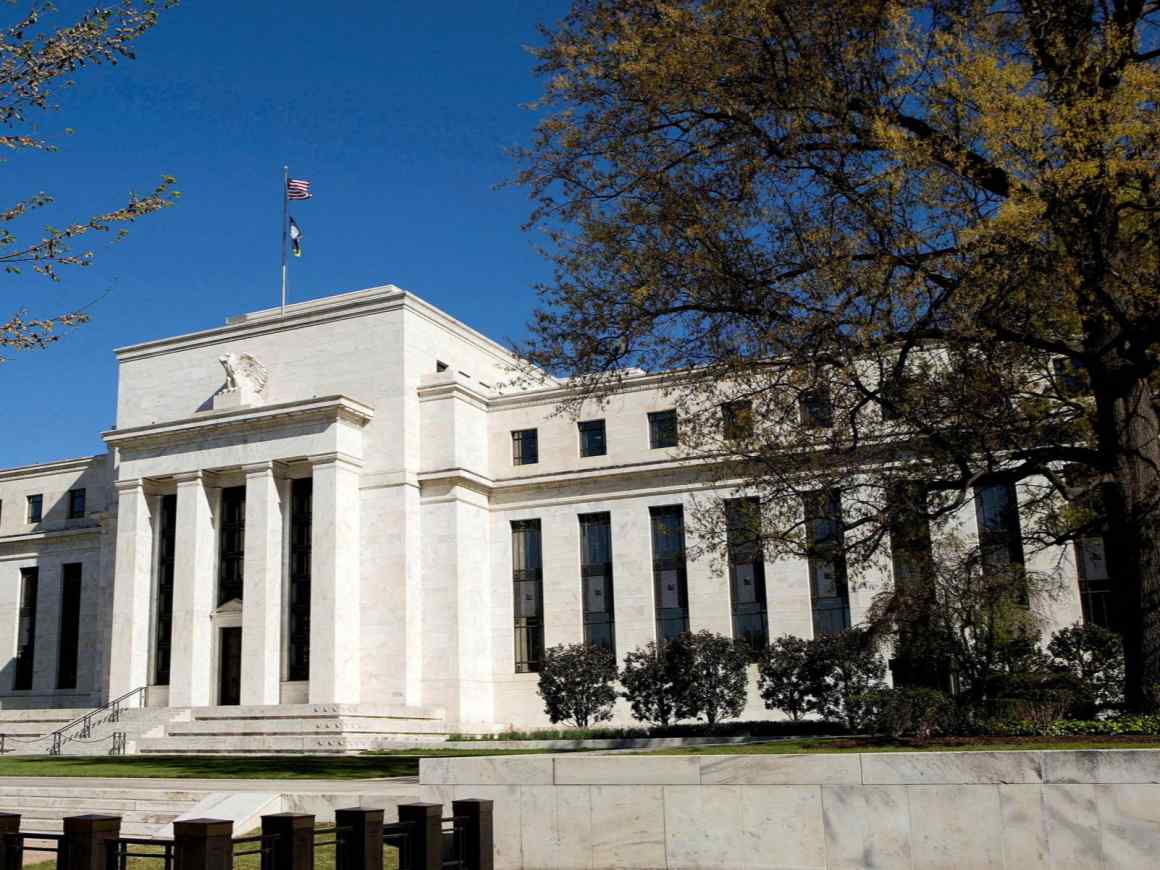
US Treasury Secretary Henry Paulson proposes that the Federal Reserve be given powers it does not have today, to demand information from/inspect the books of /impose constraints on the behaviour of - the primary dealer-brokers (that is, investment banks), for as long as the Fed is providing these investment banks with money through open market operations (via the Term Securities Lending Facility (TSLF) ) or at the Fed discount window (through the Primary Dealer Credit Facility(PDCF)). Once the investment banks stop suckling at the Federal Reserve nipple, however, the new supervisory/regulatory role of the Fed vis-a-vis the investment banks would shrivel and the ancien regime would re-emerge more or less intact.

This proposal is a recipe for increasing financial instability. The times when the Fed comes to the rescue of stricken investment banks is when the bad investments made during the most recent period of financial excess come home to roost. These are the times that the fundamental worsening in the financial prospects of this sector is amplified by liquidity crises and crunches. Systemically important financial markets (like the interbank market, the ABCP markets, other ABS markets and wholesale capital markets across the board) dry up as lack of trust and confidence, fear and panic replace euphoria, hubris, over-confidence and master-of-the-universe-syndrome. Under those circumstances there is never any objection from the afflicted private financial enterprises to the Fed asking awkward questions and sticking its nose in the books, as long as the central bank is willing to take assets off their books at prices well above what could be realised in an impaired, inefficient, free market. Beggars can’t be choosers.

(more…)

March 31st, 2008

Why Bank Risk Models Failed and the Implications for what Policy Makers Have to Do Now

My friend Professor Avinash D. Persaud recently gave a speech to the Committee of European Securities Regulators (CESR) on why bank risk models failed and are bound to fail. It is today’s guest blog. Avinash is a trustee of the Global Association of Risk Professionals, Chairman of Intelligence Capital Limited and Emeritus Professor of Gresham College.

**********************************************************

Sir Alan Greenspan, and others have questioned why risk models, which are at the centre of financial supervision, failed to avoid or mitigate today’s financial turmoil. There are two answers to this, one technical and the other philosophical. Neither is complex, but many regulators and central bankers chose to ignore them both.

The technical explanation is that market-sensitive risk models used by thousands of market participants work on the assumption that each user is the only person using them. This was not a bad approximation in 1952, when the intellectual underpinnings of these models were being developed at the Rand Corporation by Harry Markovitz and George Dantzig. This was a time of capital controls between countries, the segmentation of domestic financial markets and to get the historical frame right, it was the time of the Morris Minor with its top speed of 59mph. (more…)

March 28th, 2008

Old and New Wisdom in Finance

My good friend Peter Sinclair, Professor of Economics at the University of Birmingham, has writte this wonderfully compact refresher course in finance. Read it, enjoy it and make your fortune.

March 27th, 2008

A liquidity vade mecum

The Bank of England appears to be gearing up for new initiatives to inject additional liquidity into the sterling money markets. Governor Mervyn King’s appearance before the House of Commons Treasury Select Committee made this clear. I interpret the aim of these imminent actions to be lower liquidity risk premium components of the Libor - OIS (overnight indexed swap rate) spreads and, beyond that, the re-opening of many of the wholesale markets, especially markets for MBS (mortgage-backed securities) and other ABS (asset-backed securities) that have been effectively closed since the crisis started in August 2007.

Governor King was keen to ensure that taxpayers would not be left with the bad debts or stuck with the bad assets of the banks. What are the means at his disposal for extending liquidity to the banking system without taking on credit risk? What are the means at his disposal for extending liquidity to the banking system without taking up credit risk at too low a price? (more…)

March 25th, 2008

Moral hazard, here we come!

And there was naive me believing that in the entire Bearn Stearns/JP Morgan debacle at least one tiny blow against moral hazard had been struck: the Bear Stearns shareholders would get next to nothing under the $2 per share offer from JPMorgan. But no, Easter brought resurrection from the dead also for Bear Stearns shareholders. JPMorgan is now offering them $10 per share. Bear Stearns management and board are still in situ, of course.

All this had to be signed off on by the Fed. So what did the tax payer get in exchange? Well, the $30bn de facto first-loss guarantee for Bear Stearns’ cruddiest assets has been changed to JPMorgan taking the first $1bn loss and the Fed the next $29bn. A billion here, a billion there, but you are still not talking real money. Under the new deal, JPMorgan no longer guarantees Bear Stearns’ liabilities for a year even if its offer were voted down. That ought to be worth a few billion to JPMorgan.

So what the tax payer gets out of this is the first $1bn of its old guarantee in exchange for a warm embrace of moral hazard. There is also the nice touch that the New York Fed $29 bn loan and the JPMorgan Chase subordinated $1 bn note will be made to a Delaware limited liability company established for the purpose of holding the Bear Stearns assets. Special purpose vehicles and other off-balance sheet entities were part of the syndrome that brought us the current mess. It’s therefore charming to see the New York Fed bestow the tax payers’ largesse through such a construct.

Just to round off a great start to a new day, checking this morning on the NY Fed web site, I found that it remains the case that the collateral offered at the Term Securities Lending Facility (lending Treasury securities against collateral to Primary Dealers) will be valued daily by the clearing bank acting as the agent for the Primary Dealer. This is the same cockamamie approach to valuation as was agreed for the Primary Dealer Credit Facility (PDCF), the new arrangement under which Primary Dealers can borrow overnight from the Fed’s discount window. If ever an arrangement was designed for Primary Dealers and their clearers to collude to pass off pig’s ear assets as silk purse collateral to the Fed, this is it.

Time for a tax payer class action suit?

March 25th, 2008

How do the Bank of England and the Monetary Policy Committee Manage Liquidity? Operational and Constitutional Issues

The Monetary Policy Committee of the Bank of England sets Bank Rate – the official policy rate. Un What does it mean and what does it mean operationally in the markets for the MPC to set Bank Rate? Is Bank Rate the UK version of the Federal Funds target rate, that is, does it set the target rate for the overnight sterling interbank market? Does the MPC play any formal, constitutional role in design (or even the implementation) of the Bank of England’s liquidity management in the overnight markets, or its wider liquidity management at longer maturities and at the discount window?

In this blog I want to discuss both the technical issue about what the Bank does when it implements the Bank Rate decision of the MPC, and the wider constitutional issue about the role of the MPC in the whole gamut of decisions the Bank of England takes in the area of liquidity management - both the provision of funding liquidity to individual troubled banks and the provision of market liquidity to illiquid and disorderly financial markets. (more…)

March 22nd, 2008

Wanted: tough love from the central bank

The heads of the five biggest UK banks met with Governor Mervyn King of the Bank of England on Thursday 20 March 2008 to ask for more liquidity support. They should get it, but in the right manner and on the right terms. Liquidity should be provided on demand, against a wide range of collateral and at maturities of up to a year. But it should be provided in the right way, and on the right terms. The same applies to the Fed and the ECB. This is the time for tough love, if the resolution of the current crisis is not to sow the seeds for a worse crisis five years from now. Flexibility and responsiveness, by all means. Generosity, no.

(more…)


More FT Blogs and Forums

  • Economists' Forum Leading economists and the FT's chief economics commentator, Martin Wolf, debate the big issues

  • Clive Crook's blog The FT's chief Washington commentator blogs about intersection of politics and economics

  • Gideon Rachman's blog The FT's chief foreign affairs commentator on world issues and his travels

  • The Undercover Economist Tim Harford's blog on economics in everyday life

  • John Gapper's blog FT chief business commentator talks about business, finance, media and technology

  • Management Blog A forum for the latest thinking about the issues that preoccupy managers around the world

  • FT Alphaville Instant market news and commentary for finance professionals

  • Westminster Blog By our UK Parliament writers

  • Brussels Blog By our Brussels writers

  • Dear Lucy Columnist Lucy Kellaway and readers solve your workplace woes

  • FT Tech Blog Our San Francisco and world correspondents look at the intersection of technology and business