



Crediting an economic improvement

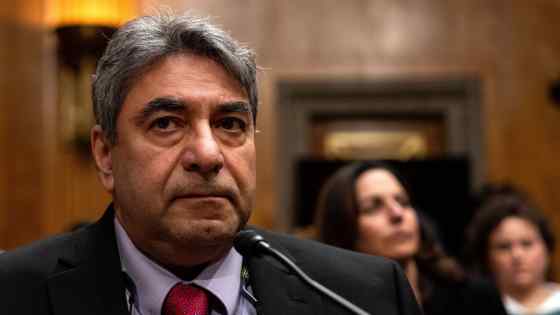
Federal Reserve Governor Elizabeth A. Duke today echoed others at the Federal Reserve, saying that she expected a “moderate” recovery in economic activity in 2010, and that businesses would “cautiously” begin to add jobs. And she, like others, said that the recovery depends largely on improving credit conditions.

“In my view, the outlook for economic activity depends importantly on our ability to build on the progress to date in improving the operation of financial markets and restoring the flow of credit to households and businesses,” she said in a speech in Raleigh, North Carolina.

Her stance is nothing new for the Fed, and she’s the third governor to repeat the sentiment in the past few weeks. Yesterday, Donald L. Kohn, Vice Chairman, said: “Lingering credit constraints are a key reason why I expect the strengthening in economic activity to be gradual and the drop in the unemployment rate to be slow.” And in December Ben Bernanke cited tight credit as one of the “formidable headwinds that seem likely to keep the pace of [economic] expansion moderate.”

But Ms. Duke also stated the flip side: better access to credit for consumers will only boost the economy if they are still willing to take on the debt.

“[One] risk I see to the outlook for household spending is the possibility of a rise in the personal saving rate as consumers choose to shore up their balance sheets rather than spend. While good in the long run, increased saving means consumers are providing less of a short-run boost to the economy,” she said. Ms. Duke points the significant drop in loans on banks books and unused credit lines at commercial banks from their peaks. But then, the peaks came as underwriting standards declined to a level we’re unlikely to see again.

Money Supply

Central bank blog

About this blog Blog guide
Opinions on market-moving economics and central banks around the world.


To comment, please register for free with FT.com. Read our policy on comments and include your name when submitting a comment.

All posts are published in UK time.

Contact claire.jones@ft.com about the Money Supply blog.

See the full list of FT blogs.

Editor’s choice

David Daokui Li

My lessons from life as a Chinese central banker

Euro in crisis

Fears of a Greek exit mount

The Money Supply team

Chris Giles Chris Giles has been the economics editor of the Financial Times since 2004. Based in London, he writes about international economic trends and the British economy. Before reporting economics for the Financial Times, he wrote editorials for the paper, reported for the BBC, worked as a regulator of the broadcasting industry and undertook research for the Institute for Fiscal Studies. RSS

Ralph Atkins, Frankfurt bureau chief, has been writing about European economics and politics for the Financial Times for more than 20 years following an economics degree from Cambridge. He has been watching the European Central Bank and eurozone economies since 2004. He has previously worked in London, Bonn, Berlin, Jerusalem and Brussels. RSS

Robin Harding is the FT's US economics editor, based in Washington. Prior to this, he was based in Tokyo, covering the Bank of Japan and Japan's technology sector, and in London as an economics leader writer. Robin studied economics at Cambridge and has a masters in economics from Hitotsubashi University, where he was a Monbusho scholar. Before joining the FT, Robin worked in asset management and banking. RSS

Claire Jones is Money Supply economics team writer, based in London. Before joining the Financial Times, she was the editor of the Central Banking journal and CentralBanking.com. Claire studied philosophy and economics at the London School of Economics. RSS

James Politi is US economics and trade correspondent for the Financial Times, based in Washington DC. He joined the Washington bureau in January 2008 following four and a half years as US deals correspondent covering M&A and private equity. James Politi joined the FT in London in 2000 with an MSc at the London School of Economics, and undergraduate degrees from Georgetown University and the University of Florence. RSS

Archive

« Dec Feb »January 2010
M T W T F S S
 123
45678910
11121314151617
18192021222324
25262728293031