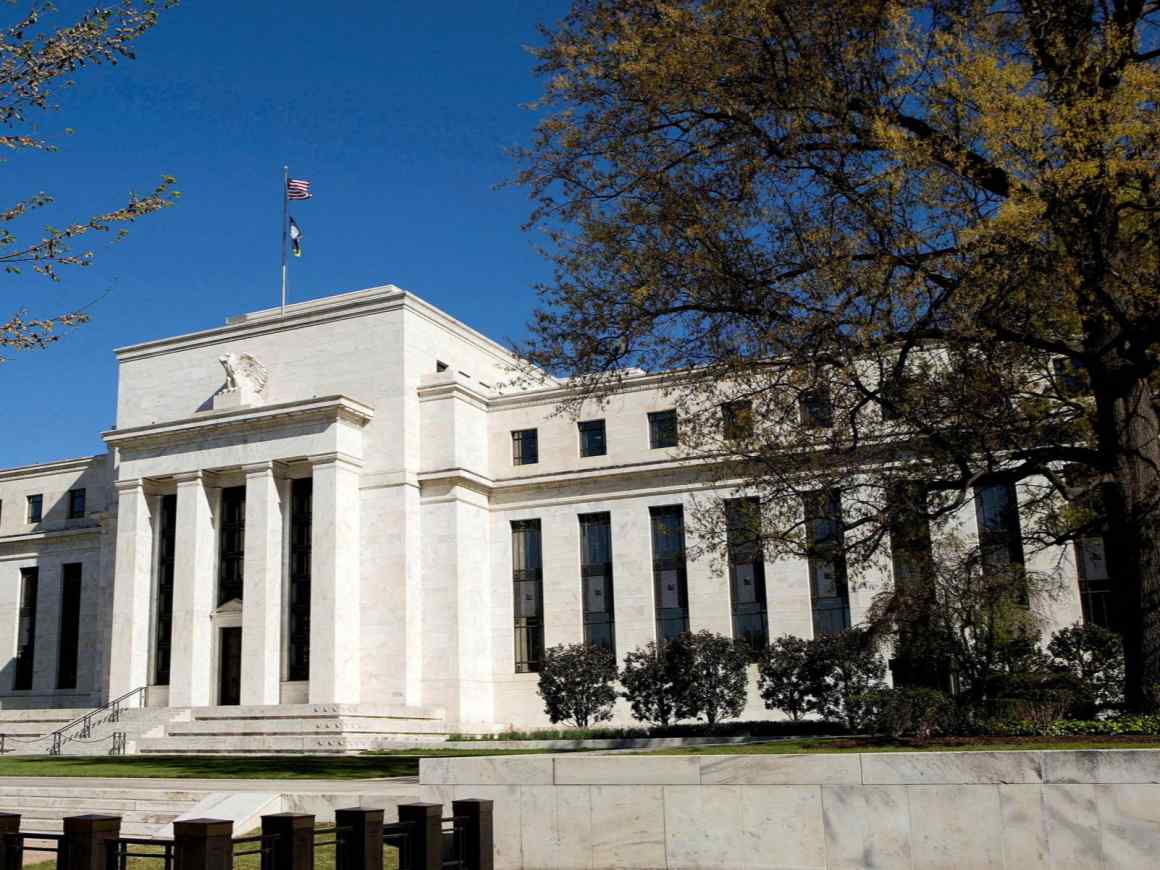




federal reserve

Robin Harding

Binyamin Applebaum at the New York Times has a good piece today about who Mitt Romney might appoint as Federal Reserve chairman and what that might mean. His analysis is similar to that of Macro Advisers, and I don’t have much to add, save that I think Glenn Hubbard or Greg Mankiw are more likely choices than John Taylor.

It is worth considering, though, how a more hawkish Fed chairman would interact with the rest of the FOMC. The seven Fed governors at present are:

Term expires Age Notes
Elizabeth Duke 2012 60
Jerome Powell 2014 59
Sarah Raskin 2016 51
Jeremy Stein 2018 52
Ben Bernanke 2020 58 Chairman until Jan 2014
Daniel Tarullo 2022 59
Janet Yellen 2024 66 Vice chair until Oct 2014

 Read more

Robin Harding

This month’s FOMC is likely to produce little visible action but there is a lot going on under the surface. The meeting starts tomorrow, Tuesday, October 23, and should conclude with a policy statement around 12.30 ET on Wednesday, the 24th.

What to expect?

Not much new. QE3 has just begun, Operation Twist 2 is ongoing, and for reasons discussed below, it is probably (although not definitely) too early for communication changes.

The FOMC may want to make slight updates to its statement noting some mildly positive economic data. It might strike a more positive tone on housing, but given that QE3 is tied to the labour market, any change to “growth in employment has been slow” is likely to be cosmetic.

Consensus forecasts

The FOMC is set to discuss consensus committee forecasts on day one. This is not as sexy as QE – it won’t move the markets – but is profoundly important to the future of the Fed. It will affect policy down the line. Read more

Robin Harding

The FOMC meeting now under way – concluding with a statement at lunchtime tomorrow, Thursday September 13, followed by a Ben Bernanke press conference – could well produce the most important Fed move since the 2008-09 crisis. Here is what I expect.

Will the Fed launch QE3?

There is an excellent chance that the Fed will both extend its forecast of low interest rates into 2015 and launch a new round of asset purchases.

Fed communications point emphatically in that direction. Read more

Robin Harding

The fourth paper at Jackson Hole, by Princeton economists Markus Brunnermeier and Yuliy Sannikov, is about the redistributive effects of monetary policy — although I think that will mislead people as to its content.

It is not a paper about how low interest rates and QE redistribute wealth from savers to consumers. Instead, it is a paper about how a crisis damages banks and how monetary policy may be able to mitigate some of the negative effects by redistributing wealth to recapitalise them. Read more

Robin Harding

Ben Bernanke, the Fed chairman, has replied to a series of questions from Congressman Darrell Issa, who chairs the House Oversight and Government Reform Committee.

The answers are mostly pretty unrevealing — a large percentage of them simply cite the Fed’s mandate — but if you share concerns about excess bank reserves, QE as a tax on savers, or exiting from easy monetary policy then Mr Bernanke’s responses are hereRead more

Robin Harding

There is some kremlinology going on about the Fed’s new easing bias language:

“The Committee will closely monitor incoming information on economic and financial developments and will provide additional accommodation as needed to promote a stronger economic recovery and sustained improvement in labor market conditions in a context of price stability.”

In the Greenspan era “closely monitor” was sometimes code for an intermeeting action by the Fed, notes Eric Green at TD Securities, via Business InsiderRead more

Claire Jones

Our week ahead email helps you to track the most important events in central banking. To see all of our emails and alerts visit www.ft.com/nbe

Joint action?

Hopes for joint central bank action mounted on Friday ahead of Sunday’s Greek election. Will the central banks deliver?  Read more

Claire Jones

Our week ahead email helps you to track the most important events in central banking. To see all of our emails and alerts visit www.ft.com/nbe

More QE from the Bank?

The Bank of England‘s Monetary Policy Committee meets on Wednesday and Thursday, when the decision is due out at noon UK time (11am GMT).

Will the MPC vote for more QE? Read more

Robin Harding

Vincent Reinhart of Morgan Stanley has a fascinating note out today which reverse engineers US forecasts from the IMF’s World Economic Outlook to answer questions about headwinds to demand, the effectiveness of unconventional Fed policy and the potential growth rate.

His chart on the effectiveness of Fed policy is particularly neat. Essentially, he plots annual long-term real interest rates against short-term real interest rates for the years from 1980 to 2007, draws a regression line, and then adds on dots for 2008 to 2011. Read more

Robin Harding

The most obvious problem with the Fed’s interest rate forecasts, discussed here yesterday, is their dissonance with the FOMC statement’s forecast of exceptionally low interest rates “at least through late 2014″.

The median participant (9th of 17) thinks rates should be 1 per cent at the end of 2014 and the median voter (5th or 6th of 10) must think they should be a minimum of 0.5 per cent. The statement is a committee decision and it can reasonably be different from the median individual view. It is still confusing, though, and weakens the credibility of the statement when they look so different.

The Fed is looking at a wide range of options to tweak communications further. Some would resolve the issues with this chart – for example Mr Bernanke acknowledged the idea of identifying who made each individual forecast – while others address the broader and more important question of giving information on the Fed’s reaction function.

Here, though, are a few ways to address the simple confusion caused by the voter/non-voter divide in the rate forecast chart.  Read more