

August 31, 2006
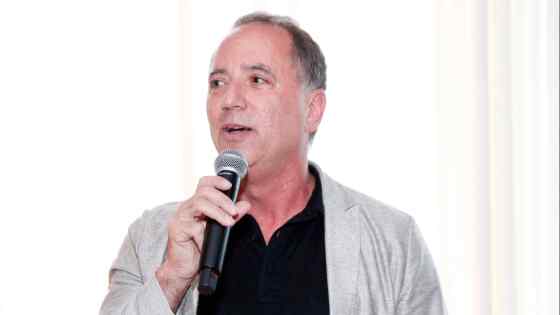
About this blog
When the Financial Times asked me to start a blog on international affairs I agreed instantly. After all, I keep reading that the internet and the “blogosphere” spell the death of newspapers – so it seems wise to start edging away from the doomed world of print and launching into cyberspace. What is more the FT pays my salary and I didn’t want to risk getting nasty looks in the corridors from my new bosses. (I joined the paper in July 2006).
It was only after I had agreed that I realised that I’m not entirely sure what a blog is. Having plunged into the blogosphere to get my bearings, it seems to me that they fall into two rough categories.
There are bloggers who are so obsessed by a particular issue – a sports team, a company, a film star – that they find that the mainstream media cannot provide enough material to satisfy them. Out there in cyberspace, they can bond with fellow monomaniacs. A favourite example of mine is an (apparently) influential blog dedicated solely to following the doings of Netflix, a big American DVD –rental firm.
The phrase “get a life” springs to mind. But hell - I’m sure many people find my interests boring too.
The second sort of blog seems to cover a broader range of subjects, and depends more on the personality and interests of the blogger. A successful example is Andrew Sullivan’s Daily Dish, which ranges eclectically across a range of subjects – from gay rights to the nature of conservatism and the war in Iraq.
My blog is going to fall more into the second category. My main job here at the FT is to write a weekly column on international affairs. Since “the world” is a fairly broad brief, I’ve defined three main interests that I intend to follow:
1) America and the world: I’ve been fascinated by American politics and foreign policy ever since spending time in California as a teenager in the 1970s – while my father was on sabbatical at Stanford. (He is a professor of abnormal psychology, since you ask). After that I studied US foreign policy (among other things) at Cambridge and Princeton, and then spent time as a foreign correspondent in Washington. When I first lived in Washington in the early 1990s, George Bush was president and there was a war in Iraq. How times change. Still, one thing that is even truer than when Bush premier was in power, is that to understand world affairs, you need to understand what is going on in Washington.
2) Europe – My most recent stint as a foreign correspondent was in Brussels from 2001 to 2005. I was the EU correspondent for The Economist and author of the Charlemagne column. Some people, I know, find the inner workings of the EU almost as dull as the inner workings of Netflix - so I intend to cover not just the doings of the Eurocracy in Brussels, but the broader political, economic and social trends shaping the “old continent”.
3) Globalisation – Yes, I know everybody says they are interested in globalisation. But I spent five years covering Asian affairs from 1992-1997 – first as a correspondent in South-East-Asia and then as The Economist’s Asia editor. I visited Bangalore before Tom Friedman had ever heard of the place – but somehow forgot to write a best-selling book about it. By globalisation I mean the flow of money, people, jobs and ideas around the world.
Finally, I have developed a morbid sub-interest in jihadism. Oh, and I reserve the right to write about anything else that interests me.
I will endeavour to post something most days of the week, although please allow for the occasional pause caused by holiday, travel or physical or mental collapse.


HI Gid……having just seen your gob on the front cover of saturday’s FT inviting me to tune in to your blog I just did….shamefully late seeing as you’ve been at it nearly a year now…hugely enjoyable…which I can honestly say I hope , against hope , that your current sojourn in Pakistan is . Hope you managed to watch the , awful ! , FA Cup final and caught Drogba’s sublime ballet-dancer’s finish …congratulations !…we hope to see you all soon for some Burgundy at ours
All the best from Londonistan
Posted by: Mike | May 19th, 2007 at 5:59 pm | Report this commentMike and crew
Being “Charlemagne” of The Economist you must be deeply Europhobic because most “Charlemagne”´s articles were antieuropean and completely (english)nationalists.
Posted by: Enrique | May 29th, 2007 at 5:55 am | Report this commentConspiracy theories, Iraq, democracy, freedom of the press.
I am surprised that you are surpised that some - if not a lot - of Israelis regret the passing of Sadam. I know very few Israelis, indeed, that would freely subscribe to Washington’s view of the Middle East. They want the support of the US, of course, but that desire for support does not remove their intelligence in all the senses of that word.
Posted by: Danny Barrs | August 5th, 2007 at 10:10 am | Report this commentAt the start of the US invasion I remember listening to an interview on French radio at an Iraqi cafe in Israel where jews that had suffered at the hands of the Iraqi regime questioned the legitmacy, morality and , above all, the pragmatic logic of invading Iraq. They knew that thousands of innocent iraqis would be killed and were convinced that the outcome would not be as Washington predicted. Was the fact that the British press did not ask the right questions of the right people at the right time not a conspiracy in itself? Is it really surprising that there are a multitude of opinions in Israel?
Who are we kidding if not ourselves? If democracy is really the answer then why not hold elections in the whole of historical Palestine? Or in the whole of historical Ireland? Or in the whole of historical Cyprus? There seems to be a desire in the British press - including some times the otherwise superb Financial Times - to not only simplify but to support a UK view of the world where consensus is what good-minded people are looking for.
The FT needs to become more international in its approach even if it is already streets ahead of a lot of its rivals.
In the opinion of many Sadam was not an enemy of Israel and the conspiracy to invade Iraq was Blairite in its nature - anyone who was against the war was soft on terror. Other views - those of the French for example - were not respected.
Where was the FT when it mattered…before thousands were slaughtered for nothing?
Dear Mr. Rachman,
I have not studied the Vietnam war, so have no basis in the regard to compare to the Iraq war. It is obvious there are imperfections in democratic (i.e., a democratically elected) change of staff every 4-8 years.
After 13 years as a professional in engineering, while a federal civil servant, and no longer being in this position (a story of an infinity of pages,) it is obvious that when a stable portion of the federal service is knocked over (OR subject to a sudden unrelenting change of management), there will be repercussions elsewhere. In the private sector, layoffs occur. In the federal government, withheld promotions, and other such “SIGNALS” curtailing ambitions are the only markers.
California bears a fair resemblance to Iraq’s economy. There is oil there. There is livestock there. There are “fruits of gods” there. There are a ton of visitors. Perhaps the primary difference is that it is not its own country. I do not see Vietnam.
As time has passed on (I was surprised that after former PM T. Blair announced a troop withdrawal that our President Bush did not follow suit) — I am looking more and more at COMMUNISM as a connecting point of a problem {especially after the article announcing Iraqi oil for soil by a Norwegian group of FT on Aug. 23+last weekend). What is the status of land ownership in Iraq, and if you were a private property owner with oil under your property, would it be yours?
I see many ties between the oil (land to subsurface) connections and cellular (individual to group) connections — many of sought to be free of these obligations. Both have “communistic” aspects.
From your study of the Vietnam war, would communism have anything to do with it? Was it, otherwise, the earliest form of identity theft?
Sincerely,
S. Laura Yeh
“Overcompensation is friendly fire.”
Posted by: S. LAURA YEH | August 29th, 2007 at 6:02 pm | Report this commentI hate to tell you, but Sonny Bono is dead.
Posted by: Sean Ellis | September 12th, 2007 at 12:32 pm | Report this comment