Thursday May 22 2008
All times are London time

Search Quotes in the FT.com site
FT Logo

October 23, 2007

Russia and China’s challenge for the west

Dmitry Peskov, official spokesman for the Russian president, likes a joke. Visitors to his Kremlin office last week noticed that the screensaver on his computer is a series of revolving quotes from George Orwell’s Nineteen Eighty-Four: “Big Brother is watching you”, “war is peace”, “freedom is slavery”, “ignorance is strength”.

Since Mr Peskov works from the same building from which Stalin operated – and now speaks for Vladimir Putin, who is often accused of establishing a new Russian autocracy – this is all rather daring. Or tasteless. Possibly both.

Mr Peskov speaks with the relaxed good humour – and even the accent – of an American spin-doctor. But listening to some of what he had to say, I experienced a strong sense of déjà vu – and it was not the US that was brought to mind. It was China.

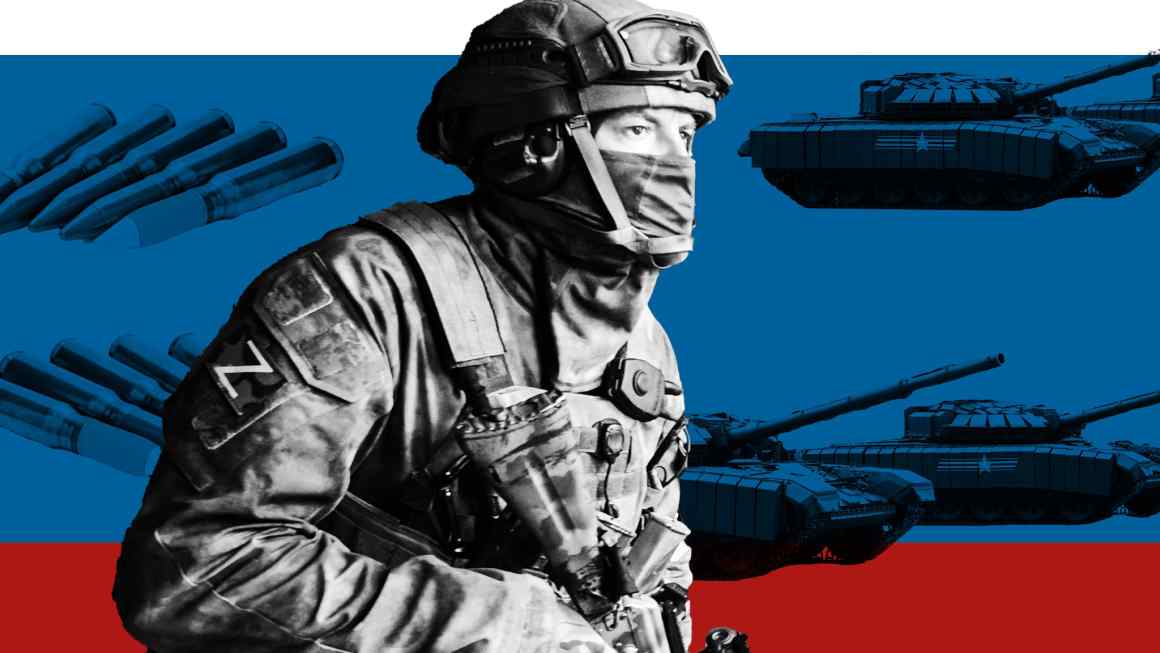
During the cold war, it was natural to lump Russia and China together. Now the two countries are once again occupying similar ideological terrain. They no longer espouse communism. But both Russia and China have nonetheless separately arrived at very similar political doctrines. At home, the formula is authoritarianism, combined with rapid economic growth and nationalism. Internationally, both see their rising economic power as the basis for righting past humiliations. They preach a doctrine of absolute respect for national sovereignty.

America’s setbacks in Iraq have given the Russians and the Chinese new confidence in the battle of ideas. But the real foundation of their new assertiveness is economic. China is a manufacturing powerhouse. Russia’s boom has a more fragile base: the rising price of oil and gas. But both countries are flush with cash.

The fact that they are doing well – without embracing liberal democracy – leads to an increasingly confident rejection of western political models. In both Russia and China, the official emphasis is on stability. Rapid political liberalisation is dismissed as a trap that could create social chaos.

When the cold war ended, many in the west assumed that the ideological argument was also over. History had ended. Russia and China had embraced capitalism. That, in turn, would create a middle class that would demand political freedom.

Almost 20 years later, things do not seem to be working out like that. An affluent bourgeoisie is certainly very visible in the big cities of both countries. But, at the moment, the Russian and Chinese middle classes seem much more interested in flat-screen television sets and foreign cars than in a free press or new political movements. There is still considerably more freedom of speech in Russia than in China. But the situation is getting worse – and only a few intellectuals seem to care.

The reasons for this political passivity once again seem similar. Chinese and Russian history give the newly affluent good reason to fear “chaos”. Those fears are reinforced by official propaganda.

Talk to independent analysts in Moscow, and their anxieties are also strongly reminiscent of the kind of thing you hear in Beijing. In both countries, the political system is blamed for breeding corruption and ignoring environmental problems. Both countries are also currently facing a classical problem for authoritarian governments: how do you manage a change of leadership without provoking dangerous infighting at the top?

The Russian and Chinese elites’ response to these political uncertainties is also similar. Increasingly, their domestic legitimacy relies on a renewed sense of national pride. Their governments push out a popular message that economic strength means they can no longer be shoved around by the west. Both countries tell a receptive public that national weakness is a thing of the past. China’s insistence that it will fight to prevent Taiwanese independence is popular. The Russian public seems to love it when Mr Putin is rude to the American president.

But nationalism has to be handled with care. In China, the authorities eventually reined in the anti-Japanese demonstrations of 2005. In Russia, the government has sponsored nationalist youth organisations. They are a useful source of political muscle. But it is also important to ensure that a resurgent Russian nationalism supports the system, rather than undermining it.

Russian and Chinese nationalism – backed by economic strength – poses obvious foreign policy dilemmas for the west. The issues involved are both practical and philosophical.

On the practical level, western countries have to decide how hard a line to take when China threatens Taiwan, or Russia squeezes Georgia. How much of a fuss should we make about human rights? What should we do when Russian and Chinese “sovereign wealth funds” try to buy western companies? How do we cope with the fact that Russia and China frequently block western efforts at the United Nations Security Council – over Burma, Kosovo and Iran for example? Behind these day-to-day issues are some bigger philosophical questions. Was it wrong to suppose that globalisation and economic growth would eventually mean that Russia and China would become liberal democracies? If that was too glib, are the new China and Russia threatening to western interests?

It is too soon to answer these questions definitively. China and Russia once again pose an ideological challenge to the west. But authoritarian nationalism, backed by massive foreign reserves, may turn out to be simply a phase on the long march to liberal democracy. Or it may turn out to be something more durable – and Orwellian.


30 Responses to “Russia and China’s challenge for the west”

Comments

  1. By the way, back in 1949, if I’m not mistaken, China’ Mao Zedong proposed to Stalin to merge the two countries together. Given that China had some 700 mln people and the Soviet Union just over 150 mln, Stalin refused.

    However, population pressure in China is much stronger now, and many in Russia fear a clandestine invasion by the Chinese to Siberia is already unstoppable. By hook or by crook, China and Russia may eventually merge (or China may simply take away Siberia). It’ll be interesting to see then the combined influence on the rest of the world of Chinese explosive demographics let loose in the warmed up Siberian forests, and their laboriousness multiplied by “economic growth” priorities. Russia’s current disregard for ecology (does Mr Rachman mean Russia’s joining Kyoto protocole by that?) will seem a quite gift then.

    Posted by: A Russian | October 23rd, 2007 at 10:18 am | Report this comment
  2. Somebody disobeys orders from Liberal Democracies! Don’t even vote on Burma! Danger! Danger!

    Posted by: KF | October 23rd, 2007 at 11:43 am | Report this comment
  3. As an Spaniard i don´t think Russian interests are divergent to those of us. They have a legitimate fear in Kosovo, exactly the same Spain has. They have economic interests in Iran, the same we have in Venezuela. About their national pride…nothing compared to Americans. About Chechenya? At least it is part of the Russian Federation and not a foreign nation like Iraq and Afghanistan…and the difference of population (1 million Chechenya and 25 million Iraq or Afghanistan) makes clear what Americans have done is much more horrible.

    The problem as we all know is the difference between the Anglo-saxon strategycal “Maritime” dimension (well, really Spain has also the same “maritime” dimension with Latin America) and the “Continental” dimension supported by Russia and, logically, by Germany (which will be joined gradually by most of Eastern Europe) which means a direct access to the Chinese market by land in an EURASIAN ECONIMIC AREA including China, Russia, India and the European Union.

    Logically, the “Continental” dimension is not appreciated in Washington DC as it means a diminishing influence of America in World Affairs. That´s why they have devised that institutional annual meeting called APEC and talk about the “Pacific”…but EUROPE has to defend our own interests and those lie in the “Continental” conception.

    Posted by: Enrique Costas Mira | October 23rd, 2007 at 11:54 am | Report this comment
  4. Sorry Enrique, but are you deciding whether a war is “horrible” or not on the basis of the number of people involved?
    So the terrorists attack on London (52deaths) was not really horrible while the madrid bombing (191death) was?
    And “at least it’s part of the Russian federation not a foreign nation”. So as long as you’re trying to crush a minority within your borders, that’s alright, then.
    Seriously, I hope you got carried away and didn’t mean what you said.

    Posted by: French_in_London | October 23rd, 2007 at 12:37 pm | Report this comment
  5. Dear Mr. Rachman,

    Well done! I guess you had a deadline to meet and after watching the football match, the rugby WC final,the Grand Prix (all of them going wrong for England!) and the long flight back from Moscow, you had to meet a deadline :-))

    So, I note that you have improved productivity by repeating,in less emotive terms, the fulminations of the “senior US source”, reported in your earlier blog post and got away with it with your editor!!

    LOL! just wanted you to know that some of us do read what you write with care.

    Best regards,

    P

    Posted by: Pacifist | October 23rd, 2007 at 12:55 pm | Report this comment
  6. It is easy to explain. If there is more people killed there is more suffering…at least that´s how i understand it.

    More people killed + more people injured + more refugees = more suffering.

    And clearly what Americans have done, and are doing, in Iraq is much more horrible because they have, and are causing more suffering.

    And we have to add the concept of national sovereignty. Chechenya is part of the Russian Federation in the same way Texas, Alabama, Georgia… were part of the United States when they decided to separate from the rest of America and Lincoln killed half a million Southerners to keep the Union. That´s History.

    Of course i think the division of the Soviet Empire was done in a bad way by Boris Yeltsin because it would have caused less problems if Crimea (russian majority in Ukraine) and Northern Kazahstan (Semipatalinsk, Petropavlovsk…russian majority) were incorporated to the Russian Federation while, at the same time, givien Independence to Chechenya.

    But that was the legal situation and the established limits of the Republics which formed the USSR by the time of its fall.

    Posted by: Enrique Costas Mira | October 23rd, 2007 at 1:05 pm | Report this comment
  7. To the French: Probably what Enrique wants to say is that Chechnya is closer to Russia than Algiers was to France. It did not stop France from killing over 140,000 Algiriens though, a big anough figure by any standards. (By the way, has France as a state ever apologised for their atrocities, the way the Germans did? I just do not know.)

    And probably what Enrique might want to ask - whether France should go on killing the Algeriens in this war or leave the Algieriens to kill themselves, as it eventually did? Freedom and democracy sometimes have an ugly face.

    Which does not say the war in Chechnya is humane. By the way, lots of peaceful Russian citizens have been killed by Russian soldiers in Chechnya.

    Posted by: A Russian | October 23rd, 2007 at 1:10 pm | Report this comment
  8. I agree with that Russian - as for official apologies to Algeria, I’m not sure either.

    I’m def not trying to justify the decolonisation wars. But Algeria was a special case in that about 0.5m French has emigrated there. It was seen by the state as another region of France, and not as a colony. That helps explain why this became such an acrimonous situation and a pretty dirty conflict.

    In any case, there’s plenty of wrong France and its leaders have done down the years - and I’m not shy nor embarassed to critice France for these.
    Still, by comparing 60’s independance war to Chechnya, you’re basically acknowledging that Russia hasn’t moved on.

    Posted by: Anonymous | October 23rd, 2007 at 2:00 pm | Report this comment
  9. Hi Russian,

    While I am generally on your side in this argument, I have a question for you.

    At what point does a state’s sovereignty over a region become illegitimate?

    In answering th above, you may wish to consider these:

    One a region is part of a state, does it have to remain part of that state for ever? (I think clearly not).

    What if the vast majority of the people of a region have withdrawn their consent to being part of a nation state?

    What if the nation state has committed unspeakable atrocities against the people of the region (particularly if those are religiously or racially distinct).

    All the best,

    P

    Posted by: Pacifist | October 23rd, 2007 at 2:15 pm | Report this comment
  10. to the French: Chechnya was also a special case in that hundreds of thousands of Russians have emigrated there since 19th century. It was not just seen - it actually WAS another region of Russia. That also helps explain why this became such an acrimonous situation and a pretty dirty conflict.

    And who are we, the Russians, to move on ahead of democratic France and the likes of it? Just last century our peasants - 3/4 of the populace - had God taken away from them and were given no other moral values. Our intellectuals were killed by millions. Generations of our leaders and military were taught a total disrespect for human life. Chechnya is just another example of ages-long Russian sport of extermintaing its own people.

    However, internationally Russia after 1991 has been surprisingly peaceful and contained. Nobody in this blog has so far managed to cite any examples of its military aggressiveness. European democracies should be thankful to totalitarian Russia for messing within, not outside its borders.

    Posted by: A Russian | October 23rd, 2007 at 2:50 pm | Report this comment
  11. to Pacifist: Again, the EU example seems to be the way ahead. Nations should voluntarily join a “strong” supra-national structure (thus giving up some of their souvereign rights), which they are technically free to leave at any time, but practically will never do. Given the apparent inability of “weak” supranatinal structures, such as UNO, to deal with the biggest problems, such as wars and climate change, the partial surrender of national sovereignity to a global “government” seems the only way out.

    As to more topical problems of Kosovo, Chechnya (which is run by a national clan now, by the way), Abkhazia etc, personally I would go with letting peoples decide for themselves through referendum - as New Caledonia will do in 2014. I like the Swiss obsession with their referendums. And although Russia may lose Chechnya in this case, it will most surely get Abkhazia and Southern Ossetia which are predominantly pro-Russian, despite Georgia’s claim over them. And that is why Russia opposes the Kosovo self-determination process which will create a dangerous precedent. While I repeate the Russian official line here, I believe it is logical, sober and, again, surprisingly peaceful and contained, unlike the EU’s short-sighted but democratic position.

    Posted by: A Russian | October 23rd, 2007 at 3:17 pm | Report this comment
  12. Very good point. There’s undeniably something that was ablated from Russia during the Soviet years. Russia had many scientists, authors, artist, philisophers etc.. who were easily among the best and most respected in their fields globally. Clearly, it will take time to rebuild.

    Pacifist - you question is very pertinent - but obviously it’s very hard to answer. (the world has tried for a long time!) Self-determination vs sovereignty…
    My own view would probably be what some call liberal in the sense that I’d have to go for individual rights - which means that in Region Vs Country I would tend to be more sympathetic to the Region.
    That said the Kurds situation is an illustration on how complex the issue is. On this one, I find the arguments for both an independant Kurdistan and the status quo pretty convincing. I guess I have the luxury of remaining undecided on the issue. Which of course, is not the case for world leaders who are asked to find a solution to this.

    Posted by: French_in_London | October 23rd, 2007 at 3:27 pm | Report this comment
  13. In three years China will have 1,380 million people and Russia just 138 million people. In the Far East there are 7 million Russians next door to over 100 million chinese…I don´t have any doubt Russia will discover her only possibility to survive will be becoming a member of the EUROPEAN ECONIMIC AREA, which right now has over 500 million people (including Norway) but could reach 700 million including Russia and Ukraine (about 800 million including Turkey, Belarus, Yugoslavia…)

    I think Chinese emigration to the Far East of the Russian Federation will be similar to that of Mexicans in the American West, comprising on average 25% of Western American population after 40 years of non preferential quotas for immigrants.

    That means in the Russian Far East Chinese immigrants will constitute about 25% (about 4 million people) of the total population but in 30 or 40 years…and third generation “chinese” will be assimilated speaking russian and marrying oftenly ethnic russians.

    Posted by: Enrique Costas Mira | October 23rd, 2007 at 3:34 pm | Report this comment
  14. After all Moscow and St. Petersbourg are the WEST for China…while Sidney and Melbourne are the South.

    Posted by: Enrique Costas Mira | October 23rd, 2007 at 3:43 pm | Report this comment
  15. To Enrique: I’m afraid Chinese emigration may be not so peaceful as the Mexicans’ to the US, given their numbers and their military and economic might. And I’m afraid the Chinese do not easily cross-breed and assimilate with other nations (admittedly I know little about them). The Chinese are no better or worse than anybody else, but their uncontrolled population and economic growth pose a global threat, nnot a regional one.

    Posted by: A Russian | October 23rd, 2007 at 3:45 pm | Report this comment
  16. I don´t think any country of the World (including the USA right now) can attack the Russian Federation with its 4,000 nuclear heads (China has 400 nuclear heads) That would be a suicide; apart from that the most developed Chinese weapons have a Russian patent, something that helps to prevent War…

    So the only way would be what the Americans did in Texas at the beginning of the XIX century: Houston and other Americans immigrants established in the Mexican province of Texas…and when they were the overwhelming majority proclaimed Independence from Mexico.

    So it is true there is that danger if Chinese immigration is too quick without time to be assimilated by the Russian majority. But if immigration is at least partially under control i think chinese immigrants will be assimiliated, learning the language and marrying euro-russians.

    Integrated schools, russian nationality after pledging alliance to Russia and learning the russian language…that all will help integration.

    Posted by: Enrique Costas Mira | October 23rd, 2007 at 3:56 pm | Report this comment
  17. Nice cartoon
    Really good article.
    I vote for the Orwellian path, and I vote for “their” increasing economic and political strength. Here in the US, there is the sinking feeling that the US took that cold war victory lap way early.

    With their 15 year breather, most of the inherent weaknesses in their systems have beem managed or counteracted. Market incentives, world trade access, information access and other modernizations, European energy supply reliance have transformed them. They manage their media image and popular approval now much as we do.

    Cant succeeed without market freedom? The beauty of information capitalism for them is they can steal, spy on, patent pirate, or buy it for practically nothing. The ridiculous marxist notion of commandeering the factory has morphed into technical knowlege spreading everywhere, even if you cant create it.

    I agree with all the headaches in your 2nd last para. I will add the far worse theory that they see nukes for “everyone” as in their interest, including Iran, North Korea, Venezuela, Algeria etc etc. Reason? Countering US hegemony, and nuclear and conventional military dominance. It would deter the US, strengthen anti US alliances, and stabilize their allies against regime change. This could be seen as worth any additional security threat to themselves. This is particularly true for allies on their borders. If so, welcome to the NEW COLD WAR, though it will differ in major ways from the last one.
    Why would they conceal? Because they gain major benefits now from ties to the west. Russia and China can act like good world citizens, while further acquiring technology and industrial strength. Meanwhile its their bad boy proxies, North Korea Iran, Venezuela, Cuba, Burma, that further their side’s interests globally.

    This extends to diplomacy. They actually have fooled governments until last week into thinking they are “helping” in the effort to stop Iran, NK and others nukes and rockets. Bush’s desperate WWIII comment reflects the shock realization that his buddy Putin is not actually going to pull the Iranian nuclear plug, but probably backs them.

    Posted by: Blind giant's white cane | October 23rd, 2007 at 3:58 pm | Report this comment
  18. Bush has been producing desperate remarks about WW III and “nukes” since 2001. Given his poor credibility and provability reckord I cannot see how anyone can trust anything he say at all these days.

    But it’s funny to see how “here in the US” they simply cannot think in any other way except “our side versus their side”. Is polarized vision the result of GMO feeding, I’m wondering?

    Posted by: A Russian | October 23rd, 2007 at 4:13 pm | Report this comment
  19. Hi Russian,

    This is an excellent article in the Newsweek of today written by its editor, Fareed Zakaria (who is normally quite pro NeoCon):

    http://www.newsweek.com/id/57346

    That somebody like Mr. Zakaria has been moved to point out the gross stupidity of the hijacked administartion in Washington is quite remarkable imho.

    Best,

    P

    Posted by: Pacifist | October 23rd, 2007 at 4:52 pm | Report this comment
  20. Brilliant article!

    Posted by: Igor Pikalnet | October 23rd, 2007 at 6:14 pm | Report this comment
  21. Thanks. Just reinforces my point - what are the fruits of informed democracy if the same US voters can dopily listen to their dopey president after so many of his blunders? Hey, blind giant etc., where are they?

    Posted by: A Russian | October 23rd, 2007 at 6:35 pm | Report this comment
  22. Isn’t liberalism a requirement for China?

    China requires liberalism to grow internally; the greatest source of discontent in China already is with expropriation of land from farmers; the farmers’ ownership rights are ignored at ones peril (perhaps its the first time ever that China can safely ignore it) but the middle classes will want to own something when they buy it. If Mr. Middle Class bought a piece of land not far from Shanghai and a property developer and corrupt government friends take it away from him for below market value, he will energize his own contacts in the bureaucracy or in law enforcement to fight this: resolving such conflicts fairly will give the middle classes trust in the rule of law. But more than that: such a rule of law will cement liberalism’s position as the mainstream economic paradigm (and displace the party’s will). As the middle classes grow they will demand better product safety and product warranties; Companies will require contracts to be lawful, banks to be solvent, eventually intellectual property rights to be respected as well. And eventually the bureaucracy will be held accountable.

    I’d like to ask if anyone believes that economical liberalism requires political liberalism? I would think so, in many ways liberalism is already enforced by the Chinese state but how can the state and especially state services be held accountable if there is no meaningful seperation of powers and political liberalism as well?

    The party is a true juggernaut; with 73 million members it has 10 million more people than all of France; perhaps they will manage to be flexible enough to stay in power and deliver on economic liberalism; it’s all they can do, the deflection of energies towards an anti-Japanese nationalism turned ugly and were curbed very rapidly. Still they’re holding the tiger by the tail!

    The contrast with Russia is very large; Russia’s wealth flows from oil revenue, through the Kremlin, into society. Ones political distance from the Kremlin determines income, that is very different from the dynamics in China where the entrepreneurial spirit is much more the driving force. Russia can literally afford to be authoritarian with these oil prices, China cannot.

    Posted by: Felix Drost | October 23rd, 2007 at 7:29 pm | Report this comment
  23. Interestingly, and despite all the contrasts with China, there is a similar school of thought among Russian SME businessmen. They hope for a long enough period of relative stability during which the big oil and gas guys will settle accounts with each other and just let the others live. Meanwhile the middle class will grow up and start demanding more accountability from the authorities. Eventually the enriched population of owners will create a critical mass gradually taking over from the current corrupt elites.

    Personally I did not believe in this scenario in the beginning, but it seems more and more appealing and sometimes even convincing. Examples include the anti-raider (quasi-legal aggressive appropriation of business) laws which are being discussed now in the parliament and more objective decisions of the arbitrage court. Also, the non-political civil movement of car-owners has been recently quite vocal in protesting against traffic police offences.

    Incidentally, while oil and gas are key movers of the Russain economy, they are not the only ones. Construction, logistics and retail have been growing extremely rapidly (in fact, much faster than stagnating oil and gas production) and contributed increasingly more to the GDP growth.

    On the downside, Russia and China face similar income disparities which make the prosperity goal quite daunting. And for more agricultural China with its 1 bln of impoverished peasants these challenges are incomparably bigger. Don’t know the average salary in China, but it’s hardly close to 400-450 EUR as in Russia. I mean, how much must the rest of the world consume in order to make 1.5 bn of the Chinese propserous middle class? A whole lot, it seems.

    Posted by: A Russian | October 23rd, 2007 at 8:58 pm | Report this comment
  24. You know, if you replace country names in your article to the opposite, it will be an editor’s choice for a Russian communist/nationalistic leaflet. However, you won’t find an interest from russians that way either.

    Posted by: One of the few intellectualls who care | October 24th, 2007 at 5:54 pm | Report this comment
  25. Why do people continue to confuse liberalism with democracy? The author is speaking about authoritarianism which is to be contrasted with democracy. On the other hand, the thing that concerns many Chinese and Russians is liberalism. The truth is, most people care about being free to do and say what they want (liberalism) rather than whether they can choose their president. China and Russia need liberalism in order to become strong economies. They do not necessarily need democracy. Just look at Singapore, Hong Kong, Taiwan and Japan. None of these places have/had real democracies when they became economically developed. Singapore, Hong Kong and Japan do not have substantive democracy (even though they have elections and political parties).

    On the other hand, China’s Government does want democracy and liberalism and has stated this at various times. The disagreement is more a matter of timing - right now vs. in 30 years.

    Posted by: Chinese | October 27th, 2007 at 2:45 pm | Report this comment
  26. Why do people continue to confuse liberalism with democracy? The author is speaking about authoritarianism which is to be contrasted with democracy. On the other hand, the thing that concerns many Chinese and Russians is liberalism. The truth is, most people care about being free to do and say what they want (liberalism) rather than whether they can choose their president. China and Russia need liberalism in order to become strong economies. They do not necessarily need democracy. Just look at Singapore, Hong Kong, Taiwan and Japan. None of these places have/had real democracies when they became economically developed. Singapore, Hong Kong and Japan do not have substantive democracy (even though they have elections and political parties).

    On the other hand, China’s Government does want democracy and liberalism and has stated this at various times. The disagreement is more a matter of timing - right now vs. in 30 years.

    Posted by: Chinese | October 27th, 2007 at 2:46 pm | Report this comment
  27. Chinese, Japan is definitely a democracy and so is Taiwan today. The problem with authoritarianism is that it breeds complacency and corruption; in order to counteract this negative effect, the leadership must have a strongly idealistic culture, as in Singapore and partially in China. Democracy’s greatest strength is its system of check and balances which tends to correct mistakes. The key concept, as in the market, is that of competition. However, the best kind of democracy is that of the indirect variety — as in Britain. This restricts most influence to a cultural and intellectual elite, which however remains ultimately accountable to the needs of the people. This was also the original intention of the framers of the US constitution, when devising the electoral college. The Communist Party of China, under the leadership of Hu Jintao, doesen’t seem to be seeking such a model. In the long term, that is a mistake. The Chinese leadership may feel that all is well right now, but they cannot promise the future continuation of good governance, unless they bring in an element of inner-party competition.

    Posted by: RCS | October 27th, 2007 at 3:14 pm | Report this comment
  28. They say that democracy is best at defining and setting the goals whereas totalitarism is much more effective at achieving them. Why is there nothing perfect in this world?
    It seems that in China, by some miracle, the goals of national development have been set right by the totalitarian regime years ago, and once set, the same regime is seemingly quite good at advancing towards them. In Russia, on the contrary, the totalitarian rulers have been much less gifted and far-sighted (in tune with the above theory) and as the result the whole country is just erratically dashing around. At a recent meeting with journalists Putin was asked by a Chinese reporter: Excuse me, but what exactly are you building in Russia? Is it capitalism. or socialism, of what? We’ve been looking at you for years and we just cannot make it out. Putin did not answer…

    However, it seems that democracies are not at all efficient in tackling urgent crisis. Global warming is an example. People in democracies are no less conservative than in totalitarian nations, if not more. And convincing voters to act against their their immediate individual interests for the sake of some distant common benefit - is just more difficult and lengthy than forcing them.

    Posted by: A Russian | October 27th, 2007 at 7:35 pm | Report this comment
  29. I think Gideon Rachman misses a fundamental point, which is, perhaps the shift of the liberal democracy towards Orwellianism.

    Posted by: Ranjan | October 30th, 2007 at 4:08 am | Report this comment
  30. Gideon Rachman’s article implies that authoritarian Russia and China are becoming like Orwell’s Eurasia and Eastasia, but he makes no mention of the US, which under the Bush/Cheney regime of secrecy, indefinite detention, lies, rendition and torture, is starting to resemble Orwell’s third totalitarian superpower, Oceania.

    Posted by: Roger Algase | November 5th, 2007 at 6:18 am | Report this comment

Post a comment

Comment Policy


As a final step before posting the comment, please type the two words you see in the image beloweight numbers in the audio clip; this test is to prevent automated robots from posting comments.


More FT Blogs and Forums

  • Clive Crook's blog The FT's chief Washington commentator blogs about intersection of politics and economics

  • Economists' Forum Leading economists and the FT's chief economics commentator, Martin Wolf, debate the big issues

  • The Undercover Economist Tim Harford's blog on economics in everyday life

  • Willem Buiter's Maverecon The LSE professor blogs on 'economics, politics, ethics, religion, culture, free and open source software (FOSS), and whatever'

  • John Gapper's blog FT chief business commentator talks about business, finance, media and technology

  • Management Blog A forum for the latest thinking about the issues that preoccupy managers around the world

  • FT Alphaville Instant market news and commentary for finance professionals

  • Brussels Blog By our Brussels writers

  • Westminster Blog By our UK Parliament writers

  • Dear Lucy Columnist Lucy Kellaway and readers solve your workplace woes

  • FT Tech Blog Our San Francisco and world correspondents look at the intersection of technology and business

Further Reading