
Two of my former colleagues at The Economist have just started blogs. It is quite funny to see The Economist struggling to reconcile this most personal of mediums (egocentric, if you are being uncharitable) with the magazine’s obsession with maintaining the anonymity of its journalists.
Why, I am sometimes asked - is The Economist still anonymous? I think there are three possible reasons. First, it keeps the place more collegiate. Second, it allows the paper rather than the journalists to keep all the “brand value”- and this is a bargain,the journalists are increasingly happy to accept, in return for a regular salary and a warm place to sit, neither of which can be taken for granted elsewhere in the media. Finally, there is the “if it ain’t broke” principle - The Economist has been a huge success story over the past thirty years, so why change?
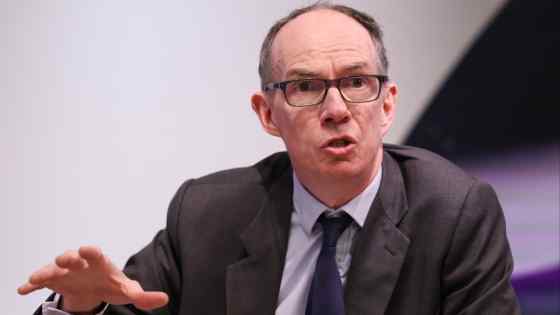
Still, now that I have left the place, I feel no compunction to respect their silly rules on anonymity. So whilst directing your attention to the new blogs by Charlemagne and Bagehot, I would also like to take the opportunity to blow their covers. Charlemagne’s name is David Rennie. I’ll say that again: DAVID RENNIE. Bagehot’s name is ANDREW MILLER.
Both of their new blogs are disturbingly good and prolific. My feeling that Charlemagne is on the right lines, was admittedly boosted by the fact that he appeared to like my most recent column on Europe. But the rest of his post is devoted to a hilarious evisceration of the euro-views of Simon Heffer of the Daily Telegraph. I was also glad to see that he shares my low opinion of the European Parliament. Describing it as a “student union with better expenses” is about right
Bagehot has also got off to a fast and fluent start. (With luck, he won’t be able to keep it up.)
Reading both of these new Economist blogs, I was struck that they were both hitting a similar theme. Bagehot-Miller was bemused that the British press was so determined to portray Gordon Brown’s trip to Washington as a disaster, whatever the facts. Charlemagne-Rennie was surprised that the British press was determined to write up the most recent European summit as a disaster, whatever the facts.
So what conclusion can we reach? Perhaps that the British media are a bunch of naysaying whingers, who know that a good disaster is always better copy than a boring success story.

Back to Gideon Rachman
This blog covers a variety of topics from US foreign policy to European politics and the Middle East - and whatever else happens to be in the news or catch my attention. I joined the FT as chief foreign affairs commentator in 2006, after a 15-year career at The Economist which included stints as a correspondent in Brussels, Bangkok and Washington. I write a weekly column on foreign affairs, which appears in the paper on Tuesdays. Occasionally my FT colleagues contribute posts to this blog.
Geoff Dyer is the FT's China bureau chief. He has been a correspondent in Shanghai and in Brazil and has also covered the pharmaceuticals and biotechnology industries from London.
Roula Khalaf is the FT's Middle East editor. She has worked for the FT since 1995, first as North Africa correspondent, then Middle East correspondent and most recently as Middle East editor. Before joining the FT, she was a staff writer for Forbes magazine in New York.
James Blitz is the FT's defence and diplomatic editor. He has been the FT's political editor, based in London, and Rome bureau chief. James is a former Moscow bureau chief for the Sunday Times.
Alan Beattie is the FT's world trade editor. He has previously been economics leader writer and spent two years in Washington DC as chief US economics correspondent. Before joining the FT, Alan was an economist at the Bank of England.
Victor Mallet is the FT's Madrid bureau chief. He is a former Asia editor of the FT, and, in more than 20 years at the organisation, has also worked in Africa, Europe and the Middle East. In 1990 he escaped from Kuwait after being one of the few foreign correspondents there when Iraq invaded.
Stefan Wagstyl is the FT's eastern Europe editor, co-ordinating coverage of the region. He has also been the FT's bureau chief in Tokyo and New Delhi.