
It is tempting to blame all the demos and violence in the streets of London on the economic crisis. But I think that would be a misreading. The fact is that the British - and many other Europeans - have long enjoyed a good riot. The thing that needs explaining is why we haven’t had much social disorder since the turn of the century, not why it has returned now.
When I was growing up in London we had the Notting Hill riots in the 1970s, the Brixton riots in the early 1980s, riots in Liverpool, all the disorder linked to the miners’ strike, the Poll Tax riots at the end of the Thatcher era. If you want to go a lot further back, you could mention the Gordon Riots in 1780; the Chartist riots in the mid-nineteenth century.
And that’s just Britain. Obviously, the French have an even livelier tradition of social disorder and street riots. And just before 9/11, it began to look as if no meeting of European leaders would be complete without being set against a background of anarchist demonstrations. In July 2001, I went to an EU summit in Gothenburg where most of the city seemed to have been trashed by the “black blocs” of assorted European anarchists.
But, after 9/11, all this seemed to have stopped for a while. Maybe security was tightened up; maybe even the anarchists felt that protests against globalisation were no longer quite the thing. Whatever the reason, for several years things have gone quiet. Of course, there were big demonstrations against the Iraq war - but they had a coherence and a focus that the anti-capitalist demos lack.
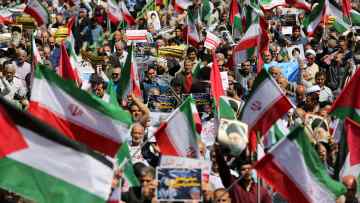
So, while it is tempting to hail the street protests against the G-20 as signalling some sort of new political era of protest, I think it is the opposite. It’s back to business as usual.

Back to Gideon Rachman
This blog covers a variety of topics from US foreign policy to European politics and the Middle East - and whatever else happens to be in the news or catch my attention. I joined the FT as chief foreign affairs commentator in 2006, after a 15-year career at The Economist which included stints as a correspondent in Brussels, Bangkok and Washington. I write a weekly column on foreign affairs, which appears in the paper on Tuesdays. Occasionally my FT colleagues contribute posts to this blog.
Geoff Dyer is the FT's China bureau chief. He has been a correspondent in Shanghai and in Brazil and has also covered the pharmaceuticals and biotechnology industries from London.
Roula Khalaf is the FT's Middle East editor. She has worked for the FT since 1995, first as North Africa correspondent, then Middle East correspondent and most recently as Middle East editor. Before joining the FT, she was a staff writer for Forbes magazine in New York.
James Blitz is the FT's defence and diplomatic editor. He has been the FT's political editor, based in London, and Rome bureau chief. James is a former Moscow bureau chief for the Sunday Times.
Alan Beattie is the FT's world trade editor. He has previously been economics leader writer and spent two years in Washington DC as chief US economics correspondent. Before joining the FT, Alan was an economist at the Bank of England.
Victor Mallet is the FT's Madrid correspondent. He is a former Asia editor of the FT, and, in more than 20 years at the organisation, has also worked in Africa, Europe and the Middle East. In 1990 he escaped from Kuwait after being one of the few foreign correspondents there when Iraq invaded.
Stefan Wagstyl is the FT's eastern Europe editor, co-ordinating coverage of the region. He has also been the FT's bureau chief in Tokyo and New Delhi.