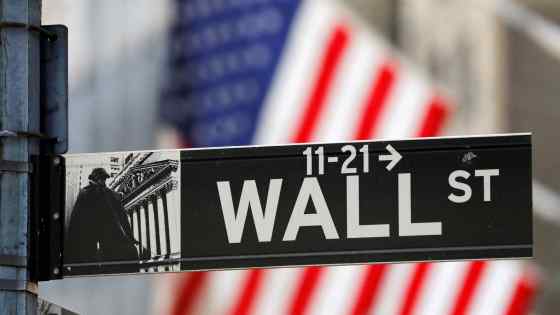

The prestige of the economics profession is meant to be at a low ebb at the moment. But prominent academic economists are still regularly recruited for the very top positions in the American government - Ben Bernanke is at the Federal Reserve, Larry Summers is co-ordinating economic policy from the White House.
By contrast, it is no longer fashionable to pick political scientists for the top positions making US foreign policy. The days when Henry Kissinger could go directly from Harvard to a job as the director of the National Security Council seem long gone. Some blame this on anti-intellectualism in American life. But there are also eminent professors who see the fault as lying within the groves of academe themselves. Joe Nye, former head of the Kennedy school at Harvard, has just published a piece bemoaning the irrelevance of much political science to practical policymaking. Steve Walt, another Harvard professor, backs him up - arguing that academics who pursue real-world issues are even penalised and looked down upon.
To a certain extent, Walt and Nye are living refutations of their own thesis. Nye served in a high position in the Pentagon during the Clinton administration and is tipped for an ambassadorship under Obama. Walt has influenced the policy debate with his co-authored book on the “Israel Lobby”.
Still, I know what they mean. I can still remember my shock and confusion when I first sampled a political science course at Princeton. I was used to the empirical, rather literary style of political analysis that is taught if you take a history degree in Britain. But I now found myself confronted with a world, dominated by abstract models and obsessed with number-crunching. I looked at something called the “Journal of Conflict Resolution” and found articles about real-world political problems which seemed just to be a mass of quadratic equations. It is hard to believe that anybody actually trying to resolve a conflict would find this kind of stuff useful, or relevant.
So it is perhaps unsurprising that the phones did not ring off the hooks in the political science departments of America’s finest universities, as the Obama administration went looking for talent. On the other hand, the new administration has been recruiting heavily from the think-tanks of Washington and New York. Many of their staff are former academics - but their work is very heavily tailored to the kind of real-world issues that confront a government. In fact, the think-tankers are often accused of having the opposite problem to the academic political scientists. They are often so interested in getting a government job, that they will self-censor to avoid offending current political sensibilities.
I suppose recruiting think-tankers into government shows an admirable willingness to draw upon outside expertise. But the transition must be extraordinary for these former analysts and scribblers. Many of them have never managed anything more than a research assistant. And suddenly, they are placed in the White House or the Pentagon and given real-world responsbilities and real soldiers to play with. It’s all a long way from the seminar room.

Back to Gideon Rachman
This blog covers a variety of topics from US foreign policy to European politics and the Middle East - and whatever else happens to be in the news or catch my attention. I joined the FT as chief foreign affairs commentator in 2006, after a 15-year career at The Economist which included stints as a correspondent in Brussels, Bangkok and Washington. I write a weekly column on foreign affairs, which appears in the paper on Tuesdays. Occasionally my FT colleagues contribute posts to this blog.
Geoff Dyer is the FT's China bureau chief. He has been a correspondent in Shanghai and in Brazil and has also covered the pharmaceuticals and biotechnology industries from London.
Roula Khalaf is the FT's Middle East editor. She has worked for the FT since 1995, first as North Africa correspondent, then Middle East correspondent and most recently as Middle East editor. Before joining the FT, she was a staff writer for Forbes magazine in New York.
James Blitz is the FT's defence and diplomatic editor. He has been the FT's political editor, based in London, and Rome bureau chief. James is a former Moscow bureau chief for the Sunday Times.
Alan Beattie is the FT's world trade editor. He has previously been economics leader writer and spent two years in Washington DC as chief US economics correspondent. Before joining the FT, Alan was an economist at the Bank of England.
Victor Mallet is the FT's Madrid correspondent. He is a former Asia editor of the FT, and, in more than 20 years at the organisation, has also worked in Africa, Europe and the Middle East. In 1990 he escaped from Kuwait after being one of the few foreign correspondents there when Iraq invaded.
Stefan Wagstyl is the FT's eastern Europe editor, co-ordinating coverage of the region. He has also been the FT's bureau chief in Tokyo and New Delhi.