



Tag: VC

Maija Palmer

Venture capital investors appear to be growing increasingly wary of European companies. In 2011, they put just E4.4bn into 1,012 start-ups in the region, a 14 per cent drop from the previous year, according to Dow Jones VentureSource.

This was the lowest annual deal count since Dow Jones began tracking investments in Europe in 2000.

Chris Nuttall

Google and Facebook have ceased to innovate, according to venture capitalist Fred Wilson, an allegation that John Doerr, a rival VC and Google board member, found hard to refute at the Web 2.0 Summit in San Francisco.

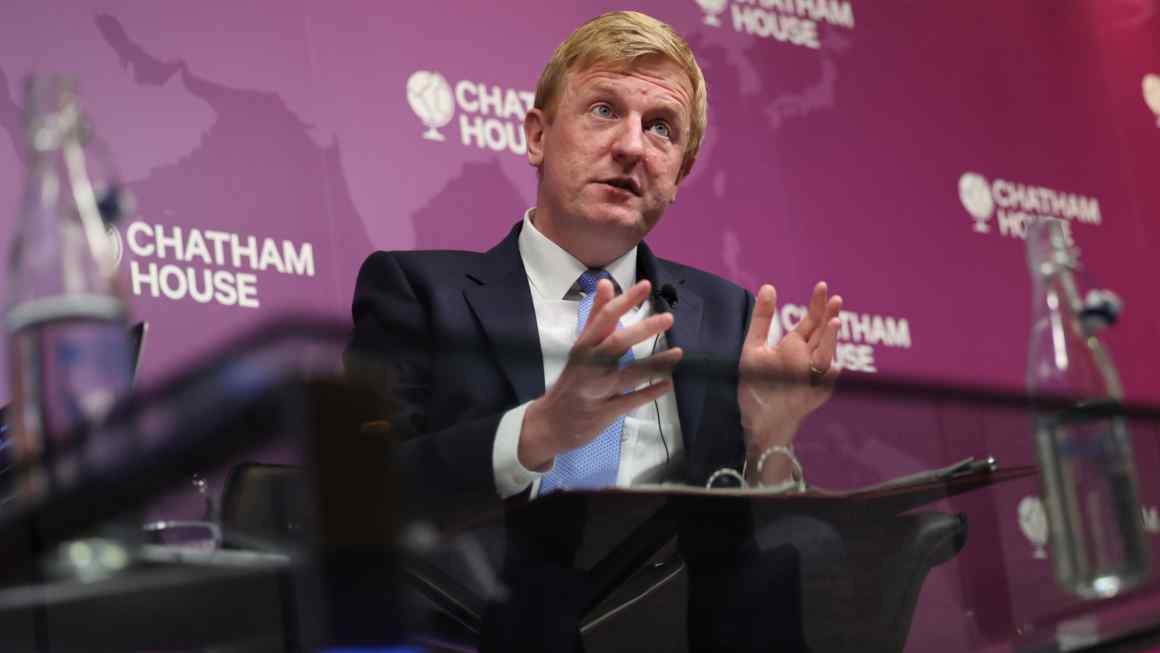
Mr Wilson (pictured right, photo courtesy of Web 2.0 Summit), author of the popular A VC blog and a managing partner at Union Square Ventures, said Google had not come up with anything truly transformative that was a home-grown product since Gmail, introduced in 2004. It had relied on acquisitions instead to develop new services.

Tim Bradshaw

This summer has seen some interesting blog posts from the venture capital community on the “rise of the super angels” – seasoned entrepreneurs who’ve cashed out and are reinvesting in the next generation.

Seedcamp, the European investor and events programme, is a big part of that story. Next week will see the fourth Seedcamp week in London, with 23 young companies jostling for up to €50,000 in investment and expert mentoring in what’s been dubbed the “X Factor for startups”.

But the increasingly active angel community means that Seedcamp has found itself facing competition too.

David Gelles

Silicon Valley cheered three months ago when there was a slight uptick in venture capital investment during the second quarter of the year. Sure, investment was down 50 per cent from a year ago, but at least it was up from the first quarter, representing a “new normal” from which growth could begin anew.

Turns out the celebrations were premature.  Investments in US venture-backed companies dropped in the third quarter, putting 2009 on track to be the worst year since 2003, according to new data from  Dow Jones VentureSource. The total number of deals was up to 616, from 595 the previous quarter. But the total dollars invested was down to $5.1bn from $5.4bn.

“The slow recovery we’ve seen for venture capital has faltered,” said Jessica Canning, director of global research at Dow Jones VentureSource. “As liquidity and fundraising lag after the economic meltdown in 2008, investors have no choice but to keep a tight rein on investments until the industry is on more solid ground.”

Nor are many venture firms raising new funds. Just 17 VC firms raised new funds in the third quarter, the smallest number since the third quarter of 1994, according to Thomson Reuters and the National Venture Capital Association.

What’s worse, VentureSource didn’t take a rosy view of the future.

Richard Waters

To cheer themselves up in these dark times, Silicon Valley’s venture capitalists have taken to drawing comparisons with tech’s pre-bubble days. If investment activity has returned to levels seen in the mid-1990s, the argument goes, this at least represents a healthy baseline: it is the “new normal” from which things start to pick up again.

So they should get a kick out of the latest figures from the National Venture Capital Association. Based on the $3.7bn put to work in the second quarter (up a little from the first quarter, but down by more than 50 per cent from a year ago), the total invested this year is projected to reach 1996-1997 levels. Of course, back then the VC industry provided a living for far fewer people. The shake-out has barely started.

Chris Nuttall

Twitter’s usage has been soaring into the stratosphere of late; now its finances are receiving a similar boost.

The microblogging service announced on Friday it had closed a funding round led by A-list VC firms Benchmark Capital and Institutional Venture Partners.

The figure is $35m, but there is no official word on what valuation that gives the company.

Tim Bradshaw

Is this the best time there’s ever been to be a start-up? Or does the current banking crisis signal the death of American-style risk-taking for new businesses seeking funding? Each view was espoused by two serial tech entrepreneurs at Seedcamp, the tech start-up conference in London.

Brent Hoberman, founder of Lastminute.com and latterly Mydeco, a furniture site, was resolutely optimistic.

“For people who can raise money, it’s the greatest opportunity there’s ever been, because the differential is so much larger,” he said. “The big corporates will retrench a bit – they will reject all innovation and all innovative ideas. So if start-ups can be innovative, their role is even more important.”

But Martin Varsavsky, the Argentinian telecoms entrepreneur behind Viatel and latterly Fon, a wifi-sharing community, was as despondent as Mr Hoberman was enthusiastic. “I’m really sorry that the group of people most likely to finance whatever we were going to do are in such deep shit.”

The US had already lost its leadership in electronics and cars, he said. “In the last few days I think America lost the leadership in banking. It’s a pity because American investment banks had the best personality vis-à-vis guys like us,” he told an audience of entrepreneurs.

“I’m shocked by the developments of the last few days and especially shocked because they started in America,” Mr Varasavsky continued. “It’s US people who over-borrowed and caused enormous grief to themselves, to the point where I believe the future of financing will never be the same.”

Mr Hoberman advised Seedcamp’s 23 start-ups, who are pitching for up to €50,000 in angel funding, to take a two-year view, and raise more money than they needed if possible. “Assume these two years are going to be pretty miserable from the revenue side, but if you can get through that, you will have a two- to three-year lead over traditional players.”

But Mr Varsavsky said the sudden consolidation in the banking sector was bad news for start-ups seeking funding. “The larger the bank gets, the less interested they are in getting involved in companies like us.”

“European VCs are still sitting on a lot of cash,” countered Mr Hoberman. “Most of them are still going to want to put that to work. They will be tighter on valuation. The risk is higher. But that doesn’t mean it’s going to be impossible to raise money.”

The even-more-lucky recipients of Seedcamp’s funds will be announced on Friday.

Tim Bradshaw

Yell investors, who have seen their shares fall from over 400p to less than 100p so far this year, may take some convincing that there is still value in the Yellow Pages market as it moves online.

But Pelle Tornberg, the former chief executive of Metro International, the freesheet empire, has always harboured ambitions to sneak into the yellow pages market, and the rise of disruptive online-only sites such as Qype have given him an opening.

Qype collects data and reviews from its users for everything from restaurants and hairdressers to plumbers and legal services. It is one of many online services which are having a field day as Yell struggles to move its print dominance online. Rivals include TrustedPlaces in the UK and Yelp in the US.

Mr Tornberg said he “begged” Qype to let him onto the board because “it is one of the few sites that has come up with an idea to modernize the yellow pages business”. It is also a “proven success”, with 5.1m unique monthly users across Europe.

“I was impressed by the management team,” he told the FT. “They have started the way you should do with low costs, and taken it step by step. Also compared to a number of other services they are one of the few businesses where user-generated content makes sense.”

Qype’s reviews pull in search traffic that individual plumbers’ or restaurants’ sites lack the scale to achieve by themselves. “User generated content really adds quality to the product,” said Mr Tornberg.

Qype has also raised €8m in a second round of financing led by Wellington Partners, new investors who are putting partner Eric Archambeau on the board. Existing backers Advent Venture Partners and Partech International also topped up, bringing its total funding to €13m.

It began in Germany in 2005, opening UK and French domains in the past year, and claims over 5.1m monthly unique users across the group. The funds will help it expand into more countries, according to Frederic Court of Advent. “It’s not by coincidence we hired Pelle – one of the few people who have a track record at internationalising media businesses,” he told the FT. Southern Europe is targeted by the end of this year, while Eastern Europe and Russia are slated for 2009. The funds will also help hire more sales people.

Stephan Uhrenbacher, Qype’s founder, told the FT when he visited London last month that local businesses still aren’t at a stage where they come to the web to buy ads themselves, hence Qype’s need for telesales. Even though traditional yellow-pages services have larger sales resources, they have lower traffic, he said. While Google is a competitor, Mr Uhrenbacher is confident Qype has a stronger community. “The community is the barrier to entry that all the yellow pages people face.”

The biggest deal in user-generated reviews was Microsoft’s acquisition of Ciao, which uses the content to drive search traffic to its price comparison service, rather than charging businesses for ads like Qype. Closer to Qype’s market, March saw Gcap, the radio group, take a majority stake in WeLoveLocal for £450,000, while Techcrunch reported in August that Beer In the Evening, a venerable British pubs review site, sold for just £30,000 last year.

While neither Qype nor its backers will reveal the valuation at which it raised its latest round, Mr Tornberg’s sales experience will be welcome to help justify the site’s apparent premium.

Tim Bradshaw

A who’s who of European technology entrepreneurs will be providing guidance and mentoring to a new generation of start-ups at this year’s Seedcamp. Founded by Saul Klein of Index Ventures and run by Reshma Sohoni, formerly of 3i and Softbank Capital, Seedcamp aims to build and support a community of European tech entrepreneurs, culminating in its main event in London this September.

The best-known entrepreneurs on this year’s advisor list are Niklas Zennstrom, founder of Skype, the internet telephony service, and more recently Joost, a web video provider; and Brent Hoberman of travel site Lastminute.com and, latterly, Mydeco, an online furniture retailer.

The rest of the advisors are all big names on the European start-up scene too, as founders of many of Europe’s largest recent tech exits. They are: Michael Birch of social networking site Bebo and Kevin Cornils of online marketing provider Buy.at, both bought by AOL earlier this year; Martin Stiksel of Last.fm, an online community of music fans for which CBS paid $280m in May 2007; Marten Mickos, chief executive of open-source database provider MySQL, sold to Sun Microsystems for around $1bn in January; and Jyri Engestrom of Jaiku and Tommy Ahlers of Zyb, mobile application firms acquired by Google and Vodafone respectively.

Alongside UK entrepreneurs who have yet to flip their companies for millions of dollars, and representatives from the big US tech companies who’ve been writing the cheques, this group will bring contacts, business advice and generally help start-ups at the week-long conference to “think big and aim high”.

Since May, Ms Sohoni has travelled led mini-Seedcamp events in Paris, Berlin and Kiev. But in spite of increasing numbers of new tech companies springing up in eastern Europe, she says London remains the main event. “We see the UK and London as a critical hub for start-up activities,” she says, especially for European companies with global ambitions.

Common technological themes among the entrepreneurs presenting across Europe so far include online and mobile gaming, personal finance applications, open source and variations on the “semantic web” – “the idea of using natural language to bring intelligence out of the information that’s out there”, according to Ms Sohoni.

But for those teams still applying to one of the 20 places at Seedcamp, she notes a preference of investors for business models based on transactional payments rather than advertising. “Everybody likes to put [advertising] up on their slide as a business model,” she said. “We were careful about that last year but are even more so now.”

Ms Sohoni also warns that almost half of last year’s applications came from social networking sites – none of which received investment.

“We are looking for globally applicable businesses that can grow beyond their local languages,” she says.

Seedcamp Week runs from September 15 to 19. The deadline for entries is August 10. The Financial Times is a media partner at the event.

FT techfeed

Tech Blog

Analysis & reviews

About this blog Blog guide
Richard Waters, Chris Nuttall and April Dembosky in the FT's San Francisco bureau share their views - plus tech insights from Tim Bradshaw and Maija Palmer in London and Robin Kwong in Taipei.


Read about the authors


To comment, please register for free with FT.com and read our policy on submitting comments.

All posts are published in UK time.

Contact the FT Tech Hub team: richard.waters@ft.com, chris.nuttall@ft.com, april.dembosky@ft.com, maija.palmer@ft.com, robin.kwong@ft.com and tim.bradshaw@ft.com.

See the full list of FT blogs.

Archive

« AprMay 2012
M T W T F S S
 123456
78910111213
14151617181920
21222324252627
28293031  

Tech analysis and reviews

Coding for dummies

Execs learn geek techniques

Time for smartwatches?

Sony synchronises watches with smartphones

Tags

advertising android apple AT&T Electronic Arts Europe Facebook funding google hacking hewlett-packard HP htc instagram intel iPad iphone IPO Jawbone Lenovo London megaupload microsoft Mobile Netflix Nintendo nokia nokia lumia patents privacy samsung smartphones social media social networking Sony SOPA Spotify story of the week Tablets Toshiba twitter venture capital Wikipedia Yahoo Zynga