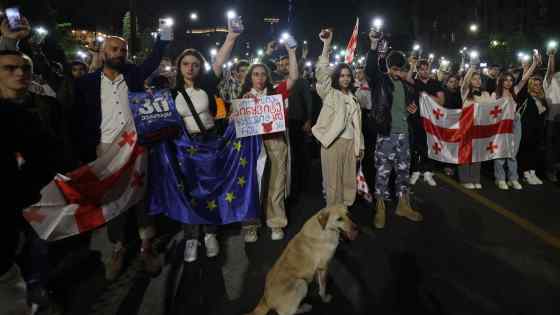

In choosing “the protester” as their Person of the Year, Time Magazine had in mind anti-corruption crusaders in India and the “Occupy” movements in North America and Europe, but above all the young men and women who surged into the squares of Tunis, Cairo, Damascus, Sana’a and Benghazi; protesters who gave a whole new meaning to the term “Arab street”. Long used to denote a sullen, inchoate, unfocused rage, it now came to mean a yearning for democracy, for a political form long identified with the western world alone.
What will happen, in 2012 and beyond, to the quest for democracy in the countries of the Arab world? Will it be further deepened by the establishment of representative government, a free press and an independent judiciary? Or will it be aborted by new forms of authoritarianism or a return to older tribal rivalries?
A transition to democratic consolidation will depend in part on the models the protesters seek to uphold. Rather than looking west, Arab democrats should study the experience of the newer democracies that lie to their east. Consider India, where every general election (there have been 15 thus far) represents the largest expression of the democratic franchise in human history; where the military is kept firmly away from politics; and where people of all faiths have equal rights under the constitution and in law.
Even more relevant than India is Bangladesh. Once written off as a basket case, this country now has an average annual economic growth rate close to five per cent. It is self-sufficient in food and has a large manufacturing sector that employs more than a million women. The military has retreated to the barracks, the Islam on display is more ecumenical than literalist, and there is a vigorous civil society.
Bangladesh’s turnaround is the subject of a fine recent book by David Lewis, which went to press before the Arab Spring and now acquires great salience because of it. Can a culture steeped in Islam respect women’s rights? Can a polity dominated by the army break free of it? Can a desperately poor country assure decent education and health care at the same time as promoting economic growth? These are all questions pertinent to the Arab protesters – who might find answers in a country to their east that does not yet appear to be on their horizon.
The writer holds the Philippe Roman Chair in history and international affairs at the London School of Economics