
Barack Obama’s most cherished illusion during his first term was the possibility of co-operation with Republicans. Time and again, the president came to Congress bearing pre-emptive concessions – on his original economic stimulus package, his healthcare plan, and the 2011 debt ceiling fight – only to have the door slammed in his face by an obstructionist Republican party that viewed politics as a zero-sum game. Because Mr Obama has long seen himself as a conciliator, he was unwilling to let go his faith that if he only hewed to the path of moderation, his opponents would eventually have to meet him there.
The A-List
The A-List provides timely, insightful comment on the topics that matter, from globally renowned leaders, policymakers and commentators.
The president’s efforts at compromise yielded him little. He won almost no Republican votes for any of his major initiatives. Being left hanging with his hand outstretched made Mr Obama look weak and ineffectual during much of his first term, despite major legislative accomplishments. It disappointed his liberal base, which would have preferred more stridency to match the GOP. The one advantage of Mr Obama’s relentless reasonableness was that it rendered him immune to Republican charges of ruthlessness and extremism in the past election. Through the long, deep recession, Mr Obama’s approval rating never fell lower than the forties. Congress’s rating bottomed out at 12 per cent, where it remains today.
Republicans are not revaluating their obdurate approach for reasons of ideology and individual self-interest (compromisers get “primaried” by well-funded true-believers). In recent weeks, however, we have seen the tentative emergence of a quite different second-term Obama: one shorn of his fantasies about compromise, contemptuous of his opponents, and almost eager to stand on principle. Obama II may be no more likely to get more legislation passed than Obama I. Politically, however, he is a bolder and more appealing figure: less the hostage, more the reluctant gunslinger of the classic Western.
More
On this story
- Roger Altman Washington and the debt crisis
- Cracks widen in US debt ceiling debate
- Wolfgang Munchau US joins misguided pursuit of austerity
- In depth US fiscal cliff
- Edward Luce Tea Party’s moment of maximum leverage
On this topic
- Gideon Rachman The myth of the imperial presidency
- Half of US states set to snub healthcare law
- Edward Luce Obama’s path to Xanadu runs via Jerusalem
- Obama fires first in US fiscal battle
The A-List
During the year-end fiscal cliff negotiations, liberals feared Mr Obama would once again cave to economic blackmail by acceding to the extension of George W. Bush’s tax cuts, as he did in 2010, or caving on debt ceiling concessions, as in 2011. Instead, it was Mr Obama who stood his ground and House Speaker John Boehner who blinked. Bolstered by his new mandate, Mr Obama, stood firm and got the first tax agreement in two decades tilted in favour of the middle class rather than the wealthy.
What Mr Obama did not get was a grand bargain covering the pending “sequester” on spending or another increase on the debt ceiling, America’s statutory debt limit, which is shortly to expire again. This time, however, the president is resolved to handle the conflict differently; his cower has turned to swagger. “I will not have another debate with this Congress over whether or not they should pay the bills that they have already racked up through the laws that they passed,” he declared on New Year’s day, laying down a clear marker.
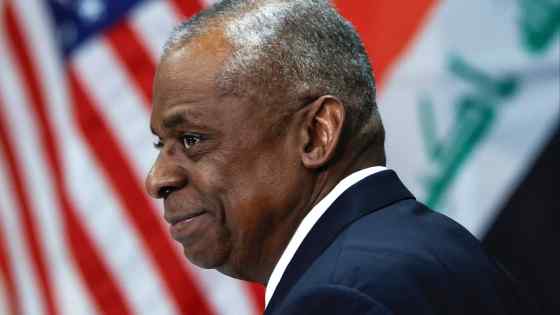
The president is similarly spoiling for a fight with his nomination of Chuck Hagel to be secretary of defence. Conservative foreign policy hawks who remember the former Republican senator’s opposition to the Iraq war consider him too reluctant to challenge Iran, insufficiently supportive of Israel, and too eager to cut military spending. At the ceremony to announce the nomination this week, Mr Obama almost dared them to take on their former colleague, presenting Mr Hagel as a wounded and decorated Vietnam veteran who “bears the scars of war”. It went without saying that he also bore the scars of the moderate Republican, a species hunted to near-extinction.
On a range of other issues, such as gun control, the president’s new tone suggests that he prefers going it alone to beating his head against a wall of ultraconservative opposition. This means either proceeding unilaterally with more limited executive orders or forcing the Republicans to stand up and be counted in opposition. There is probably some political strategy here. The GOP continues to control the House only because turnout in midterm elections is smaller, older, and whiter than in presidential years. Picking fights on social issues is probably the best way for Mr Obama to turn out the Democratic base in 2014.
Recapturing control of Congress in his final two years remains a distant dream. The real reason we are seeing the emergence of a different Barack Obama is simply the late-dawning realisation that compromise is impossible with the enfeebled Mr Boehner and his perfervid rank-and-file. Lacking a partner for peace, war has become the president’s only option.
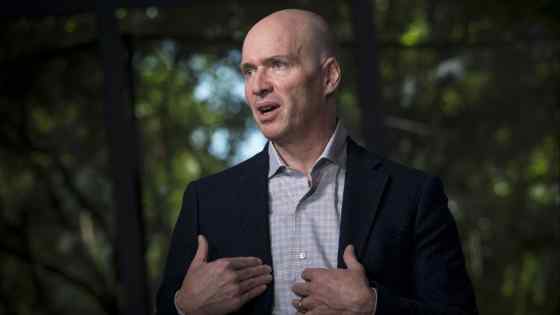
The writer is chairman of the Slate Group