


Afghanistan and Nato’s two-tier alliance

No sooner had Tony Blair announced a withdrawal of some British troops from Iraq, then it emerged that more soldiers will be going to Afghanistan. This is not so much a scaling back of Britain’s military commitments overseas, as a re-deployment from one battlefront to another.

There is an unstated logic behind the British move. Iraq is going very badly – and the war may eventually be lost. Under these circumstances, it becomes all the more crucial that the western allies prevail in Afghanistan. Two defeats in the "war on terror" (or whatever you want to call it) would be catastrophic.

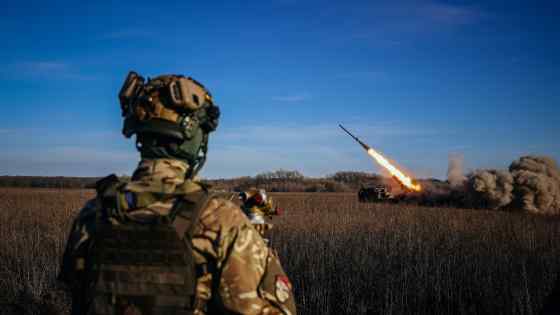
The British are not alone in sending re-enforcements to Afghanistan. The Americans have just announced a similar move, and the Australians are planning to send more troops too. Everyone is preparing for the much ballyhooed "spring offensive". The cliche in Nato circles is that – "We have to make sure that it is our offensive, not the Taliban’s." There is plenty of (justified) anxiety about the way the war is going. But all the same, in recent months, the military situation has improved a little. Things are precarious, but not remotely as bad as in Iraq.

But he decision to beef up troop levels in Afghanistan is creating new tensions within the western alliance. Senior American and British officials complain that Nato is becoming a "two tier alliance" – divided between those countries that will fight and those that will not. There is particular ire reserved for the Germans – who have steered well clear of the areas of Afghanistan that might actually involve real combat.

A top American is simultaneously understanding and exasperated, arguing that – "Most of these governments sold this war to their populations as ‘light peacekeeping’, but they have suddenly realised they are in a war and the war is on TV." But – the official argues – the future of Afghanistan and of Nato may depend on countries like Germany taking much more responsibility for real military operations. As another American official acidly notes – "Afghanistan was the good war, wasn’t it? This was the one they agreed with."

The trouble is that even if European elites agreed with the Afghan war, their populations were never quite as convinced. As Quentin Peel points out in today’s FT, tensions over troop deployments in Afghanistan are causing political problems all over Europe – and played a direct role in the fall of the Italian government.

A lot is now going to depend on what happens with the "spring offensive". If it goes well for Nato, then the political tensions over Afganistan may subside. If things go badly – and the call goes out for more troops – Afghanistan could be the cause of the next great split in the western alliance.

The World

with Gideon Rachman

About this blog About Gideon Blog guide
Gideon Rachman and his FT colleagues debate international affairs. Read more on the authors.

Gideon became chief foreign affairs columnist for the Financial Times in July 2006. He joined the FT after a 15-year career at The Economist, which included spells as a foreign correspondent in Brussels, Washington and Bangkok. He also edited The Economist’s business and Asia sections.

His particular interests include American foreign policy, the European Union and globalisation
To comment, please register for free with FT.com and read our policy on submitting comments.

All posts are published in UK time.

Contact gideon.rachman@ft.com about The World blog.

See the full list of FT blogs.

FT World News page

Read FT world news coverage from our network of international correspondents.

The FT’s Brussels blog

For views and opinions on the European Union from Peter Spiegel, Joshua Chaffin, Alex Barker and Stanley Pignal, follow the FT's Brussels blog here.

Tags

arab spring Argentina austerity bailout Barack Obama Berlusconi Bo Xilai Brussels China Colombia Cuba Davos ECB EFSF Egypt elections EU Europe European Commission Eurozone Eurozone crisis Fidel Castro France François Hollande Greece IMF In the Picture Iran Italy Klaus Schwab Live blog Merkel Mexico Nicolas Sarkozy Papademos Papandreou Putin Romney Sarkozy Spain Syria US election Venizelos WEF World Economic Forum

The blog day by day

« Jan Mar »February 2007
M T W T F S S
 1234
567891011
12131415161718
19202122232425
262728