

Monthly Archives: June 2007

For reasons too dull to disclose, I am currently in Finland. However, I am following the British cabinet re-shuffle closely and I see that we have a new foreign secretary.

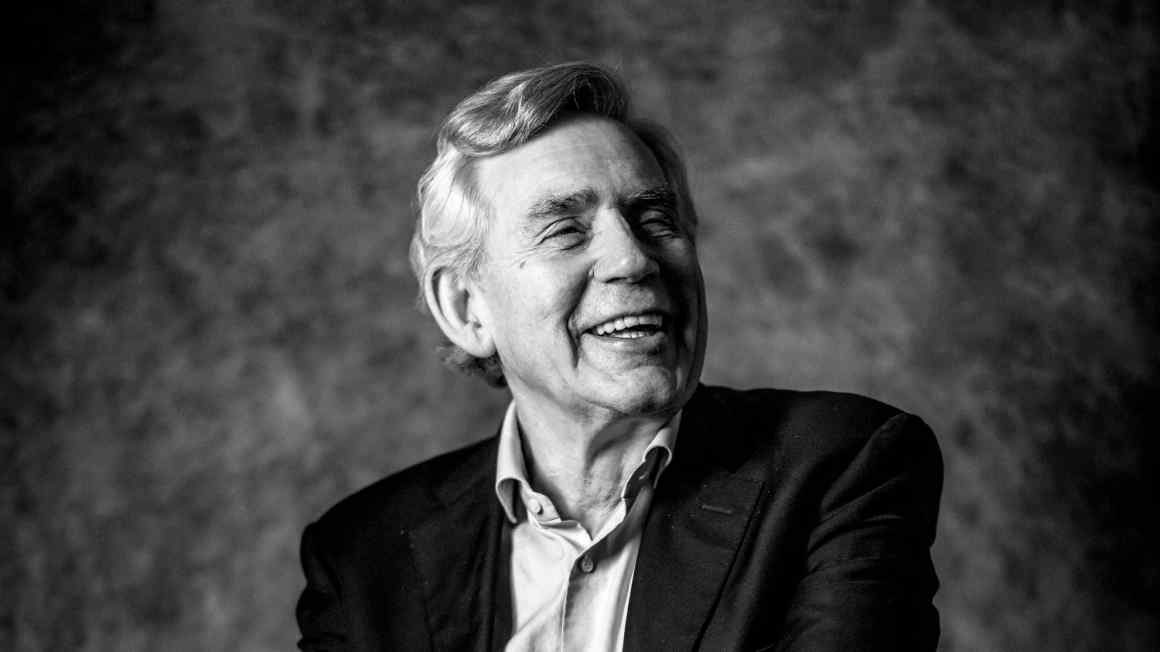
David Miliband is young (41) and clever – unlike his predecessor Margaret Beckett. She was last seen sobbing inconsolably in the House of Commons, after Tony Blair’s farewell statement. Gordon Brown put a consoling arm around her. Then – that evening – he sacked her. That’s politics.

So what will Miliband be like as foreign secretary? Point one – he is obsessed by global warming. His last job was as environment secretary and he became increasingly pre-occupied by climate change. I would guess that his top personal priority will be working on the post-Kyoto agreement.

Is Tony Blair the right man to bring peace to the Middle East? Plenty of people will have their say on that if – as predicted in today’s FT – Blair is appointed as a new envoy to the area. But, to my mind, the more interesting question is whether the Middle East is the right place to bring peace to Tony Blair.

Consider the problem. Here is a man who is leaving office reluctantly after 10 years in Downing Street. He is uncomfortably aware that his reputation for competence and morality has been badly damaged by the Iraq war. He is seeking redemption – and now wants to do something unarguably good. He wants to save something. He could try to save the planet from climate change – but Al Gore seems to have cornered that market. He is itching to save Africa – but there is no formal job to apply for. Oh well, it will have to be the Middle East.

Tony Blair is working right up to the last minute. Some FT colleagues and I went to see him earlier this week, for top-secret discussions about the future of Europe. But just as interesting as the off-the-record stuff (I thought), was what Blair had to say about the Oscar-winning film, “The Queen” – which portrays Blair and the Queen, dealing with the aftermath of the death of Princess Diana.

Last night I went to the London launch party for Christopher Hitchens’ new book, God is not Great – The Case Against Religion. The book seems to have hit a nerve. It is on the New York Times best-seller list – in fact it briefly got to number one.

Hitchens was my boss (or possibly just colleague, he’s not a very managerial type) in Washington in the early 1990s. We were both working for a now defunct British newspaper called The Sunday Correspondent – nicknamed “The Despondent” because of its irreversible downward spiral. I can still remember our first lunch. I would like to say that this is because of the sparkling nature of the conversation. In fact, it is because of the frightening amount that we drank. I staggered home afterwards and fell asleep for a few hours. At 5pm I got up and called Hitchens to discover that he had gone home and written a 2,000 word essay on WH Auden.

According to an opinion poll released today, there is a new front-runner for the Republican nomination for the presidency in 2008 – and he hasn’t even officially declared yet. Fred Thompson is an actor and a former senator from Tennessee. Officially, he is still thinking about whether to run. But the Rasmussen poll already puts him one point ahead of Rudy Giuliani, who hitherto has been the Republican front-runner. Other polls have the two men neck-and-neck.

Thompson gave a speech at Policy Exchange, a London think-tank, today. So I went along to see what all the fuss is about. He certainly looks the part – but then he would because he is an actor. He is very tall and exudes a certain authority, which has allowed him at various times to play roles as the White House Chief of Staff and the head of the CIA. His biggest recent part was as Arthur Branch in "Law and Order" – which apparently is a very popular TV show; although when he started to speak he sounded more like "Deputy Dawg" because of his deep southern accent. He already has a well-honed line – ready for the campaign trail – that "eight years in Washington made me long for the realism and sincerity of Hollywood."

Tony Blair thinks that the British media are too frenzied and aggressive (see yesterday’s post). But are the French media too passive and respectful of authority?

The question is raised by the current controversy over whether Nicolas Sarkozy was drunk at a press conference at the G8 summit. The suggestion was first made by a Belgian television newscaster and the accompanying video is certainly amusing and suggestive. But no French television station broadcast the footage. And the main French papers also ignored the story, until the Belgian TV newsreader was forced to apologise – a fact which was then dutifully reported in France.

Tony Blair’s attack on the media may or may not be fair. But it does illustrate an iron law of British politics. All prime ministers end up fearing and hating the press.

The first time I interviewed Blair – shortly after he became PM in 1997 – he made rather a point of underlining that he was going to avoid this particular pitfall. I remember him saying with a laugh that his predecessor – John Major – had been so obsessive about the newspapers that he had anxiously checked the first editions at 11 at night. "I don’t bother with all that," said Blair with an airy laugh.

I got lots of correspondence about my column last week – in which I suggested that the era of American global dominance is coming to a close. Some of it was rank abuse – accusing me of everything from “penis envy” to loathing of the United States.

But there was also a much more reasoned line of argument. This was essentially that I had been much too credulous about Goldman Sachs’s projection that the Chinese economy will be larger than that of the US by 2027. I got lots of e-mails making this point. Here is one (the author prefers to remain anonymous):

“You should go back and read the pieces in the 80′s on Japan overtaking US, before that there was a Brazilian miracle, and the 50s the Soviets were going to take over the world because THEY have figured out how to get things done."

Linear earnings projections did wonders for the internet stock valuations in the 1990s (you just had to extrapolate the same growth rate 10 years into the future), and it seems like political scientists are guilty of the same sin. All of a sudden structural issues in the Chinese society do not matter, (of course 15 years ago the orthodox view was that sustainable long-term economic growth was impossible without democracy and this was why China simply could not grow without an extensive political reform).

President Bush made a really good speech in Prague yesterday. Unfortunately, his credibility is so shot that hardly anybody paid attention. The only bits that were widely picked up were his remarks on Russia, in which he expressed a completely justified concern at the "troubling implications for democratic development" of the Putin government’s recent actions.

But the whole speech deserves to be read. It is a well argued and principled defence of  Bush’s "freedom agenda" – his belief that  the US should stand up for human rights and democracy around the world. Unfortunately, America’s disastrous effort to export democracy by force of arms to Iraq – added to the abuse of civil liberties at Guantanamo and elsewhere – has discredited the whole Bush doctrine. But a less militarised version of the "freedom agenda" is worth defending, even if Bush is now the wrong messenger.

“Do you lick a dick a day?” No mother likes to be asked that sort of question by her eight-year-old son – particularly over breakfast. But my wife stayed calm. She turned to my son and asked him coldly, which of his friends had taught him this horrid little ditty? “Jamila”, he replied.

This was a surprise. Jamila is a Muslim child who wears the veil. Islamic piety has its drawbacks, but I had assumed it provided some protection against smut. However, on reflection, I found the episode strangely heartening. The British often agonise about whether Muslim immigrants are assimilating with the mainstream. Jamila’s taste in doggerel suggested to me that – behind the veil – assimilation is proceeding apace.

The World

with Gideon Rachman

About this blog About Gideon Blog guide
Gideon Rachman and his FT colleagues debate international affairs. Read more on the authors.

Gideon became chief foreign affairs columnist for the Financial Times in July 2006. He joined the FT after a 15-year career at The Economist, which included spells as a foreign correspondent in Brussels, Washington and Bangkok. He also edited The Economist’s business and Asia sections.

His particular interests include American foreign policy, the European Union and globalisation
To comment, please register for free with FT.com and read our policy on submitting comments.

All posts are published in UK time.

Contact gideon.rachman@ft.com about The World blog.

See the full list of FT blogs.

FT World News page

Read FT world news coverage from our network of international correspondents.

The FT’s Brussels blog

For views and opinions on the European Union from Peter Spiegel, Joshua Chaffin, Alex Barker and Stanley Pignal, follow the FT's Brussels blog here.

The blog day by day

« May Jul »June 2007
M T W T F S S
 123
45678910
11121314151617
18192021222324
252627282930