China has risen

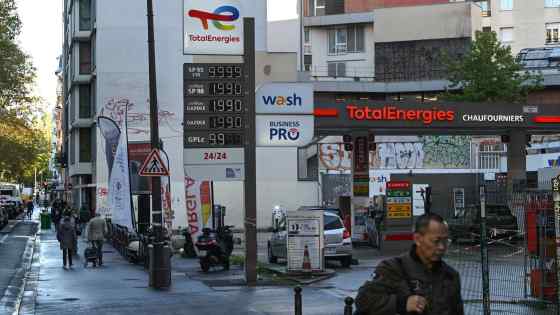
Earlier this year Goldman Sachs caused a stir when they predicted that China would have a larger economy than America by 2027. But this week China overtook America in one area that is of particular interest to the likes of Goldman Sachs. PetroChina became the most valuable company in the world. After its stockmarket debut in Shanghai the firm is now valued at over $1 trillion – slightly more than double the value of the world’s second biggest company, ExxonMobil.

PetroChina is no anomaly. Three of the five most valuable companies in the world are now Chinese – China Mobile and the Industrial and Commercial Bank of China (ICBC) are the other two. If you take the top 10 companies as your preferred measure, it is four-all between China and America. Sinopec is China’s other entry. The US has Exxon, GE, Altria and Microsoft.

There is an argument that this tells you more about a bubble in the Chinese stock market than about shifts in global economic power. It could just be the equivalent of the moment when the Japanese property bubble grew so extreme that the grounds of the Royal Palace in Tokyo were deemed to be more valuable than the entire state of California. (I always wondered how people worked that out, but you heard it said a lot at the time.)

The bubble argument has something to it. PetroChina’s shares shot up partly because there is huge demand and only 2.2% of the company was floated. As the FT’s Geoff Dyer pointed out earlier this week, it is now trading at 54 times earnings, compared to an industry average of 18 times earnings. But the valuation of other huge Chinese companies – like China Mobile – is much closer to an accurate reflection of the size of the market.

Maybe the PetroChina float will one day seem like a historic curiousity. But in the week in which the dollar sank to new lows against the euro, it certainly feels like something is shifting.

The World

with Gideon Rachman

About this blog About Gideon Blog guide
Gideon Rachman and his FT colleagues debate international affairs.

Gideon became chief foreign affairs columnist for the Financial Times in July 2006. He joined the FT after a 15-year career at The Economist, which included spells as a foreign correspondent in Brussels, Washington and Bangkok. He also edited The Economist’s business and Asia sections.

His particular interests include American foreign policy, the European Union and globalisation
To comment, please register for free with FT.com and read our policy on submitting comments.

All posts are published in UK time.

Contact gideon.rachman@ft.com about The World blog.

See the full list of FT blogs.

The FT’s Brussels blog

For views and opinions on the European Union from Peter Spiegel, Joshua Chaffin, Alex Barker and Stanley Pignal, follow the FT's Brussels blog here.

Tags

2012 US presidential election arab spring Argentina austerity Bahrain bailout Berlusconi chile China Cuba David Cameron Davos drugs ECB EFSF Egypt EU Europe European Commission Eurozone Eurozone crisis France Fukushima Gaddafi Germany Greece IMF Iran Italy Japan Klaus Schwab Libya Live blog Merkel Middle East protests Obama Papandreou Rick Perry Romney Sarkozy Syria Tahrir square US election WEF World Economic Forum

The blog day by day

« Oct Dec »November 2007
M T W T F S S
 1234
567891011
12131415161718
19202122232425
2627282930