


Becoming a British citizen

I am just back from watching a citizenship ceremony at the Tower of London.  The new Britons swear an oath of loyalty to the crown, in which they are referred to as subjects rather than citizens. Then they go and get a certficate and their photo taken with a man in a fancy uniform, in front of a Union Jack and a portrait of the Queen. Then everybody sings the national anthem: just the first two verses, so that the new citizens do not have to engage with that confusing passage about “crushing rebellious Scots”.

The citizenship ceremony is a new thing in Britain. One of my neighbours at the FT recalls that when he became a citizen many years ago, all that happened was that he got a letter from the Home Secretary saying that he was “minded” to grant him citizenship. He then had to go a local solicitor’s office and swear an oath of loyalty to the monarch. The solicitor said merrily – “I’ll give her a call and tell her.”

I always found this British casualness about citizenship quite re-assuring. It seems self-confident and under-stated – which are two of the better national characteristics. But 9/11 and an increasing awareness of the impact of immigration on Britain has changed things. The government brought in a citizenship ceremony – loosely modelled on the US. The first one took place in Britain in January, 2004.

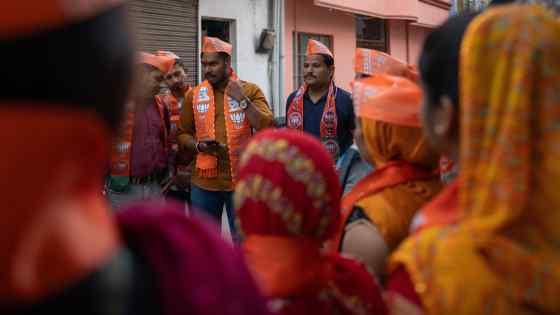
I found today’s ceremony genuinely moving. My favourite family group was a mother, father and daughter from China – the little girl in bright red, plastic raincoat, holding up her certificate for the cameras. The sheer range of places people have come from is  dazzling. They announce the birth-place of each new citizen, as they come up to get  their certificates. They got as far as 16 countries, before one was repeated – Australia. The roll-call went: Sierra Leone, Australia, Colombia, Hong Kong, Bulgaria, Somalia, Congo, Uganda, Ivory Coast, the Phillipines, the USA, China, New Zealand, South Africa, Bangladesh, Australia (again).  There were also former Turks, Russians and Thais. The largest single contingent were Bangladeshis. But then came Australia, New Zealand, South Africa and the US.

Where else would you get such a diverse range of new immigrants.?Perhaps only in New York. And maybe not even there.

The World

with Gideon Rachman

About this blog About Gideon Blog guide
Gideon Rachman and his FT colleagues debate international affairs. Read more on the authors.

Gideon became chief foreign affairs columnist for the Financial Times in July 2006. He joined the FT after a 15-year career at The Economist, which included spells as a foreign correspondent in Brussels, Washington and Bangkok. He also edited The Economist’s business and Asia sections.

His particular interests include American foreign policy, the European Union and globalisation
To comment, please register for free with FT.com and read our policy on submitting comments.

All posts are published in UK time.

Contact gideon.rachman@ft.com about The World blog.

See the full list of FT blogs.

FT World News page

Read FT world news coverage from our network of international correspondents.

The FT’s Brussels blog

For views and opinions on the European Union from Peter Spiegel, Joshua Chaffin, Alex Barker and Stanley Pignal, follow the FT's Brussels blog here.

Tags

The blog day by day

« Jan Mar »February 2008
M T W T F S S
 123
45678910
11121314151617
18192021222324
2526272829