The G-20 – it’s the banks stupid

The Financial Times building is a good vantage point for watching the goings-on at the G-20 summit. The Excel centre, where the summit will take place, is just a few tube stops away. As I write the “anti-capitalist” demonstrators are gathering near London Bridge – I can hear the sirens and the hovering helicopters through the windows. A procession of world leaders and summit participants have been trooping through the building, giving on-the-record interviews or off-the-record briefings.

Listening to three of the people who will be sitting around the table at the summit tomorrow, I was struck that maybe the leaders are arguing about the wrong issues. At the moment, the big controversies are about regulation and fiscal stimuli. But the three leaders I am referring to made the same point: this crisis is not going to end, until the banks have been cleaned up. As one of them argued, until the banks balance-sheets are cleaned up, more government money is just “pouring money into a bucket with a hole in it.”

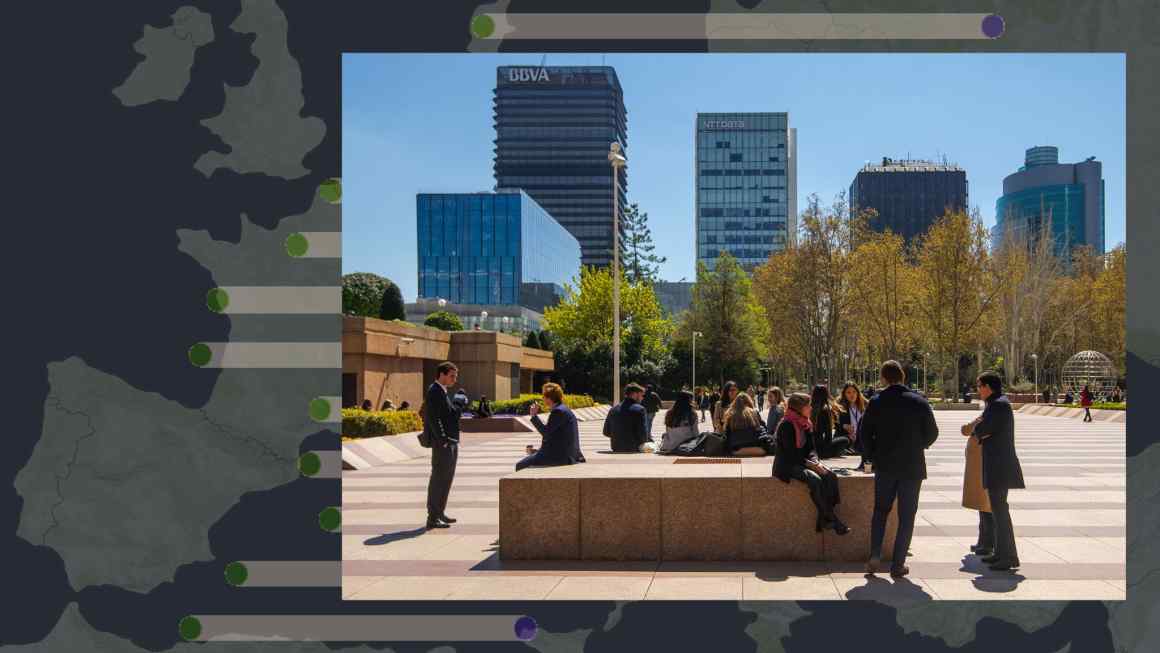
Unfortunately, there is little confidence that we yet have a handle on the problem. The British claim to be confident that we have stabilised our own banking system. But there are still big worries about America. And the problem area that is shooting up everybody’s list is Central and Eastern Europe. Fiscal or banking crises there would then have a knock-on effect on western Europe, given the exposure of Austrian, German, French and sundry other banks.

But whilst it is the banks that are on everybody’s mind, the headlines are still dominated by the arguments over regulation and fiscal stimuli. The politics of this seem to have got worse over the last 24 hours – with strong statements coming out of Japan and France. The line-up of countries even reminds me faintly of the run-up to the Iraq war – with France and Germany allying against the Anglo-Saxons on both the spending and regulation issues. Merkel and Sarkozy are due to hold a joint press conference later today. All it will need is for President Medvedev to turn up, and it will be just like 2003 all over again.

The World

with Gideon Rachman

About this blog About Gideon Blog guide
Gideon Rachman and his FT colleagues debate international affairs. Read more on the authors.

Gideon became chief foreign affairs columnist for the Financial Times in July 2006. He joined the FT after a 15-year career at The Economist, which included spells as a foreign correspondent in Brussels, Washington and Bangkok. He also edited The Economist’s business and Asia sections.

His particular interests include American foreign policy, the European Union and globalisation
To comment, please register for free with FT.com and read our policy on submitting comments.

All posts are published in UK time.

Contact gideon.rachman@ft.com about The World blog.

See the full list of FT blogs.

FT World News page

Read FT world news coverage from our network of international correspondents.

The FT’s Brussels blog

For views and opinions on the European Union from Peter Spiegel, Joshua Chaffin, Alex Barker and Stanley Pignal, follow the FT's Brussels blog here.

Tags

arab spring Argentina austerity bailout Barack Obama Berlusconi Bo Xilai Brussels China Colombia Cuba Davos ECB EFSF Egypt elections EU Europe European Commission Eurozone Eurozone crisis Fidel Castro France François Hollande Greece IMF In the Picture Iran Italy Klaus Schwab Live blog Merkel Mexico Nicolas Sarkozy Papademos Papandreou Putin Romney Sarkozy Spain Syria US election Venizelos WEF World Economic Forum

The blog day by day

« Mar May »April 2009
M T W T F S S
 12345
6789101112
13141516171819
20212223242526
27282930