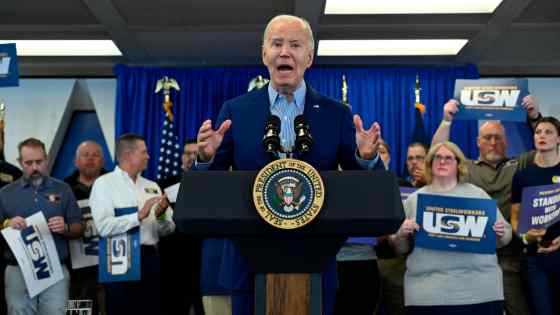

It was fascinating to see Paul Volcker standing next to Barack Obama yesterday, when the president made his big announcement on the reform of investment banking. Volcker, the slayer of inflation in the early 1980s, who more or less disappeared from the public eye for a generation after retiring as head of the Fed in 1987, is now back in fashion and back in power. Meanwhile, Alan Greenspan – the man who succeeded Volcker, the high priest of deregulation and once hailed as a “Maestro” – has had his reputation trashed.
There is a fascinating contrast in styles between the two men. Watching the pictures yesterday, I was reminded of what Greenspan had to say about Volcker in his autobiography:
“Volcker and I were not personal friends. At six foot seven with an ever present cigar, he made a vivid impression, but in conversation I always found him quite introverted and withdrawn. He didn’t play tennis or golf – instead, he liked to go off by himself and fly-fish … Having been a civil servant most of his career, he didn’t have much money. He kept his family at their house in suburban New York for the entire team he was Fed chairman. All he had in Washington was a tiny apartment – he invited me over once in the early 1980s to to talk about the Mexican debt crisis, and the place was filled with piles of old newspapers and all the other clutter of a bachelor apartment.”
Is there a hint of disdain there from Greenspan, for Volcker’s failure to go off and make a pile of money on Wall Street – like so many of the other top appointees of the Reagan and Clinton years? Certainly Greenspan, with his high-profile tennis partners and TV reporter wife, was much more of a fixture on the social scene in Washington than the austere Volcker.
But Volcker, of course, is having the last laugh. His recent caustic comment that the most valuable financial innovation of the last thirty years was the ATM (cash-dispenser) is a marked contrast to the awed praise for complex financial innovation that Greenspan liked to offer.


For views and opinions on the European Union from Peter Spiegel, Joshua Chaffin, Alex Barker and Stanley Pignal, follow the