
We are borrowing Gideon’s blog to cover Japan’s earthquake. Please keep your comments coming, and please send us any images you have to japan.quake.ft@gmail.com if you are in Japan.
For global market reaction to events in Japan, you can follow Jamie Chisholm’s rolling coverage.
All times are London time, Japan is 9 hours ahead. By Josh Noble and Kanupriya Kapoor in Hong Kong, Orla Ryan and Leyla Boulton in London, Johanna Kassel and Anora Mahmudova in New York.
2055 – A bit more on the financial implications:
From Reuters: Some foreign financial institutions are calling for Japan’s stock market to halt trading, while the Tokyo Stock Exchange and Japanese financial regulators are planning to keep markets open, news agency Nikkei reported.
The news agency said officials from more than 10 non-Japanese financial firms held a conference call Tuesday afternoon. Some firms called for the market to be closed immediately, Nikkei reported, citing people familiar with the discussion.
CBOE Holdings Chief Executive William Brodsky pointed out that markets in Japan rallied after Tuesday’s decline, allowing investors to express their confidence in Japan’s ability to recover.
“When you run markets, you want to keep them open whenever possible, because you don’t want to create panic that people who need to get out can’t get out,” said Mr Brodsky, who was also formerly head of the World Federation of Exchanges. “To voluntarily close a market makes no sense.”
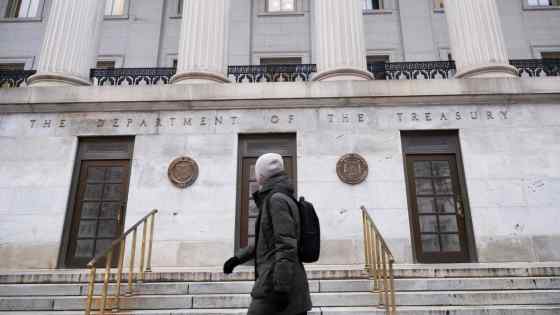
2045 - US Treasury Secretary Tim Geithner said the United States’ focus on Japan is to help it limit the human costs of last week’s earthquake and tsunami.
“It a hard judgment to make at this stage. Our focus now is, as it should be, on trying to do as much as we can to help them mitigate the humanitarian costs of the catastrophe there, and we’ll offer them every assistance we can and help make sure that the restructuring effort itself is handled as carefully as possible.”
2033 - From Kyodo: To address the crisis at the No 4 reactor, plant operator Tepco asked for the help of a special water cannon truck used by the Metropolitan Police Department to douse water on the reactor’s spent fuel rod pool. The truck arrived at the Fukushima power station early Thursday.
2025 - Mure Dickie, our intrepid reporter on the ground in the north-east coast of Japan, has filed a video dispatch from the seaside cities of Ofunato and Rikuzen Takata. Both were nearly decimated by the tsunami following the earthquake. Definitely worth taking a look, the view from the ground is haunting.
2015- The British Embassy in Tokyo has published an interview with the government’s chief scientific officer professor John Beddington, during which he commented on the developments following the explosion at Fukushima nuclear plant. He explained why this situation cannot turn into a Chernobyl-like situation.
And to give you a flavour for that, when Chernobyl had a massive fire at the graphite core, material was going up not just 500 metres but to 30,000 feet. It was lasting not for the odd hour or so but lasted months, and that was putting nuclear radioactive material up into the upper atmosphere for a very long period of time. But even in the case of Chernobyl, the exclusion zone that they had was about 30 kilometres. And in that exclusion zone, outside that, there is no evidence whatsoever to indicate people had problems from the radiation. The problems with Chernobyl were people were continuing to drink the water, continuing to eat vegetables and so on and that was where the problems came from. That’s not going to be the case here.
2006 – The comments from Mr Jaczko, if confirmed, would be worrying as the pools are necessary to keep the fuel rods cool. The higher the temperature goes, the more likely the rods are to melt.
2005 - From Reuters: More on the Congressional testimony from Gregory Jaczko, head of the US Nuclear Regulatory Commission. He said that the spent fuel pool at Japan’s troubled number four reactor has no water.
“There is no water in the spent fuel pool and we believe that radiation levels are extremely high, which could possibly impact the ability to take corrective measures,” Mr Jaczko said.
When asked later by a lawmaker on the panel to further clarify his remarks, Mr Jaczko said: “We believe at this point that unit four may have lost a significant inventory, if not lost all, of its water.”
He added that there is also the possibility of a crack in the spent fuel pool in reactor three “which could lead to a lost of water in that pool.”
1955 - Areva, the biggest supplier of nuclear fuel and services, is delivering protective equipment to Japan, including 3,000 masks, 10,000 overalls and 20,000 gloves, as well as 100 tons of boric acid, a neutron absorber made available by EDF, the company said in a statement.
1945 - The most notorious area for earthquakes in the US is the west coast, specifically California. For years, experts have been warning about the possibility of a massive earthquake. The US Geological Society has mapped the areas of the US most vulnerable to earthquakes. Thirty nine of the 50 states have moderate or high risk for earthquakes.
The Daily Mail has an interesting take on it.
1935 - The White House said that US food inspectors will ensure the safety of food imports from Japan, following the actions of many Asians countries and India.
“The agencies that check food imports do that every day and of course are aware of what has happened in Japan and will be checking food accordingly,” White House spokesman Jay Carney said.
1925 - Following Japan’s request for IAEA assistance to monitor environmental effects and the effects of radiation on humans, Yukiya Amano, the organisation’s director general, will travel to the country.
“I plan to fly to Japan as soon as possible, hopefully tomorrow, to see the situation for myself and learn from our Japanese counterparts how best the IAEA can help. I will request that the Board of Governors meet upon my return to discuss the situation. My intention is that the first IAEA experts should leave for Japan as soon as possible.”
1915 -Reuters reports: The top US nuclear regulator told Congress that radiation levels around Japan’s troubled nuclear power plant may give emergency workers “lethal doses” of radiation, preventing them from getting near the plant.
“We believe that around the reactor site there are high levels of radiation,” Gregory Jaczko, head of the Nuclear Regulatory Commission, told a House Energy and Commerce subcommittee hearing. “It would be very difficult for emergency workers to get near the reactors. The doses they could experience would potentially be lethal doses in a very short period of time.”
Mr Jaczko noted the NRC had very limited data on what was going on in Japan and he did not want to speculate too much on the matter. “Our information is very limited,” he said.
1855 - The US Nuclear Regulatory Commission head testified told Congress today that the US will not be hit by harmful radiation from Japan’s crisis-hit reactors, but said that the evacuation area around the embattled nuclear power facility is smaller than what it would recommend.
However, the AP reports that federal environmental regulators say they are adding more radiation monitors in the western United States and Pacific territories as concerns rise over exposure from damaged nuclear plants in Japan.
Track the data from these monitors here.
1849 – From the AP: The operator of Japan’s tsunami-crippled nuclear plant says it has almost completed a new power line that could restore electricity to the complex and solve the crisis that has threatened a meltdown.
Tokyo Electric Power Co. spokesman Naoki Tsunoda said early Thursday the power line to Fukushima Dai-ichi is almost complete. Officials plan to try it ‘as soon as possible’ but he could not say when.
1835 – For more on the market reaction to the crisis in Japan, we turn to our colleagues on FT Alphaville for the financial perspective and fascinating commentary on the markets’ reaction. Some of their Japanese offerings today:
International yen rescue
Japanese repatriation pressure points
Radioactive contamination – the uninsurable
Uranium prices, before and after Japan
Goldman sees no earthquake impact on Japan’s GDP
Japan’s Wednesday bounce: what it says and where it goes
1825 – Both Dow and S&P briefly dipped into negative territory in afternoon trading on fears about Japan.
1810 - The White House said on Wednesday it was satisfied with the information it was getting about the nuclear crisis in Japan and was in contact with independent experts there, Reuters reports.
“It is a crisis situation,” White House spokesman Jay Carney told reporters. “The lead in dealing with the crisis is the Japanese.”
1801 – The UK has advised all British nationals to leave Tokyo and the areas north of Tokyo, the Foreign and Commonwealth office said.
However, due to the evolving situation at the Fukushima nuclear facility and potential disruptions to the supply of goods, transport, communications, power and other infrastructure, British nationals currently in Tokyo and to the north of Tokyo should consider leaving the area.
1800 - The US has yet to urge the evacuation of American citizens from Japan amid the reactor crisis at an earthquake and tsunami-damaged nuclear power plant, US Energy Secretary Steven Chu said.
“It’s not there yet, but we monitor these situations very closely,” Mr Chu said.
However, the US embassy in Tokyo has recommended that all US citizens living within 50 miles of the stricken reactor evacuate or stay indoors.
1745 - From Reuters: US Secretary of State Hillary Clinton said that the nuclear crisis in Japan raises questions about the use of nuclear energy in the United States.
“What’s happening in Japan raises questions about the costs and the risks associated with nuclear power, but we have to answer those. We get 20 percent of our energy right now in the United States from nuclear power,” Mrs Clinton said in an interview with MSNBC in which she emphasised the need for a comprehensive US energy policy.
This clashes with previous statements from the US government, which stressed that the administration was confident in the state of the US nuclear network and development.
1732 – South Korea has announced plans to send boric acid, a vital tool to help cool the reactors, to Japan, as it has nearly exhausted its supply.
1721 – News organizations have produced some really informative graphics to help understand the situation at the nuclear facility. The FT has published a variety of graphics and videos including:
Interactive: The Fukushima Daiichi reactors
Interactive map: the Japan earthquake
For other examples from around the world, the blog 10,000 words has compiled them
1710 – Josh Chaffin, one of our Brussels correspondents, has blogged about the EU’s energy commissioner’s comments earlier today.
Beleaguered Japanese officials are already grappling with a humanitarian crisis wrought by a biblical earthquake and tsunami, and the prospect of apocalyptic meltdowns at a pair of stricken nuclear reactors. Add to their list of woes one European commissioner.
That would be Gunther Oettinger, the energy commissioner, whose ill-judged remarks about the crisis on Wednesday have helped to make a bad situation worse.
Click here for the whole post
1700- The London blogging team has signed off for the day, so this is Johanna Kassel picking up the blog from New York. Just to catch you up:
- After the European Union’s energy commissioner warning of ‘further catastrophic events’ at Japan’s stricken nuclear power plant, US markets fell dramatically.
- The US plans to send an unmanned drone outfitted with sensors and cameras to get a better idea of what is going on at the nuclear facility.
- China suspends nuclear development plans
- Companies continue to evacuate employees, but many banks are resisting.
1635 - France will put all 58 of its nuclear reactors through safety checks following Japan’s atomic accident at Fukushima, according to French Energy Minister Eric Besson, who defended atomic energy at a parliamentary commission today. “France has to learn as much as possible from this catastrophe,” says Besson, while maintaining that France, which has the world’s highest dependence on atomic energy, was right to opt for nuclear power because it provides energy independence, less expensive electricity and lower greenhouse gas emissions.
1633 – The death toll from the earthquake and tsumani currently stands at 4,340, NHK reports on its website. More than 9,000 are still missing, it said. More than 344,000 people are in about 2,400 shelters.
NHK provides the following breakdown of the death toll:
Miyagi prefecture – 2,207 people have been confirmed dead
Iwate prefecture – 1,545 people have been confirmed dead
Fukushima – 533 people have been confirmed dead
In the Kanto region, dozens of people have died
1629 – Tokyo Tower has illuminated the Japanese capital from sundown to midnight for the past 22 years. Tonight, the 176 floodlights will remain switched off for a fifth night. “We all should play our parts, so we shouldn’t use electricity if it isn’t necessary,” Masakazu Yoshida, an administrative official at Nippon Television City Corp, which operates the building, is quoted as saying by Bloomberg.
1611 – This from Bloomberg: The Obama administration will press ahead with efforts to expand loan guarantees for new nuclear reactors while investigating the failure of Japan’s power plants after an earthquake, says Energy Secretary Steven Chu. The US Energy Department is seeking to add $36 bn in loan-guarantee authority to the program’s existing $18.5 bn, Chu tells a House of Representatives committee hearing.
1605 – International Atomic Energy Agency chief Yukiya Amano says he plans to go to Japan as soon as possible, hopefully on Thursday.
1602 – The US military will operate a Global Hawk unmanned high-altitude reconnaissance aircraft over the stricken Fukushima nuclear power plant, possibly on Thursday, to take a closer look at the troubled reactors, a Japanese government source tells Kyodo news agency.
1530 – After markets fall on remarks by the European Union’s energy commissioner warning of ‘further catastrophic events’ at Japan’s stricken nuclear power plant, a spokesman for Guenther Oettinger says he has no privileged information on the subject.
1516 – As China and Germany reconsider their nuclear plans. Recep Tayyip Erdogan, Turkish prime minister, says his quake-prone country will proceed with plans to build its first nuclear plant, in cooperation with Russia.
1451 – One of the 50 workers who continued to work the Fukushima plant says he is not afraid to die. while a government official tells the FT’s David Pilling: “Those 50 will be seriously damaged [by radiation]. Japanese people have to thank them a lot. It’s a kind of sacrifice. ”
1441 - Earthquake strikes Dominican Republic.
1420 – Rescue workers mark cars in the wreckage with an X to indicate they have checked a vehicle for quake/tsunami victims and it is empty. Watch the video.
1405 – This just in from Gideon Rachman, this blog’s regular owner, on the different reactions to the tsunami and nuclear crises.
It strikes me that there is something odd about the relative reactions to the tsunami and the nuclear accident. At the moment, it is the nuclear story that is dominating the bulletins, with the toll from the tsunami very much as item two. And yet, according to the experts I’ve heard, even if there is a serious nuclear leak, the result will probably be scores of deaths from cancer and the contamination of a large area. By contrast, the tsunami has already killed many thousands of people, and turned whole towns into rubble. So why the difference in the reporting of the two events?
I can think of a few reasons. First, the tsunami has already happened – the threat of nuclear meltdown is ongoing.
But, perhaps on a deeper level, we find it easier to talk about the nuclear issue because there is something that humans can do about it and there is a debate to be had – who is to blame, what can be done in future? By contrast, the tsunami was an Act of Nature; nobody was to blame, and there is nothing that can be done to prevent future tsunamis.. Such an event leaves people oddly mute.
1353 – Other companies are rushing to evacuate staff but bankers are reluctant to leave, writes the FT’s Gwen Robinson.
1320 – Evacuations are continuing from the regions worst hit by the quake. From the FT’s Jamil Anderlini in China:
China’s government said on Wednesday night that it had already evacuated more than 3,000 Chinese nationals from the worst-hit Japanese prefectures of Miyagi, Fukushima and Iwate. In Sendai, in Miyagi prefecture close to the epicentre, 20 buses were sent on Wednesday to pick up about 1,000 Chinese and take them to Niigata on Japan’s west coast.
1247 – BREAKING: China announced on Wednesday that it would suspend approvals for any new nuclear power plants in light of the disaster in Japan. In a statement the State Council said it would suspend approval of nuclear power projects, including those currently in preliminary stages of development. More on beyondbrics.
1240 – The FT’s Clive Cookson has been talking to Colin Brown, Director of Engineering at the Institution of Mechanical Engineers. Here’s what he had to say on Fukushima Daiichi:
Colin Brown: Looking at the situation in Fukushima at the moment, it seems as if engineers have enough cooling water pumping into the reactor and if they are able to continue their efforts to get the core heat down the site could be safe in just 5-10 days.
The explosions at the Fukushima plant are incredibly serious, and the Japanese authorities have rightly been swift to evacuate people from the local area, but we are confident that if we can maintain pumping, radiation levels at the site will not escalate further.
1159 – Time for a recap on the nuclear situation. As we understand it – here are the developments so far on Wednesday at each of the reactors:
- No.1 – No major change
- No.2 – No major change
- No.3 - Plumes of white vapour were seen rising from reactor on Wednesday, which was previously said to have been ‘stabilised’. The rise in radiation prompted the temporary evacuation of technicians working to end the crisis at the plant. Authorities were also forced to abandon efforts to dump water into the reactor by helicopter.
- No.4 – A fire broke out on Wednesday. Authorities continued to pump seawater into the reactor.
- No. 5 – No major change
- No. 6 – No major change
1144 – Attempts by the Japanese military to drop water onto one of the troubled nuclear reactor at Fukushima Daiichi had to be abandoned earlier on Wednesday, due to increased radiation levels at the plant. NHK reports that police water cannons may also be used to help cool reactors.
1125 – beyondbrics – the FT’s emerging markets blog – has been asked what events in Fukushima mean for nuclear plans across developing countries. Here’s a look, country-by-country:
1119 – What will rolling blackouts mean for the Japanese economy. UBS has been looking into this, and here’s a flavour of their take:
Assuming that there will be planned blackouts for one and a half months until end-April, and that power supply will be reduced by 25%, our model suggests that this could push down Japan’s real GDP by 0.3pt…
We now expect 2011 real GDP to come to +1.0%, versus our previous estimate of +1.4%.
1115 - Also on Reuters, French finance minister Christine Lagarde said France has called for a meeting of G7 finance ministers and central bankers to consider responses to the crisis, including possible purchases of Japanese debt. The meeting on Japan would be “so that we can see how we can take part in their debt issues and how we can react on a financial level”, she said.
1113 – The UK Embassy in Japan has been urging calm amid the ongoing problems at Fukushima Daiichi. This was their message to UK citizens resident in Japan on Tuesday:
It is wholly wrong to compare the situation to Chernobyl, which emitted a radioactive cloud 30,000 feet into the air for a long period of time. In the reasonable worst case scenario at Fukushima, a plume would only be emitted to a maximum height of 500m so any radioactive cloud would land very close to the reactor. A 20km exclusion zone and a further 10km zone where residents are advised to stay indoors would be entirely appropriate for minimising health effects from direct radiation exposure.
1110 - As countries around the world rethink their use of nuclear, French president Nicolas Sarkozy is to call a special meeting of Group of 20 ministers to discuss future energy, Reuters reports. France is G20 president this year. Mr Sarkozy said:
“Under the G20 framework, France will take the initiative to gather together energy and economy ministers in the coming weeks in order to discuss broad energy options for the world of tomorrow. “
1104 – Non-Japanese readers may have seen pictures of people in Japan wearing face masks. Here’s an explanation from the Science Media Centre of Japan:
In the wake of the fluctuating levels of radiation coming out of the Fukushima Dai-ichi Nuclear Power Plant, locals have been told that wearing masks can help prevent them from breathing in radiation. Indeed, we’re seeing a lot of people wearing masks today in Tokyo and in disaster-stricken areas but this IS NOT entirely due to radiation scares. It is common practice in Japan for people to wear masks because:
- they have a cold, and don’t want to spread it (or they don’t have a cold but still wear a mask to stop breathing in the cold virus, although whether this really works is debatable)
- they have hayfever and are protecting themselves from breathing in pollen (pollen forecasts today are very high, and the weather has gone back to mid-winter temperatures with snow expected in northern Japan).
A lot of people will be wearing masks today for the above reasons and not because of possible radiation in the air.
1055 – Here are some before and after images from the European Space Agency, showing the impact of Friday’s tsunami on the northeast coast:
1029 – Snow blanketed Miyagi on Wednesday – where rescue efforts continue:
1015 – Here’s the latest on Japan from FT Alphaville:
1009 – Just to clarify – workers at the Fukushima Daiichi plant were evacuated for around 50 minutes at about 1040am Tokyo time. They left the water pumps running while they were away from the plant. Workers returned at 1130am and have remained there since.
0919 – How do you shut down a reactor? The New York Times has this.
0902 – Yukio Edano is once again addressing the press live on national television.
0850 - Bloomberg reports that fake text messages have circulated rumours of radiation spreading across Asia. The World Health Organisation has issued this statement to counter these rumours:
“WHO would like to assure governments and members of the public that there is no evidence at this time of any significant international spread from the nuclear site.”
0830 – Japanese television has shown pictures of military helicopters preparing to drop water onto one of the reactors at Fukushima Daiichi.
0812 – The FT’s Ben McLannahan on the Japanese markets on Wednesday:
It’s been a positive session for Japanese equities. At close in Tokyo (4.30pm local time), the index – which is a broad representation of all 1666 companies listed on the first section of the Tokyo Stock Exchange – was up 6.6 per cent. That is a marked reversal of the previous two days’ selling, during which it fell by almost a fifth. Many commentators had described Tuesday’s selling as overdone; the market now seems to agree.
Telecoms stocks (mobile more than fixed-line) did best, rising almost 10 per cent, followed by basic materials, oil and gas and industrials. The only sector that fell was electric utilities, dragged down by Tokyo Electric Power Company, operator of the stricken Fukushima complex, which fell by 25 per cent. The company’s equity capitalisation is now just over a third of the value of its debt. Few companies make it back from there, without some kind of extraordinary state support.
Still, the Topix as a whole still trades at an exceptionally low valuation of 0.97 times book value. In other words, the future cashflows of Japan Inc are valued at less than what shareholders would receive if all its assets were sold to repay debts. Even by the gloomy standards of Japan, which has lagged most other markets since its bubble burst at the end of the 1980s, this is remarkable. Only once in the past ten years – during the depths of the financial crisis between October 2008 and March 2009 – did the Topix dip below book value.
The sense of panic that gripped markets on Tuesday has subsided. But optimism is a long way off yet.
0759 – Andrew Hasegawa – one of our readers – has sent us this:
Andrew Hasegawa: More and more foreign staff fleeing Tokyo – some overseas and others to western Japan. The number of Bloomberg terminals flashing red, signaling a users absence continues to grow.
0735 – The Japanese Emperor Akihito has addressed the nation on television. The FT’s Jonathan Soble has this:
Six days into a crisis that Japan’s prime minister has called the
country’s worst since the war, Emperor Akihito spoke to the public for the first time. In an address broadcast on television late Wednesday afternoon, the 78-year-old monarch said his thoughts were with victims and rescue workers, and he was watching the nuclear emergency at Fukushima with “concern”.
0730- As many foreigners flee Tokyo, and some the country, the US embassy has told its citizens there’s no need to fear radiation in Tokyo, says @martyn_williams.
0707 – Photojournalist Alex Hofford has a moving collection of photos from Japan.
0649 – Seiichiro Muta – one of our readers – has sent us this update:
Seiichiro Muta: Japanese people are carefully watching TV news to update the situation.
However, most people have been taking proactive stance to buy bread, batterlies, milk, toilet paper, etc. much more than usual to anticipate bigger crisis.
Also, we see a long queue before every gas stations which has been making worse flow of traffic. To buy gas, it takes 1 to 3 hours.
Due to shortage of electricity provided by Tokyo Electric Power, trains that are able to run daily are limited in number. This situation is giving a great pain on most workers who work in the centre of Tokyo.
Some of young people are seriously thinking of moving to southern part of Japan due to potential stronger exposure to radiation remit from accidents in Fukushima nuclear power plant.
0642 – Sendai Shiogama port in north Japan is to reopen on Thursday, according to Bloomberg.
0638 – Workers trying to control problems at the Fukushima Daiichi reactors were evacuated for 50 minutes on Wednesday morning after radiation levels spiked. They returned to the plant at 1130am Tokyo time, according to NHK.
0636 – Shares in Tepco closed down a further 25 per cent on Wednesday. On Tuesday the stock failed to attract a single bid.
0632 – Nuclear safety authorities are now saying the spent-fuel tank at reactor No.3 has overheated dangerously, potentially exposing the fuel or releasing radioactive steam into the air. Military helicopters were preparing to dump water onto the tank through the top of the building, whose roof was torn off in a hydrogen-gas explosion on Monday.
0628 – The Nikkei 225 closed up 5.7 per cent on Wednesday, pulling the index back up above 9,000.
0625 - Commander Jeff Davis of the 7th Fleet said a US team trained in radiological monitoring is on its way to Japan from the Puget Sound Naval Shipyard in the state of Washington, a homebase for US nuclear submarines. The team are mostly civilians and their primary purpose will be to do radiological monitoring for the US forces.
0611 - Chinese ports have been ordered to step up monitoring for radiation in the wake of the explosions at the Fukushima nuclear power plant in northern Japan, reports the FT’s Jamil Anderlini.
China’s General Administration of Quality Supervision, Inspection and Quarantine gave the order to the country’s port authorities on Wednesday.
0607 - The Australian government on Wednesday authorised the voluntary evacuation of family members for its Tokyo-based officials. However, Canberra stressed its advice was not related to fears about nuclear contamination from the Fukushima reactors, but instead due to continuing disruption to major infrastructure.
0603 – Japan is to allow foreign doctors in to treat victims of the earthquake and tsunami, according to Kyodo.
0528 – Sendai airport is to reopen a section of runway on Wednesday to receive aid flights, reports Bloomberg. This was the moment the tsunami hit the airport on Friday.
0522 – NTT DoCoMo will limit voice call traffic in some parts of Tokyo, Chiba and Ibaraki on Wednesday, according to Bloomberg.
0511 – The disaster in numbers, from ThomsonReuters.
0505 – After Tuesday’s huge sell-off in Japanese equities, Nomura tries to offer a broader perspective, comparing the situation to SARS. This from Sean Darby.
The current events involving the failure of some nuclear reactors following the Toshoku Pacific (Sendai) earthquake bear an uncanny resemblance to the SARS virus that, for a short period in April 2003, had gripped HK and other Asian countries. The possibility of an undetectable virus, spread through contact with other people and responsible for killing over 100 people during that time caused people to worry about a widespread pandemic. The current news of foreigners leaving Tokyo and offices closing as the fear rises of radiation emanating from the reactors is not substantiated by a great deal of facts.
0453 – Hiromasa Yonekura, chairman of Keidanren, Japan’s largest business lobby, has urged utilities to target rolling blackouts carefully.
“With some industries such as semiconductors, even short power cuts can have a lasting impact on production. We hope measures can be taken on an industry-by-industry basis.”
0435 – The US Ambassador to Japan confirms that the US military provided two firetrucks to authorities in Fukushima.
0424 – Japanese government spokesman says there was no blast at the No.3 reactor this morning. The white smoke seen rising this morning is ‘under investigation’.
0356 – Japan may seek direct US military help to end a crisis at the Fukushima Daiichi nuclear power plant, the chief government spokesman said, Reuters reports
0348 – Live NHK TV coverage is showing white smoke billowing from the Daiichi power plant, while clarifying they do not know which reactor it is coming from or what is causing it.
0342 – The government calls on people to save gas and other fuel and stop stop panic buying of fuel. Egano says Fukushima Daiichi’s No. 3 reactor’s container feared partially damaged. However, there are no plans to expand evacuation area near troubled nuclear plant, he says, according to Kyodo News.
0328 – Tepco says it is unable to confirm temperature levels at No.3 reactor’s spent fuel pool, nor can it check smoke at Fukushima plant as radiation is too high, Kyodo News reports
0317 – The Japanese nuclear crisis has scuppered plans for a future nuclear power station in Venezuela. President Hugo Chavez said that he is halting plans to develop nuclear power in the South American country, according to Bloomberg. Chavez signed a deal with Russia’s Rosatom Corp. in October to develop nuclear power in Venezuela including a research reactor.
0310 – A fuel pool at the No.3 reactor may have heated and produced steam, Tepco said during the press conference. This might explain white smoke, which was seen by the local TV crew.
Media images earlier showed white smoke drifting from the Daiichi nuclear power plant
0236 – NEW: Reuters reports that white smoke is seen rising from the No. 3 reactor at the Fukushima’s Daiichi power plant, citing Fuji TV. Also, the No.4 reactor appeared no longer to be on fire as of 6:15 a.m. on Wednesday (2045 GMT Tuesday), half an hour after a fire was reported at the reactor, Japan’s trade minister said.
0220 – The nuclear crisis in Japan has prompted many countries that rely on the nuclear power plants for much of their electricity to rethink their policies over developing and maintaining such plants, as well as implementing emergency preparedness measures. In Germany, the chancellor Angela Merkel decided to call an immediate moratorium on extending the operating life of country’s 17 nuclear power stations. In the US, the Obama administration will study distribution policies for a drug to protect against the effects of radiation, according to a government spokeswoman.
0152 – Some corporate news: in an internal memo to all of the employees, Sony said they were not turning their backs on the Tokyo HQ, which they say “survived the shaking admirably.”
It is built like a fortress with tsunami barriers that rise in front of the building to protect it from flooding, and will continue to be our central command post as we fight back together from this devastation.
…
After the quake, more than 1100 Sendai employees, together with another 100 neighbors, were trapped on the higher floors of our building, but as of today, that number is down to approximately 10. Water levels are now down to a thick layer of mud. We sent in helicopters to deliver water and other basic necessities, and the damage is being assessed.
0138 – In a further sign the previous two days of heavy selling was excessive – it drove valuations to a 28-month low - the Nikkei share average rose more than 6 per cent. The Nikkei 225 rose 5.4 per cent to 9,069.26 as of 9:12 a.m. in Tokyo.
0115 – Japanese stocks saw a strong rebound, after two days of heavy selling, which wiped out about a sixth of the market value of the bluechip companies. Today, markets opened sharply higher, with the Nikkei stock index up 3.4 per cent. Clearly, traders thought the stocks were oversold. While the Bank of Japan added Y3,500bn ($43bn) to the financial system in a one-day operation to help ease liquidity.
0110 – GE, which supplied the nuclear reactors at the Fukushima’s Daiichi nuclear power plant, said it will offer technical assistance to the Japanese government and the plant’s operator Tepco, according to Kyodo News. More than 1,000 engineers will provide assistance, it said. The US company will also provide 10 truck-mounted gas turbines for emergency use to address power shortages in Japan.
0050 – Tepco said that it is considering dispersing boric acid, a fire retardant, over the Fukushima Daiichi plant’s No. 4 reactor from a helicopter, Reuters reports. Radiation levels prevented workers from approaching the fire, NHK cited Tepco as saying earlier.
0035 – To recap on the previous entries: a fire broke out early in the morning at Japan’s Fukushima Daiichi No.4 nuclear reactor, however, NHK reports that the flames are no longer visible. This reactor, one of six nuclear reactors at the Daiichi complex, had been shut for regular maintenance before last week’s devastating earthquake crippled the power plant.
Kyodo cites Tepco saying an estimated 70 per cent of the nuclear fuel rods have been damaged at the troubled No. 1 reactor of the Fukushima Daiichi plant and 33 per cent at the No. 2 reactor. The reactors’ cores are believed to have partially melted with their cooling functions lost after Friday’s earthquake.
2341 – The yen stood within a whisker of a record high against the dollar early in Asia on Wednesday, while the Swiss franc held at all-time highs as jitters about Japan’s nuclear crisis kept investors on edge, Reuters reported.
2332 - A bit more detail on the fire according to Kyodo: A fire broke out again early Wednesday at the troubled No 4 reactor of the quake-hit Fukushima nuclear power plant, Tepco said. Around 545 am, a worker at the plant saw flames on the fourth floor of the reactor’s building, believed to be the same spot where an apparent hydrogen explosion caused a fire on Tuesday morning.
2321 – Japanese media report that the fire has been extinguished, but this has not been confirmed by Tepco. It is not known how much damaged No 4 reactor sustained, if any.
2252 - A fire has broken out at the building housing the No 4 reactor, Tepco said. Efforts are under way to put out the fire.


For views and opinions on the European Union from Peter Spiegel, Joshua Chaffin, Alex Barker and Stanley Pignal, follow the