US election round-up, October 5

Welcome to the round-up of news coverage of the US presidential election. There is a noticeable spring in the step of election pundits in the wake of the first presidential debate.

Yes, while political rune-readers and campaign commentators had been showing a rather lacklustre performance in recent days, the surprisingly interesting Denver dialogue has invigorated not just the campaign of Republican candidate Mitt Romney, but his backers in the newspaper columns too.

With no major polls taken since the debate, we are still in the kingdom of analysis, where the likes of George Will hold court. In the Washington Post, Will ripped into President Barack Obama for failing to prepare properly:

His vanity — remember, he gave Queen Elizabeth an iPod whose menu included two of his speeches — perhaps blinds him to the need to prepare. And to the fact that it is not lese-majeste to require him to defend his campaign ads’ dubious assertions with explanations longer than the ads. And to the ample evidence, such as his futile advocacy for Democratic candidates and Obamacare, that his supposed rhetorical gifts are figments of acolytes’ imagination.

Politico ran a lengthy article explaining how the Romney campaign had pulled off a notable win in Denver:

In the afterglow of the Denver duel, top campaign advisers said Thursday that the reinvention efforts will include forthcoming ads featuring clips from Romney’s much-praised debate performance, and the increased behind-the-scenes role of two close confidants — Sen. Rob Portman (R-Ohio), who played President Barack Obama in debate prep, and oldest son Tagg Romney, who has subtly taken a more active role in the selling of a more likable version of his dad.

The other political website enjoying a healthy election campaign, RealClearPolitics.com, took a look at how the president responded to his own underperformance in the debate:

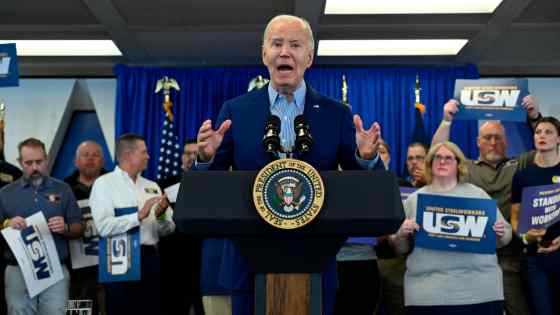
Reading from teleprompters a few hours after pundits wondered anew whether the president’s polish really does depend on them, Obama argued that debater Romney had been dreamed-up — a character invented to try to rewrite an entire season of campaigning with a dramatic script substitution. The president said he had been left to untangle fact from falsehood, and he hinted at his surprise Wednesday night at confronting a challenger he did not quite recognize.

“If you want to be president, you owe the American people the truth,” Obama said forcefully Thursday.

That line of attack became the script for a new Obama campaign ad titled “Trust,” in which Romney is seen denying he favors a $5 trillion tax cut. The ad cites the analysis of the nonpartisan Tax Policy Center to refute Romney’s denial (using a clip of NBC News veteran Andrea Mitchell, who refers to the report’s findings). “If we can’t trust him here . . . how could we ever trust him here?” the ad intones as it closes with an image of the Oval Office.


The New York Times said the entire campaign had been revitalised, at a moment when the president seemed to be strolling towards re-election, by the events in Denver:

A day after the first debate, in which Mr. Obama was almost universally judged to have underperformed and Mr. Romney to have seized his opportunity, the president resolved to do what he did not do the night before: He went straight at the challenger, arguing forcefully that Mr. Romney’s moderate words masked extreme conservative policies.

“The man onstage last night, he does not want to be held accountable for the real Mitt Romney’s decisions and what he’s been saying for the last year,” the president said at a rally, looking more energetic than he was at his lectern Wednesday night.

There was support for Mr Obama from some of his supporters among the politerati too, especially Paul Krugman, also writing in the Times about what he said was Mr Romney’s deceit over his healthcare reform plans:

What Mr. Romney did in the debate, in other words, was, at best, to play a word game with voters, pretending to offer something substantive for the uninsured while actually offering nothing. For all practical purposes, he simply lied about what his policy proposals would do.

The Huffington Post reported that the Obama campaign has tacitly – well, perhaps not even that tacitly – acknowledged that tactics needed to change after Denver, with two more rounds of debate to come (it’s the vice-presidential candidates next week and then two more Obama/Romney clashes in succeeding weeks).

“It is like the playoffs in sports — you evaluate after every contest and you make adjustments,” [David] Axelrod [the president's campaign chief] said in a conference call with reporters. “And I’m sure that we will make adjustments. I don’t see us adding huge amounts of additional prep time. I think … there are some strategic judgments that have to be made and we will make them.”

“I’m sure he will consider his approach moving forward,” Axelrod added. “But I know he is very, very eager for the next debate on the 16th … I think that, again, this was the first chance for the president to see how Governor Romney operates in these debates firsthand, and you have to make some adjustments for the fact that he is a … very artful dodger.”

Asked why Obama didn’t tackle Romney for his infamous comment about the 47 percent of Americans who don’t pay income taxes, Axelrod responded that his boss hadn’t been prompted.

“He made a choice last night to answer the questions that were asked and to talk to the American people about what we need to do to move forward and not get into serial fact checking with Governor Romney, which can be an exhausting, never-ending pursuit,” he said.


Mr Romney confronted his misstep in apparently dismissing the 47 per cent of Americans who don’t pay income tax, in an interview on Fox News. It was perhaps a sign of renewed confidence in his campaign that Mr Romney, who previously described this as an opinion that was “not elegantly stated” now told Fox host Sean Hannity mistakes happen on the stump and that such stumbles happen while campaigning, and “in this case, I said something that’s just completely wrong”.

Meanwhile, News Corp’s TheDaily.com says patience will be needed by those who were waiting to find out about the great blink-rate contest. It quoted Joseph Tecce, the academic who claims the candidate who blinks less always wins the election, as saying that although Mr Romney was marginally ahead, with only 40 blinks per minute to the president’s 53bpm, it was too early to call the race for the White House. Which will be a relief to the campaigns.