

Russia’s role in world politics
Under the second Putin presidency, the Russian government seems to have become even harder to deal with, be it in seeking to forge international agreement on Syria, spy scandals, energy diplomacy, or neighbourhood diplomacy. Charles Clover, Moscow bureau chief, and James Blitz, diplomatic editor, join Gideon Rachman to discuss the best ways to understand the Russian government. Read more

'Getting to Gnome you' (Getty)

The Chelsea Flower show, that quintessentially British annual event where celebrities, business leaders, and horticulturalists rub shoulders with royalty, is in full bloom. This year it has generated a number of unusual talking points.

The chatter started with the Gnome controversy. This year the organisers, the Royal Horticultural Society, announced (well ahead of the show so Gnome collecting could begin in earnest) that they were lifting their ban on the love-them-or-hate-them ornaments. A plethora of photoshoots have now been held of the humble figures, displayed liberally around the show. Debate’s raged over whether they were tacky, somewhat lowering the tone of this highly polished event that kicks of the British social ‘season’, or whether it signified a welcome abandonment of snobbery and class discrimination. Read more

Evidently, Ai Weiwei is not one to let 81 days in jail keep him quiet. China’s most famous dissident has just released a heavy metal song with a video that re-imagines his time in detention. The FT’s Kathrin Hille describes it as “a chilling, five-minute rant filled with coarse language that is provocative even by Mr Ai’s standards”.

The artist is nothing if not versatile, working with a range of materials – here is the best of the rest.

 Read more

David Gardner

The battle raging in al-Qusair, about 15km east of Lebanon’s northern border, looks ominously like a turning point in Syria’s civil war. If the Assad regime can recapture this strategic corridor from the rebels, it will, on the face of it, be a morale-boosting triumph.

It will also almost certainly flatten the few remaining barriers to this bloody conflict turning into an out-and-out sectarian fight between Sunni and Shia that will graft an uncontrollable regional dimension onto what began as an Arab Spring struggle for freedom from tyranny.

Militarily, the narrow corridor between Homs and the Lebanese border is a great prize for both sides. The Homs Gap, as it is sometimes called, has always been the natural gateway from the Syrian coast to the interior; not for nothing did the Crusaders build a line of castles there (including the magnificent Krak des Chevaliers, reportedly already damaged by regime shelling). Read more

♦ Since 2010, American drone attacks have declined due to unfavourable popular opinion around the world.

♦ The US Attorney’s Office of the Southern district of New York is cozying up to the Wall Street rogues it once deposed, says Kara Scannell. Read more

Gideon Rachman

I am pleased that my column on Britain and Europe today has attracted lots of hits and comments. But, inevitably, when you try to deal with such a complex subject in 900 words (give or take), there is a lot you have to leave out. And there was one vital part of the subject that I didn’t deal with – and that is the impact of immigration on the British debate on Europe. Read more

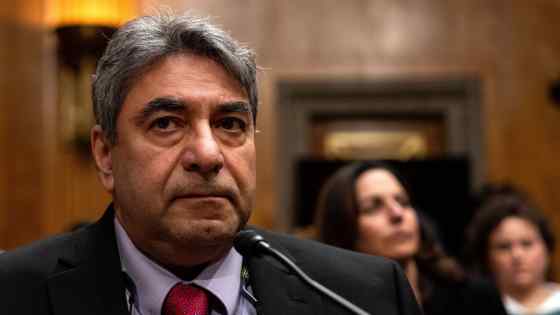
♦ Tim Cook faces a grilling by the US Senate committee after a report on Apple’s international tax structure accused the company of using Irish subsidiaries that are not tax residents of any country to avoid paying billions of dollars in tax. Although Ireland’s low tax rate has created a vibrant International Financial Services Centre, there are questions over the benefits of it – especially at a time of sluggish growth and stagnant tax revenues.
♦ Britain’s plans to renegotiate its ties with the EU could hit efforts to tackle crime and terrorism, particularly in Ireland.
♦ In Parma, the first major Italian city run by the Five Star Movement, the reviews so far are decidedly mixed.
♦ Hong Kong is being taken over by art, but is it ready for it?
♦ If any of you have been bemused by football in the UK before now, the NYT has pulled together a handy guide.

 Read more

By Gideon Rachman
Twenty years ago, I was an anti-European. Today, I am a pro-European. The strange thing is that my views have not changed. I have always thought that Britain should stay out of the euro but inside the EU. During the John Major and Tony Blair years, when the euro was the dominant issue, that position made me a eurosceptic. But now the argument has become about whether Britain should leave the EU altogether. The front-line in Britain’s civil war over Europe has moved and, because I have stayed in the same place, I find myself on a different side of the battle-lines. Read more

By Aaron Hagstrom

♦ An isolated village in northeast China has adopted an “eldercare” model, in which the old look after the even older.
Richard Beeston, the courageous Times correspondent who covered the 1991 Kurdish massacres in Halabja, has died of cancer at 50.
Pakistan’s “crumbling” railways have become an emblem of a troubled past.
Israeli finance minister Yair Lapid has returned to the limelight, in the wake of his unpopular austerity budget.
French chefs are turning from fresh to frozen ingredients, in the face of rising costs.
Researchers have shown the invention of the “humble” shipping container in 1956 explains a 790% rise in bilateral trade over 20 years.
Greece shows rising fertility rates, despite rising unemployment.
In the highest level of US-China military talks held for nearly two years, cybersecurity was the focus.

 Read more

Katrina Manson


In our Reporting Back series, we ask FT foreign correspondents to tell us about a recent trip. Katrina Manson, the FT’s east Africa correspondent, tells us about her visit to Somalia.

Why now? It’s a rare day anyone can say the future looks bright for Somalia, but for the first time in years, the state preyed on by jihadis, pirates and warlords has a shot at stability. The most significant success came towards the tail-end of 2011, when African Union troops forced out al-Shabaab, the al-Qaeda-linked Islamists, from the capital Mogadishu.

On guard: a pirate on the Galmudug coast.

Ever since, diplomats, donors and Somalis have been hopeful. But Somalia hasn’t had a functioning government for the past 22 years. Everything needs to be done and all gains are fragile. Relations between a new, weak central government and clan-aligned regions are increasingly fractious, al-Shabaab launches regular suicide attacks on Mogadishu and still controls much of the southern countryside. This month, the UK hosted a conference dedicated to security, political stability and reform in Somalia. Hundreds of millions of dollars in aid were pledged. Much more is needed, but Somalia’s debts need to be cleared first. Read more