
Barack Obama is meant to be the most powerful man in the world. But it looks increasingly as though he may be dragged into a conflict in Syria, against his own better judgment. Read more

Gideon Rachman

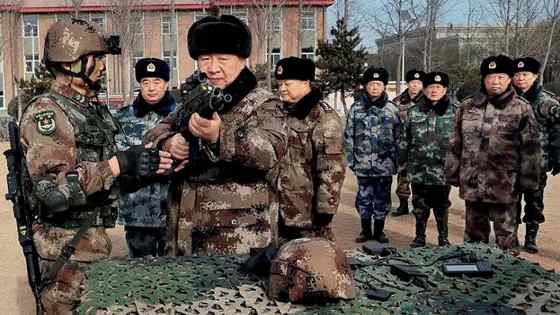
US military chief Gen Martin Dempsey meets Chinese President Xi Jinping in Beijing. AP

Perhaps it is excitement over the new Chinese leadership. Perhaps it is simply a tribute to the growing centrality of the Middle Kingdom. But Beijing seems to be full of foreign visitors, trying to get the measure of the place.

There is me for a start – enjoying the first clear day since I arrived in the city on Sunday. Lionel Barber, the editor of the FT is also in town – or so I infer from his Twitter feed. Twitter also tells me that Niall Ferguson, the Harvard historian is here. In fact, I think he gave a talk in the hotel I’m staying in – although I have yet to bump into him in the lobby. Read more

By Gideon Rachman

Is France on the brink of revolution? Is President François Hollande in danger of being dragged to the guillotine? These sound like silly questions. In fact, they are silly questions. Yet talk of a new revolution is surprisingly common in France these days. This week’s edition of Le Point, a leading news weekly, asks on its cover, “Are we in 1789?”, and illustrates the question with a picture of Mr Hollande, dressed up as Louis XVI, the hapless monarch executed by the revolutionaries. Even academics are making the comparison. Dominique Moïsi, a visiting professor at the University of London, has argued that the president “looks ever more like a modern Louis XVI” and that France is in the grip of a “regime crisis”. Read more

Gideon Rachman

Over the past year, there have been security and war scares all over East Asia – but Taiwan, the traditional hot spot, remained strikingly cool. In recent months, Japan and China have jostled over their disputed islands and the North Koreans have threatened America and the South with nuclear weapons. By contrast, Taiwan has not been at the centre of a good war scare since the Straits crisis of 1996. Visiting the island, a few weeks ago, I was told by a senior member of the security establishment that – “We look like an island of calm in a boiling sea.”

Perhaps the Taiwanese were feeling left out? Because, together with China, they have succeeded in creating some waves over the past week. First, the Taiwanese government staged its first live-fire security exercise since 2008. And this event was swiftly followed by the revelation that China has deployed missiles near the island that are capable of threatening American aircraft carriers. This is significant, because the carriers are the basis of American power in the Pacific. And, in the Straits crisis of the mid-90s, it was the dispatch of US carriers to the area that signalled that America was taking a tough stance. Read more

By Gideon Rachman
Travelling between Madrid and Barcelona on a recent weekday afternoon, I wandered into the first-class section of the train. There was only one passenger, snoozing on the black leather seats – and he turned out to be the conductor, who looked up startled at the sound of an intruder. Read more

Gideon Rachman

In the week of Margaret Thatcher’s funeral – and with the euro-crisis bubbling along – it is interesting to take a look back at what Thatcher had to say about the single currency. Much of the commentary since her death has portrayed Thatcher’s views on Europe as irrational and backward-looking. For example, Anne-Marie Slaughter in the FT, wrote that “her attitude to Europe was a throwback to the 19th century”. For good measure, Prof Slaughter adds that Thatcher’s views were “deeply anachronistic and dangerous”. Of course, there was a strong element of emotion in Thatcher’s views of Europe. So what? It is more interesting to note that she also made some quite precise criticisms of the European single currency that look increasingly prescient, as time wears on. Read more

By Gideon Rachman
Margaret Thatcher had an impact on the global scene that is still playing out today. The three most important aspects of her legacy were her impact on globalisation, on the EU and on the cold war. Of the three, only the debates surrounding the cold war are now safely consigned to the past. Read more

Gideon Rachman

The refusal of the Portuguese courts to authorise the full version of the latest round of austerity cuts will be watched closely in neighbouring Spain – which is, of course, a bigger and more systemically important economy. The Spanish fear that, economically and politically, Portugal offers a vision of their future. The recession there is deeper and so are the cuts to government spending. But with Spain facing another year of recession and cuts – the Spanish too are wondering how long their public will tolerate austerity. Read more

The thing about MAD is that it requires both sides to be sane. Ever since the onset of the nuclear age, the doctrine of mutually assured destruction, or MAD, has kept the peace. The calculation that, ultimately, no rational political leadership would risk millions of deaths in their own nation has seen the world through some perilous moments – from the Cuba missile crisis to the fall of the Berlin Wall. Read more

Gideon Rachman

Sergei Lavrov, Russia’s faintly sinister foreign minister, is not a man who panics easily. So it is worth paying attention, to what Lavrov has just said about North Korea. “The situation could simply get out of control, it is slipping toward the spiral of a vicious cycle,” was his comment yesterday. You could dismiss this as the usual Russian criticism of US foreign policy, since Lavrov was implicitly knocking the US military exercises that seem to have provoked North Korea’s most recent, blood-curdling threats. Or you could take what Lavrov has to say seriously. I’m inclined to do the latter. There are still far too many people in the West, who treat North Korea as a joke. That could be a big mistake. Read more