
Asia

By Gideon Rachman

The flickering black and white films of men going “over the top” in the first world war seem impossibly distant. Yet the idea that the great powers of today could never again stumble into a war, as they did in 1914, is far too complacent. The rising tensions between China, Japan and the US have echoes of the terrible conflict that broke out almost a century ago. Read more

Geoff Dyer

Facing a grilling: Chuck Hagel (Getty)

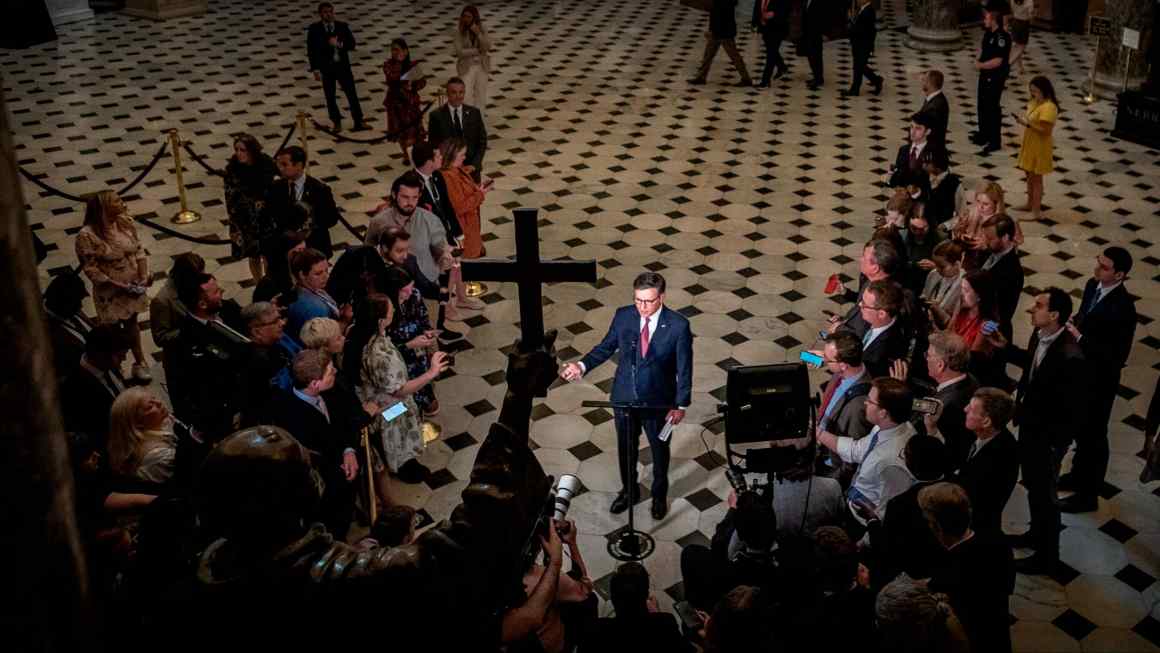
Chuck Hagel’s keenly awaited confirmation hearing on Thursday to be the next US defence secretary is likely to be dominated by the hot-button issues that have already got him into trouble with some of his fellow Republicans (and a few Democrats) – his position on Israel, his opposition to Iran sanctions, his criticism of the Iraq war and his views on gays.

If so, that will be a shame, because it would be both interesting and important to hear him explain what his brand of “principled realism” actually means for US foreign policy. The hearing could provide a seminal debate on America’s global role. Here are ten questions he should be asked.

1) Defence budget. You said in September 2011 that the defence budget was “bloated”. That was before the Pentagon announced $485bn in cuts over the next decade. Is the budget still bloated? Are more cuts possible or necessary?

2) Pentagon cuts. To meet the cuts that have already been announced, will the Pentagon need to axe some important capabilities? Can the US still afford all of its aircraft carrier groups? Is the F-35 jet fighter too expensive to support? Does the US need such a large presence in Europe? Read more

Lord Paul Boateng, former chief secretary to the treasury and the former UK high commissioner to South Africa, answers questions about his first trip to Davos.

1. Is this your first trip to Davos?

I have to confess that it is. I’ve reached a fairly advanced age without ever having felt Davos was for me. I have been an active participant, however, both as a cabinet minister and a diplomat at the spin offs in Mumbai and Cape Town where the WEF reaches out to the rest of the world.

2. What’s the best thing about going to Davos?

If you’ve got an idea or a product to sell then this is a quite unique market place. There are lots of serious people on the lookout for the next big idea or opportunity. A voracious media circus with the promise of global coverage also helps. Read more

By Gideon Rachman

Everybody agrees that economic and political power is moving east. Barack Obama has constructed a whole new foreign policy around this theory – the “pivot to Asia”. But, as I assemble my annual list of the five most important events of the year, it is striking how events in Europe and the Middle East still dominate. Read more

Chris Cook

South Korean students in Seoul sit a test (Chung Sung-Jun/Getty)

South Korean students in Seoul (Chung Sung-Jun/Getty)

A novelty that has emerged since the mid-1990s is the international standardised test solely designed to measure how good national school systems are – not individual schools nor their pupils. Today, two of the three big tests issued results.

The tests, TIMSS and PIRLS, measure basic learning skills and primary school performance respectively. (The third big test, the OECD’s PISA test, comes out next December. It measures higher order skills among 15 year-olds.)

The educational divide in the US is always startling: on the TIMSS maths test for teenagers, Alabama’s test scores put them in line with Armenia and behind Dubai. Meanwhile, Massachusetts comes in at around the same level as market-leader Japan.

These tests confirm the crowd of top performers: Korea, the Chinese cities and Singapore always do well. Not even Finland and Ontario, western school-reform pin-ups, have the degree of consistency that the Asian education superpowers do.

This will spark hand-wringing about school performance, but it is important to note the role of culture. As a really simple experiment to show this, we can look at how Chinese children in England do in their GCSE exams at the age of 16. Read more

David Pilling

Built five years ago, Myanmar's capital is still eerily quiet. (AFP)

At Naypyidaw’s international airport, members of staff in stylish uniforms are at their posts behind ranks of check-in counters. The large departure hall is brightly lit and the air temperature pleasantly cooled. Two pilots and a glamorous young air hostess in traditional Burmese dress breeze across the polished marble floor of a terminal that would grace any European capital.

The only thing missing in this palace of modernity is passengers.

The airport was completed last December on the edge of a ghostly city that had itself not formally existed until November of 2005. After several years of construction, the generals who then ran Myanmar announced without warning that they had built a new capital in the interior of the country 200 miles north of Yangon. Government ministries were to relocate immediately.

 Read more

By Gideon Rachman

Anybody might think that Susan Rice is gearing up for a confirmation hearing. Last week, the US ambassador to the UN tweeted: “I condemn today’s cowardly terrorist attack targeting innocents on a Tel Aviv bus.” Yet trawling back through her Twitter feed over the previous week, there is no indication that innocents might be dying anywhere else in the Middle East. The word “Gaza” is noticeable by its absence – although the ambassador did find time to hail America’s Transgender Day of Remembrance. Read more

 Read more

China’s new leadership
China has just completed its carefully-scripted, once-in-a-decade leadership transition. The Politburo was cut from nine to seven members and incoming general secretary and president Xi Jinping will also become head of the military. With these remaining uncertainties settled, Jamil Anderlini, Beijing bureau chief; James Blitz, diplomatic editor, and David Pilling, Asia editor, join John Aglionby to discuss how the new leadership will cope with an increasingly demanding population and whether the world will engage with Beijing any differently Read more

David Pilling

Aung San Suu Kyi arriving in New Delhi. (AFP)

Aung San Suu Kyi, Myanmar’s opposition leader, gave an exceptionally interesting interview to the Hindu newspaper ahead of her trip on Tuesday to India, her first visit since she studied there as a schoolgirl nearly half a century ago.

The interview is worth reading in its entirety.

On whether she had ambitions to succeed Thein Sein as president after elections due in 2015, the 67-year-old recipient of the Nobel Peace Prize was pretty unequivocal.

“I’d be prepared to take over the position of president. Not so much because I want to be president of a country but because I want the president of the country to be elected through the will of the people.”

She added that she believes her party, the National League for Democracy, “has the people behind it” but made no reference to the recent divisions within it.

An important test of the irreversibility of reform, she said, would be the military’s willingness to change parts of the 2008 constitution that were undemocratic. This would include sections that guarantee the military one-quarter of parliamentary seats as well as a provision – aimed explicitly against her – that bars people married to foreigners from becoming leader. Such changes would need to be made in advance of the 2015 elections, she said. Read more