By Gideon Rachman
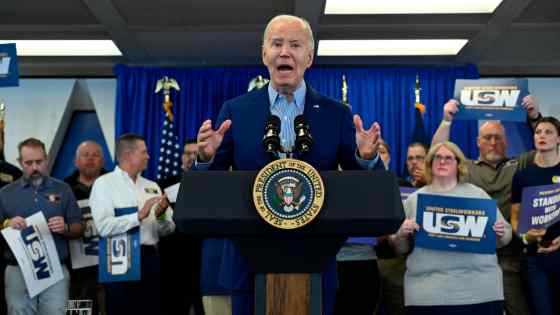
“Weak.” “Apologist.” Those two words are repeated endlessly in the Republican party’s attack on Barack Obama, as it tries to persuade voters that the US president is not worthy of another term as commander-in-chief.
By Gideon Rachman
“Weak.” “Apologist.” Those two words are repeated endlessly in the Republican party’s attack on Barack Obama, as it tries to persuade voters that the US president is not worthy of another term as commander-in-chief.
Inside Obama’s re-election headquarters
As the Republican primary season drags on, the Obama re-election campaign has fired up its engines. This week on Luce Talk, Edward Luce, the FT’s chief US commentator, takes us inside the Chicago headquarters and speaks with Obama spokesman Ben LaBolt.
In 2008 Davis Guggenheim made a biographical video of Barack Obama based on hope – the young senator’s lack of experience was studiously avoided. This time round, in Guggenheim’s The Road We’ve Travelled, which, at 17 minutes, is almost twice as long as his first effort, experience is Mr Obama’s chief selling point. It barely even needs a script to press home, although Tom Hanks does a soothing narration. All that is required is to glance at the shots of the youthful president-elect in 2008 versus the grizzled man seeking re-election in 2012.
No matter how many “cheesy grits” Mitt Romney professed to love, or “y’all”s he threw out, the deep south gave him two custard pies on Tuesday night with third place finishes in Alabama and Mississippi. In neither state was he expected to win. But to come behind a nearly-moribund Newt Gingrich in both was nevertheless a humiliation.
And so, once again, this tortured Republican race has reminded us what makes it so peculiar: almost everybody still bets on Mr Romney getting the nomination; but the point at which it is likely to pay off keeps getting pushed over the horizon. The slim chance that Mr Romney will in fact fail to win the crown also gets a little less slim with each passing setback.
“Outside” being the WTO, in this case.
Dave Camp and Max Baucus, Congress’s two top dogs on trade, want the administration to try to make currency misalignment a WTO matter (originally Brazil’s idea). Good luck with that one. Since the WTO works by consensus, China can block this issue on its own. Regarding the renminbi, the consultancy fees for working out just how undervalued is undervalued would put international economists’ kids through college for decades to come.
So what’s going on here? Possibly the creation of a distraction in an attempt to forestall currency legislation on the Hill. Camp doesn’t like it, and although Baucus voted for it last year, he would probably be secretly happy to see it stalled indefinitely, not being a confrontationist firebrand. If Congress decides to pass a bill to fix this awkward example of judicial meddling in the near future, it could provide a vehicle on which China-bashers can attach some more radical legislation.
The conventional wisdom is that when the economy picks up and unemployment comes down, trade and currency disputes generally abate. On the other hand, there is an election coming up, and POTUS gave a pretty clear indication in the State of the Union that he thinks that warming up the old protectionist rhetoric from four years ago might play well in the Midwestern swing states. Don’t hold your breath for a currency deal coming out of Geneva – Capitol Hill is the real battleground for this one.
By Gideon Rachman
It took an economic crisis in Greece in 1947 to force the United States to assume world leadership. Now, more than 60 years later, another Greek crisis is showing what the world feels like without US leadership.
By Gideon Rachman
The old is dying and the new cannot be born: in the interregnum a great variety of morbid symptoms will appear.” That statement from the Prison Notebooks of the Italian communist Antonio Gramsci was a favourite of student Marxists when I was at university in the 1980s. Back then it struck me as portentous nonsense. But Gramsci’s observation does resonate now – in an age of ideological confusion.
By Gideon Rachman
For half a decade the war in Iraq was the most controversial and important issue in international politics. But when the American military slipped out of the country last week, the world hardly noticed
By Gideon Rachman
This time next year, Americans will be voting in the 2012 presidential election. The Republican party’s effort to choose a candidate to take on Barack Obama increasingly resembles speed-dating – with party loyalists giving swift consideration to candidate after candidate, before getting restless and moving onto the next prospect.
| About this blog | About Gideon | Blog guide |