Gideon Rachman

The Germans: rated trustworthy but lacking in compassion (Getty)

The Pew poll on European attitudes came out this week and drew plenty of attention because of the remarkably negative attitudes it revealed towards the European Union. But to my mind, some of the most amusing and intriguing findings came when the pollsters probed nations’ views of each other, and of themselves.

The Germans were widely rated as both the most trustworthy and the least compassionate people in Europe – which says something about the complexity of European reactions to the euro crisis. The Italians rated themselves as the least trustworthy people in Europe. Do we call that self-knowledge or self-loathing? Asked to choose from a list of several countries, the French rated themselves as the most arrogant people in Europe. But they also rated themselves the least arrogant people in Europe. Maybe they are just the most self-obsessed? Read more

♦ Pharmaceutical companies are worried that the battle in India over patents will inspire other emerging economies to change their laws and make it more difficult to register or extend patents.
♦ Joshua Foust makes the liberal case for drones: “a lethal autonomous drone could actually result in fewer casualties and less harm to civilians.”
♦ The US military has seen a baffling rise in suicide numbers from 10.3 per 100,000 troops in 2002, to above 18 per 100,000 now.
♦ Gazans have a real taste for KFC and one entrepreneur has set up a business smuggling the fried chicken in from El Arish, Egypt. “Despite the blockade, KFC made it to my home”, says one satisfied customer. Read more

Britain’s future in the EU
Prime Minister David Cameron thought that his promise to renegotiate the terms of Britain’s membership of the EU, and to hold an in-out referendum on British membership in 2017 had bought him domestic political peace. Instead, many in his own Conservative party are agitating for an even harder-line position, and the anti-EU United Kingdom Independence Party is soaring in opinion polls. An eventual British exit from the EU is looking increasingly possible. So what’s going on, and what do other Europeans make of it. Quentin Peel in Berlin joins Janan Ganesh and Gideon Rachman in London. Read more

♦ Wild card candidates for the Iranian election have confused the regime’s orchestration of the vote.
♦ Dana Milbank thinks President Obama needs to show more engagement with his presidency:He responded as though he were just some bloke on a bar stool, getting his information from the evening news.”
♦ The Guardian reports on climate refugees in Alaska, where people are losing ground to the sea at a dangerous rate.
♦ Devastating water shortages in China are putting a brake on economic growth and stirring political discontent, but Beijing’s high-spending responses to the problem have triggered widespread criticism.
♦ Shanghaiist has photos of Gansu’s Crescent Lake Oasis, where the government had to step in to preserve the lake in the Gobi desert.
 Read more

You still need a strong constitution or a taste for gallows humour to read most eurozone economic statistics, as today’s release of the preliminary Q1 gross domestic product growth contraction data shows.

The bloc is now in its longest recession since the birth of the single currency, beating the post-Lehman Brothers slump in duration, though not in the depth of the downturn.

 Read more

James Blitz

Fighting on: rebels on a training exercise in Syria's northern Latakia province (Getty)

The international diplomacy to try and resolve the crisis in Syria is entering a new and complex phase. Over the next few weeks, the main focus will be on attempts by the US and Russia to convene a peace conference in early June that brings together representatives of the regime of Bashar al-Assad, president, and the Syrian opposition. Whether this conference can achieve anything – indeed, whether it will even take place – is hard to tell. As President Obama said when meeting David Cameron, British prime minister, this week: “I’m not promising that [the peace conference] is going to be successful. It’s going to be challenging, but it’s worth the effort.”

Despite that effort, the UK and France are not giving up on an altogether different diplomatic push. Both want to open the way for the transfer of weapons by EU states to the moderate rebels fighting the Syrian regime. Britain has committed itself to providing the opposition with armoured vehicles, body armour and power generators. But Mr Cameron said this week that he now wants “more flexibility” to support the rebels.

The UK and France are therefore committed to trying to get the EU arms embargo on Syria amended at the end of this month so that weapons can at some later stage be transferred to the Syrian opposition. The difficulty is the huge opposition within the EU to any amendment that allows weapons to be transferred to Assad’s opponents. Read more

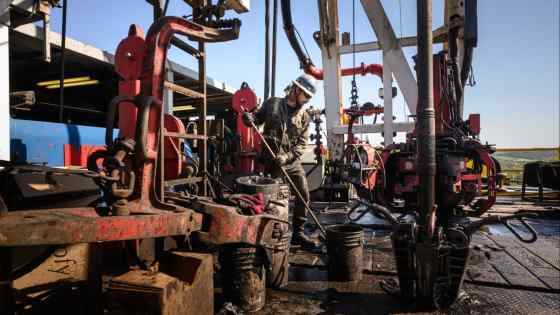
♦ Energy companies scrambling for reserves in Somalia are at risk of opening up dangerous faultlines.
♦ Janan Ganesh thinks the UK Conservative party has become ungovernable. “Drama is giving way to farce. Having run out of big but rash things to ask for, the demands of eurosceptic backbenchers are now plain odd.”
♦ Germany’s Green party is still coming to terms with its historical links to pedophiles.
On a final note… Are you a fan of statistics guru Nate Silver? Do you love Euro-pop song contests with political undertones? Martin O’Leary, a “recovering pure mathematician”, has set up a model to predict the results of this weekend’s Eurovision Song Contest.  Read more

Seen from outside France, the country’s “cultural exception” – which protects its art, music and movie industries in trade negotiations – is like a long-running film franchise.

In the new sequel – Exception Culturelle 3D, if you will – Pierre Lescure, author of a government-commissioned report, has given the story a great new twist by suggesting a tax on smartphones, tablets, gaming consoles and e-readers to fund French cultural output. Read more

♦ There are doubts over how much longer Latin America will benefit from the “commodity supercycle”.
♦ Akbar Hashemi Rafsanjani, the former Iranian president, has registered for next month’s election, disrupting the Islamic regime’s plans to hand power to a loyal fundamentalist.
♦ Nawaz Sharif has sealed his third term as prime minister of Pakistan. However, the sense of vibrant democracy has been tempered by Taliban attacks. The New York Times bureau chief was also expelled on the day of voting.
♦ Forty years after Watergate, the BBC looks at the legacy of investigative journalism in the UK.
♦ After the news that Bloomberg’s journalists could see more than Bloomberg’s customers would like them to, Quartz takes a look at the culture of omniscience that pervades the organisation and Hilary Sargent (aka ChartGirl) explains how it works in this neat diagram.
On another note… Britain’s approach to Eurovision might need some fine-tuning.  Read more

Gideon Rachman

I have just returned from the annual “Polish-British Round Table” in Krakow. This year, the theme was – “Britain and Poland: A Shared Future?” After sitting through several hours of discussions, my conclusion was – “not necessarily”. In fact, it is quite startling how swiftly British and Polish viewpoints have diverged, since Poland joined the EU back in 2004. Read more