
Bassem Youssef

♦ Syria’s Jabhat al-Nusra has dealt a blow to the rebel cause.

♦ When it comes to the labour market, America is suffering from a rising case of ‘German envy’, writes Edward Luce. However, Germany’s labour market is not without its problems – reformers are keen to take action on the shortage of workers.

♦ The world’s top commodities traders have pocketed nearly $250bn over the last decade, making the individuals and families that control the largely privately-owned sector big beneficiaries of the rise of China and other emerging countries. The FT’s Javier Blas has done a comprehensive review of the sector.

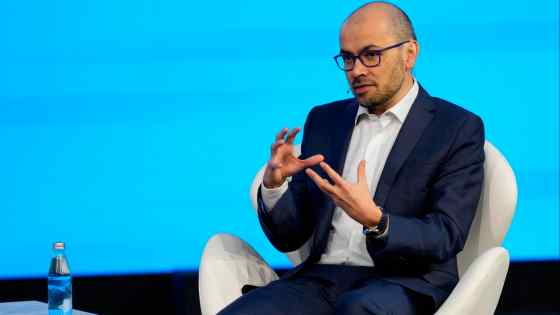
♦ Bassem Youssef, Egypt’s Jon Stewart, has ignited a public debate over Qatar’s influence in Egypt.

♦ MJ Rosenberg looks back at negotiations over the Israeli-Palestinian issue in 1990 and explains why he thinks there is “no possibility of serious negotiation so long as Benjamin Netanyahu is prime minister of Israel.”

♦ The Senate begins debate next week on the biggest gun control bill in nearly 20 years, and the gun rights lobby is working with Senate allies on a series of amendments that could actually loosen many of the current restrictions.

♦ Anonymous has handed over to Canadian police what it claims are details about four boys linked to the alleged rape of Rahtaeh Parsons, whose funeral was held last week.

♦ A matriarch in her mid-50s with only $28 to her name is making a bid for election to the provincial assembly in Pakistan’s elections next month.

♦ The Economist writes on Bitcoin and how it is more than a passing frenzy: “chances are that some form of digital money will make a lasting impression on the financial landscape.” Meanwhile, Paul Krugman thinks that “Goldbugs and bitbugs alike seem to long for a pristine monetary standard, untouched by human frailty. But that’s an impossible dream… green pieces of paper are doing fine — and we should let them alone.”

♦ A row has flared between the London School of Economics and the BBC over the presence of journalists on a university-affiliated trip: “the BBC, which the university says actually sent three journalists, also later acknowledged that it had not told the students of the nature of the documentary, in what it characterized as a bid to keep them safe if the journalists were found out and the students were questioned about what they knew.”

Golf round-up
Adam Scott has become the first Australian to win the US Masters.
♦ The Guardian looks back at Guan Tianlang’s week and what he has gained from it – the teen golfer has changed the face of Chinese sport.
In the UK, the downturn means that golf clubs are trying to shed their stuffy, middle-aged image.

 Read more

  • The daughter of Uzbekistan’s autocratic president, Gulnara Karimova, has for some time been the western-friendly face of the regime. She has released a duet with Gérard Depardieu, launched a fashion line and even has her own perfume. However, attention is turning to her other persona: “that of the ruthless businesswoman, ready to use her family position to crush business rivals.”
  • Bassem Youssef, Egypt’s equivalent of US chat show host Jon Stewart, has been the target of death threats and law suits, but he shrugs them off: “It is a guarantee that freedom of speech will not be oppressed if we continue to speak.”
  • Steven Cook at the Council on Foreign Relations argues that the Egyptian opposition’s feckless approach to politics underscores the need to replace wedge issues and anti-Muslim Brotherhood sentiment with real policies.
  • Why the White House shmooze-fest? The “president’s only route to a so-called grand bargain for deficit reduction is to go around the leaders to build a bipartisan consensus.”
  • As it is International Women’s Day, we thought we’d share with you this cheering article on the media’s double standards for women at the top.

 Read more