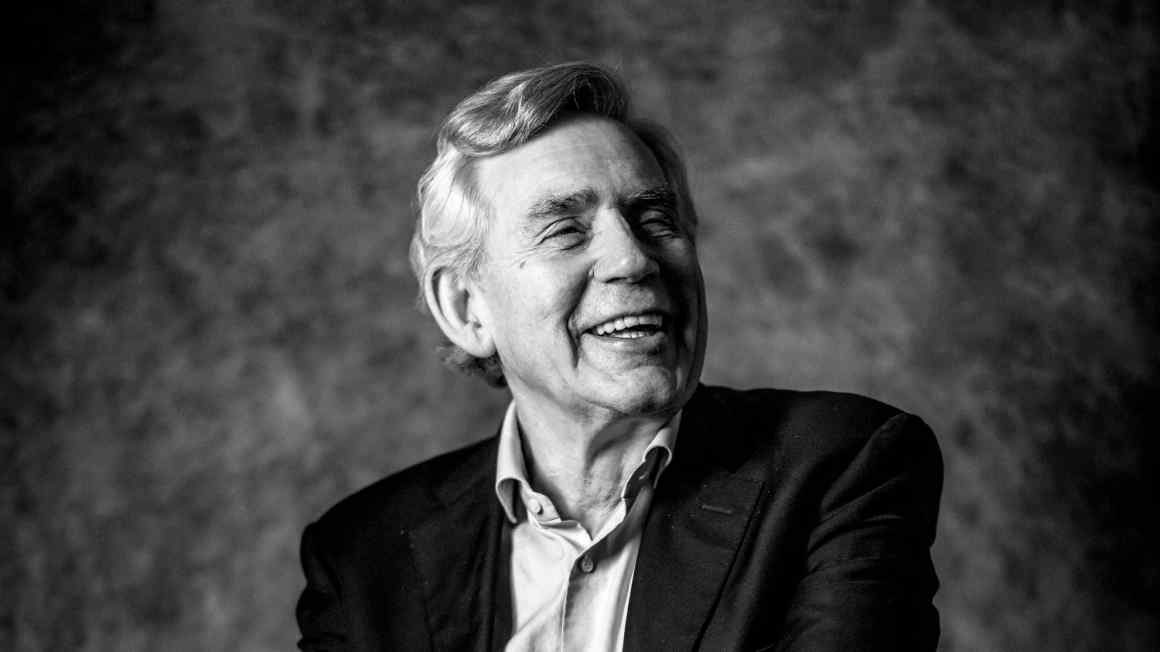
While most Labour MPs are taking delight from the hacking story - because it puts David Cameron in a difficult position - one person is taking a more nuanced position: the prime minister.
Early today, a Downing Street spokesman made clear that Gordon Brown would not comment on the issue because he was focussed on big global issues at the G8 summit in Italy. In the afternoon Mr Brown said it “raises issues that are serious and will obviously have to be answered.”
But is it conceivable that he would have preferred to have stayed out of a debate which involves some of New Labour’s key allies?
Close relations with the Murdoch business empire seem to be a prerequisite of any successful UK government of recent years. Peter Oborne, in his excellent book “The Triumph of the Political Class” reminds us that Tony Blair twice flew across the globe to address the annual conference of News Corporation executives.
Meanwhile Lance Price, the former Downing Street press office, once claimed that Mr Murdoch had been the “24th member of the Cabinet”.
“His presence was always felt. No big decision could ever be made inside Number 10 without taking account of the likely reaction of three men - Gordon Brown, John Prescott and Rupert Murdoch. On all the really big decisions, anybody else could be safely ignored.”
Early in his premiership, Blair raised the subject of Murdoch during a conversation with Romano Prodi, then Italian PM. He asked about Murdoch’s multi-billion pound bid for Mediaset, the media group. Blair then passed the reply - Prodi would prefer Italian buyer - back to Murdoch.
Here is another direct quote from a Lance Price article in the Guardian in 2006:
“I was reminded just how touchy Downing Street is about Mr Murdoch when I submitted the manuscript of my book, The Spin Doctor’s Diary, to the Cabinet Office.
The government requested some changes, as is its right. When the first batch came through, it was no surprise that Tony Blair’s staff were deeply unhappy. The real surprise was that no fewer than a third of their objections related to one man - not Tony Blair or even Gordon Brown, as I might have expected, but Rupert Murdoch.
“In my first few weeks as Alastair Campbell’s deputy, I was told by somebody who would know that we had assured Mr Murdoch we wouldn’t change policy on Europe without talking to him first. The Cabinet Office insisted that I couldn’t say in my book that such a promise had been made because I did not know it for a fact. With some reluctance I turned the sentence around so that it read: “Apparently News International are under the impression we won’t make any changes without asking them.” Every other request relating to Murdoch was rejected.”

Back to Westminster Blog homepage
Jim Pickard and Alex Barker, FT Westminster correspondents, share the latest news and gossip from the UK's political scene.
Alex Barker
Jim Pickard