


Never mind the manifesto: Clegg is having a good war

Gordon has Sarah; David has Samantha; and Nick has Vince.

The Liberal Democrats are having a good campaign. There is no reason to suppose that the publication of the party’s manifesto will change that.

The uncertainty about the election outcome has assured Mr Clegg of plenty of exposure. The televised leaders’ debates will treat him as a nearly equal alongside Gordon Brown and David Cameron. There is nothing that more excites the media than the possibility that the Lib Dems might hold the balance of power in a hung parliament.

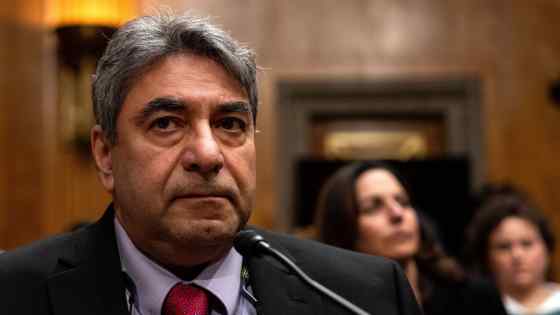
The presence at the leader’s side of Vince Cable has added ballast to the Lib Dem campaign. I have argued elsewhere that “honest Vince” is often prone to sanctimonious claptrap. For all his protestations otherwise, Mr Cable’s fiscal arithmetic is as dodgy as anyone else’s; and some of his manifesto ideas are frankly barmy.

Much as I sympathise with the underlying sentiment, in a free society you simply cannot ban the banks from paying bonuses of more than a few thousand pounds. As for the Lib Dems’ hugely expensive plan to lift the earnings threshold for income tax to £10,000, the people who would benefit least are those on the lowest incomes. At this level of earnings almost anything gained on the tax roundabout is lost on the benefit swing. I am not sure how the party can call this “fair”. Never mind. Mr Cable has joined the likes of Tony Benn as a national treasure.

History is also be on the side of third-party politics. This is not just a question of the closeness of the present contest; the Lib Dems are long-term beneficiaries of the fracturing of the old tribal alliances. In the 1951 election, the Conservatives and Labour between them accounted for more than 97 per cent of the vote; by 2005 that had fallen to about 68 per cent. Nothing in the polls suggests the two big parties will do  better this year. Britain is getting pluralist politics by stealth.

So what about the manifesto? The good parts are those in which the party draws on its essential instincts as a guardian of civil liberties and political pluralism: rolling back the powers of the surveillance state; shifting power from Whitehall to local government; reforming the nation’s political institutions to ensure that the way people vote is better reflected in electoral outcomes.

The fairness theme comes across in the plan to pay a “pupil premium” to boost the educational chances of the most disadvantaged children.

The weakest section, oddly enough, is the one about economic policy. Messrs Clegg and Cable make much of what they claim is line-by-line accounting for all commitments and savings. The manifesto then conjures billions from thin air by assuming they could close tax “loopholes”. And, like those of the other parties, it relies heavily on those fabled “savings” in Whitehall budgets. True Mr Cable promises not to modernise the Trident nuclear deterrent but all in all the maths of closing the deficit is fuzzy.

None of this should affect the party’s chances. The Lib Dems have a solid following. Mr Clegg and Mr Cable look good together. And even with their wives in tow Messrs Brown and Cameron have scarcely been setting the country alight.