Monthly Archives: November 2010

The Queen and Prince Charles have made their debut in the Wikileak files.

A dispatch from a US diplomat notes that the next British monarch will not necessarily be the next head of the Commonwealth. Apparently there are no rules on succession. Should Charles become the next King, he could in theory face a Commonwealth leadership challenge.

The cable written by Richard Mills, one of the most respected diplomats at the US embassy in London, is based on his conversation with Amitav Banerji, the political director at the Commonwealth secretariat.

Here’s the key section:

Banerji acknowledged that succession of the Head of the Commonwealth would have to be dealt with when Queen Elizabeth passes, as there is no rule stipulating that the British monarch is the head and no procedure for selecting a new head.

Banerji goes on to note that Charles’ faces an uphill task to win support:

He acknowledged that heir-apparent to the British Crown, Prince Charles, does not “command the same respect” as the Queen and said the Commonwealth was trying quietly to get him more involved in Commonwealth affairs.

Banerji goes on to point out that the succession is not currently an active topic of discussion. But it’s clear that if a leadership contest does materialise, would be a disaster for Charles. Even if the alternative candidate was a no-hoper from Mugabe’s Zimbabwe, the Prince would still have to weigh up whether to risk his reputation on entering a race. It is a big gamble for a new King.

Even so, Banerji notes that the British Royal family have one serious advantage:

Banerji noted Marlborough House, the Commonwealth Secretariat’s current location, was a royal property, owned and funded by the British Royal Family, and mused that may be a factor in the discussions.

If you asked a Lib Dem MP whether they would abstain on tuition fees given a free vote, the answer would almost certainly be no. Most of them have very strong views on the matter. Vince Cable just spelled out the obvious: his “personal instinct” is to vote for the policy he developed.

Yet when 57 Lib Dem MPs gather in one room, strange things begin to happen to their judgement.

Even Nick Clegg is now seriously considering the mass abstention option — bravely leading his party to sit on the fence.

To be fair, there are no good options. They will be punished for breaking their pledge to vote against a rise. But it seems that after countless hours of excruciating debate, they’ve decided the best way to minimise the pain is to not vote at all.

Here’s another example of the OBR shrugging its shoulders at coalition policy.

The Office of Budget Responsibility reviews the Lib Dem-backed crackdown on tax avoidance and concludes that it will have no impact on compliance rates.

This is a bit embarrassing for the Treasury, particularly given they expect the policy to raise at least £7bn by the end of the parliament. Much like the coalition immigration policy, the OBR is almost saying the government may as well have not bothered.

They of course put it in a slightly more diplomatic way:

The Spending Review 2010 settlement for HMRC included overall resource savings of 15 per cent. This assumed 25 per cent efficiency savings and a £900 million investment to addressthe tax gap and tackle tax avoidance and evasion.

This included measures to increase criminal prosecutions, tackle offshore evasion, extend HMRC’s coverage of high risk areas and the greateruse of debt collection agencies.

Inevitably there are always large uncertainties about the effects of both the efficiency savingsand additional investment. As a result, we have not included the impact from either factor in the November forecast.

Some weeks ago, we ran a story on how David Cameron’s immigration cap would stunt economic growth and cost the exchequer around £9bn a year, at least according to the Office of Budget Responsibility economic model.

At that point the OBR had yet to take account of the new coalition policies. So for our piece, we had assumed Cameron would actually achieve his aim of bringing net immigration down to the level of the 1990s, when the average was close to 60,000.

Well, the OBR has now officially taken account of the coalition’s immigration policies. Their verdict makes surprising reading.

Their considered view is that Cameron will have no impact on net immigration. All the announcements since June have not made a jot of difference.

This is the key passage explaining the old assumption and the new policies:

Ed Milband flailed around this morning while defining his “squeezed middle”. By the end of the Today interview, it basically counted as any household earning under £100,000 that is not reliant on benefits.

All wonderfully inclusive (see this chart). But including most of the nation in your analysis hardly helps in identifying policies to help these squeezed people.

Gavin Kelly at the Resolution Foundation has done a much better job. His broad definition is anyone who is “too poor to be able to benefit from the full range of opportunities provided by private markets, but too rich to qualify for substantial state support.” Even something this vague would have helped Miliband.

But Kelly does go further. His squeezed middle consists of:

…those on below-average incomes who remain largely independent of state support. While median income is relatively straightforward to establish as an upperthreshold, defining when people become independent of state supportis more difficult, particularly as all income groups are entitled to some welfarepayments.

This table shows the final definition, according to household type:

Kelly’s analysis shows what a genuinely important political problem the squeezed middle will be in the years ahead. He calculates that stagnating pay and the rising cost of living will leave these households losing an average of £720 in 2012. That is even before the impact of cuts to tax credits are taken into account. No politician can ignore that.

Miliband’s mistake wasn’t the choice of issue. It was the rubbish way he explained it.

UPDATE: If you want to read more on this, Gavin gives a compelling explanation of The Big Squeeze over at the Spectator Coffee House.

Does the defence review add up? The head of the RAF has today given us an important insight into the maths. He has made public that David Cameron’s vision for the armed forces in 2020 is only affordable if you assume the MoD budget rises every year after 2015 by around 2 per cent above inflation.

For those of you who don’t think it sounds much, a five-year military settlement as generous as that was last granted in the early 1980s.

Is the rise a realistic basis for planning? A prudent approach? Should we really count on a military spending boom after 2015?

This review was, after all, supposed to balance the MoD books. Yet it looks like we’re back to buying kit on the never-never. Officials tell me the cumulative unfunded liability — if you take the usual planning assumption of the budget rising in line with inflation after 2015 — stands at £13bn to £15bn over the coming decade.

Coalition aides say this is completely different from the “black hole” they say they inherited from Labour. It all comes down to this statement given by the prime minister in the Commons:

“My own strong view is that this structure will require year on year real-terms growth in the defence budget in the years beyond 2015.”

On the basis of this “strong view”, Liam Fox’s team think it is realistic and reasonable to at least plan on the basis of real terms increases to cover their spending commitments. Defence chiefs also welcomed Cameron’s “strong view” of the future — but they are still pushing for a more “bankable” pledge. They want George Osborne to guarantee an annual uplift beyond 2015, a request that some Treasury officials will treat as light comedy. I don’t think such a guarantee has ever been given to a department.

An old parlour game in Westminster has been guessing the political motives (if there are any) behind Mervyn King’s various interventions in public life.

What has become all too clear today is the serious concerns they have generated in the Bank of England.

At an extraordinary hearing of the Treasury select committee today, an external member of the monetary policy committee spoke out over Mervyn’s “excessively political” statements on the pace of deficit reduction. In genteel Bank terms, this is an uprising.

Howard Flight is the latest politician to make a bid for the “most inappropriate remark of the year” award. He’s up against some tough competition but this quote is quite something.

We’re going to have a system where the middle classes are discouraged from breeding because it’s jolly expensive. But for those on benefits, there is every incentive. Well, that’s not very sensible.

Although I’m loathe to say it, he’s kind of right about one thing. There is apparently a link between benefits and birth rates. What is inexcusable is the suggestion that those incentives should be rigged against the poor.

What is the evidence of a link? We’ve written on this blog before about the 45,000 extra children born as a result of Gordon Brown’s largesse with benefits. This is the cohort of “Brown babies” identified by the Institute of Fiscal Studies.

The changes to tax credits and benefits basically lowered the financial risk of having a kid, helping to push the birth rate to its highest level since 1974. The “price” of an extra child fell for many low income families along with the financial penalty of staying at home as a mother. Working class families had more confidence to have children – or at least have them earlier.

That’s the theory at least. It admittedly does sound a bit crude to make such a link. But the IFS research seems reasonably rigorous. None of that, though, excuses Flight’s breeding blunder.

Here the FT’s South Asia bureau chief discusses the UK’s aid policy in India. What do you think David Cameron’s government should do? Join the debate in the comments section.

Sixty years after granting independence to India, the UK is weighing whether India is a worthy recipient of its aid programme. Once the largest single recipient of British foreign aid, the country has developed so rapidly in recent years that some in prime minister David Cameron’s government think it could be time to cut off India and channel the money to poorer countries, mainly in Africa.

Bankers can breathe easy. This year’s bonus season will roll on unhindered by any new disclosure rules.

George Osborne will take credit in the City for the U-turn. But the bankers also have to thank Sir David Walker, the City grandee who originally proposed the measures, for concluding it would be “mistaken” for Britain to go it alone.

Walker’s revised view is largely consistent with his report, which did acknowledge the dangers of unilateral action. But Walker also made one conflicting point. This is the key passage:

The priority of persistence with efforts to achieve such [international] convergence needs no further underlining, but a situation may develop in which the adoption of an exemplary leadership stance by the UK in this respect is the most effective way of achieving progress.

Exemplary leadership? The virtues of going it alone? This bold manoeuvre is not something  Walker cared to mention in his recent op-ed for the Financial Times.

It is probably not an idea that will capture Osborne’s imagination.

There have already been some noises off between the UK government and the green energy industry over the green investment bank, the government’s proposed investment vehicle for funding clean energy projects. Apart from anything, many in the sector simply don’t think the £1bn promised by Chris Huhne, the energy secretary, is enough.

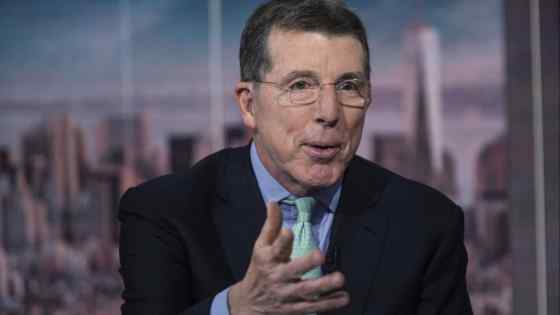
But another faultline opened up today at a briefing attended by both Sam Laidlaw, the chief executive of Centrica (pictured), and Huhne himself. Specifically, the pair seemed to be at odds over whether the green investment bank could be used to fund energy efficiency initiatives.

Michael Gove interviews can, in patches, be almost as fun as reading his newspaper op-eds.

One particularly highlight of our interview with him yesterday was the section on grammar schools. Gove, remember, had told pro-grammar school Tories that his “foot was hovering over the pedal” of allowing an expansion of selective education.

His foot, it seems, is still hovering. Here’s an extract from the transcript:

Westminster blog

on the UK political scene

About this blog Blog guide
Jim Pickard and Kiran Stacey, FT Westminster correspondents, share the latest news and analysis on the UK's political scene.

Follow the latest news on the UK politics and policy.

To comment, please register for free with FT.com and read our policy on submitting comments.

All posts are published in UK time.

Contact the Westminster blog team: Jim Pickard, Kiran Stacey, Nicholas Timmins, Elizabeth Rigby and Helen Warrell.

The illustrations of Jim and Kiran are by Nick Hardcastle.

See the full list of FT blogs.

The authors

Jim Pickard joined the lobby team in January 2008. He has been at the Financial Times since 1999 as a regional correspondent, assistant UK news editor and property correspondent.

Kiran Stacey is an FT political correspondent, having joined the lobby in 2011. He started at the FT as a graduate trainee in 2008, working on desks including UK companies and US equity markets before taking over the FT's Energy Source blog.

Contributors

Elizabeth Rigby, the FT's chief political correspondent, joined the lobby team in September 2010. Elizabeth has worked at the FT for more than a decade and was most recently its consumer industries editor.

Helen Warrell is the FT's UK reporter, covering home affairs, crime and policing. She joined the FT in 2008 and has spent time as a reporter in the Brussels bureau and more recently, editing the paper's Asia coverage on the world news desk.

Archive

« Oct Dec »November 2010
M T W T F S S
1234567
891011121314
15161718192021
22232425262728
2930