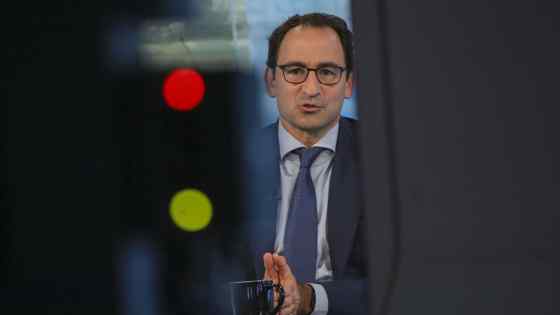

James Murdoch as he arrives at the Leveson Inquiry on Tuesday. (Photo by Peter Macdiarmid/Getty Images)
Welcome to our live coverage of the Leveson Inquiry into the standards and ethics of the UK press, on the day when James Murdoch is giving evidence.
By Salamander Davoudi and Esther Bintliff in London, with contributions from FT correspondents. All times GMT.
NB: We refer to James Murdoch as James throughout for speed and to avoid confusion with his father Rupert. Jay is Robert Jay QC, who is questioning James.
16.33 Wow that’s been a big day. We’re going to close the live blog for now but we’ll be back tomorrow morning just before 10am, for Rupert Murdoch’s appearance. In the meantime, FT.com will have all the news, analysis and comment you need. You can also investigate the documents mentioned during today’s proceedings here.
16.30 Members of the opposition Labour party are not being slow to voice their anger at the revelations today. Ivan Lewis, the former Labour culture spokesman – and Jeremy Hunt’s opposite number at a key time during the BSkyB bid - commented:
“Jeremy Hunt told me in parliament he was behaving in quasi judicial way. This cannot include off-record contact with any party.”
16.26 Labour MP Tom Watson – who has played a large role in investigating the phonehacking scandal, and is a vocal critic of the Murdochs and News Corp business practises – said in an interview with ITV news:
“I don’t think people knew the depths to which special advisors had been communicating with executives” at News International.
16.23 Over on the FT’s Business Blog, John Gapper focuses on the issue of whether newspaper proprietors get favourable treatment in business in return for publicly supporting politicians. He points out that the most telling moment on the subject today was when James described his anger at Simon Kelner, the editor of the Independent, who he clearly felt had betrayed the Murdoch family:
“I found Mr Kelner and I told him of my concerns, whether I used colourful language I will not dispute … I was particularly upset because Mr Kelner had been availing himself of the hospitality of my family for years.”
16.21 The prime minister’s spokesman said David Cameron has full confidence in Jeremy Hunt, reports Kiran Stacey from Westminster:
When asked if the PM had full confidence in Mr Hunt, a spokesman said he had. But he declined to say that Mr Cameron had full confidence in Mr Hunt’s handling of the BSkyB bid.
16.19 Jeremy Hunt has not tweeted today. However the first little bit of his update from yesterday – which coincided with the launch of the World Shakespeare festival – has a strange relevance today:
16.16 Lord Justice Leveson has thanked James Murdoch for appearing and the inquiry is closed for the afternoon.
The inquiry will publish on the website “as soon” as it can, some of the evidence mentioned, including Fred Michel’s statement. The inquiry will begin again tomorrow at 10am (when Rupert Murdoch is due to appear).
16.12 Leveson is asking about the issue of plurality of the media and its independence from government. James says:
I would simply say that the first part of protecting plurality… is being crisp around what plurality is sufficiency. Otherwise you would simply have the ability of a regulatory body to intervene… at any stage…
I think the baseline is the key thing to understand with respect to sufficiency. Because then it will become a much more simple and straighforward and frankly light-touch system..
With respect to independence from government, I think we have a very independent press – though they’re dependent on other things – but I think we have a very independent press and that’s a credit to it.
16.10 Hannah Kuchler has picked up on the more gentle tone adopted by Lord Justice Leveson towards James when discussing the broader themes of regulation. The two are indeed very polite to each other.
Now the news is clearly out, the frantic typing from the press corp has subsided as Jay QC addresses broader questions about press regulation. Leveson is posing some questions too – like a kindly tutor with a tired student.
16.07: Jay asks why James celebrated the Max Moseley story in an internal company update. James says he would have been given a list of stories to mention, and it was before the court case. Had he known then what he knew later – with regard to the story being false and not in the public interest – he certainly wouldn’t have included it, he says.
Jay asks: “Did you see it when it was published?”
James says yes, but that he didn’t read it in “great detail”.
16.04 Jay has some questions from “core participants”.
Jay: “Did you discuss the phonehacking scandal with your father, particularly given the reputational repercussions to your company from the Gordon Taylor settlement?”
James: “Yes I did after 2009 when the Gordon Taylor payment resurfaced in The Guardian.”
Jay: “So 2009 was the first discussion?”
James: “Yes, the middle of 2009.”
Jay: “Did you discuss with him the reputational ramifications for your company as the story took wing?”
James: “Yes…but… the wider reputational damage – the notion that, you know, there was a lot more there – wasn’t discussed, because we didn’t know there was a lot more there, until much later, as you know.”
15.59 An update from Kiran Stacey, Westminster correspondent, who says Jeremy Hunt’s allies are now firmly on the defensive.
“They say Mr Michel is exaggerating, presumably to boost his position with the Murdochs. They say he wouldn’t have spoken to Mr Hunt directly – that’s not the way access to cabinet ministers works. So for Mr Michel to claim to have spoken to Mr Hunt directly shows he was not telling the exact truth. One person close to the culture secretary said:
“I think it’s quite clear from what is being said that there is a lot of exaggeration going on. In every single one he refers to having spoken to Jeremy personally. He had a lot of contact with Adam [Smith] and a lot of other officials in the department. But he hasn’t spoken to Jeremy.”
They also insisted that Mr Hunt played strictly by the rule book at all times.
“All meetings were published along the way – we actually raised the bar for transparency,” they said.
15.56 A tweet from Ben Bradshaw, the Labour MP:
15.54 The deputy editor of the Guardian has tweeted in relation to James’ comments on his paper’s corrections:
15.52 James says it may be a question of “the enshrining of speech rights on the one hand, coupled with a self-regulating body that includes press members and non-press members…”
James admits it is difficult to allow an industry to regulate itself.
15.50 Lord Justice Leveson is in a rather ponderous mood. He is discussing what any new framework for regulation of the media industry should be.
“It can’t always be left, some might say… and I’d be interested in your view – to the police. There has to be some other method of regulation that can deal with issues that are less than criminal, but also to make sure that governance is in place to protect the industry from serious problems, and it’s a question of how one tries to create that system in a way that binds everybody but does not impact upon the freedom of the press which everybody quite rightly feels is so important, and I am certainly in that group. But how to find that balance is the problem. And if you’ve thought about it at all I’d be interested in your thoughts, from your particularly unique perspective.”
15.48 Lord Justice Leveson wants to know James’ view on regulation, and suggests, should not a framework be set up in a statute, independently set up and administered – might not that be “what this country requires?”
James says, he knows things that were illegal happened, and they should have been brought to light, and for whatever reason at the News of the World they weren’t… which is a matter of huge, huge regret.
15.44 Jay asserts: “Wouldn’t you expect government to respond favourably to a bid by News Corp since support had been given to the Tory party on 30 September 2009. This is in part a quid pro quo?”
James said he simply wouldn’t make that trade.
Jay says: “I believe your position may be this. That although you are not in favour of much internal regulation, your position is not that there should be no regulation, is that right?”
James agrees.
Jay: “Is it your position that we should be satisfied with the current system – namely, self-regulation?”
James says his personal experience – being the subject of much media coverage – in the last few months has given him cause for reflection, nad made him think about right to reply and corrections. He has a go at The Guardian, claiming they had to make 40 corrections over the past 6 months in stories relating to News Corp.
15.43 “I don’t know the ins-and-outs of Westminster protocol,” says James. “But we were receiving feedback and information through our public affairs channel.” [Public affairs channel seems to be James' way of referring to Fred Michel]
15.41 Jay asks James whether he thinks Hunt fulfilled his quasi-judicial role with regards to the bid? James defends Hunt, saying the secretary of state followed all the advice he was given, but ultimately didn’t have to make a decision.
15.40 Update from Andrew Edgecliffe-Johnson, the FT’s media editor in New York:
For a company that delights in seeing itself as an outsider, challenging political and media elites around the world, James Murdoch’s testimony to the Leveson Inquiry is both remarkably damaging and remarkably helpful.
The exposure of a cosy relationship with Jeremy Hunt, the culture minister with a quasi-judicial role in overseeing News Corp’s $12bn pursuit of the 60 per cent of BSkyB it did not already own, gives the lie to the idea of the Murdochs’ outsider status.
But Westminster is fully focused now on how long Mr Hunt can survive. James Murdoch has learned enough from his father about newspapers to know that – barring further surprises – tomorrow’s headlines will be dominated by politics, not phone hacking.
No paper loves a ministerial scandal more than The Sun, News Corp’s flagship UK tabloid. The question of how it handles this double-edged story will make tomorrow’s front page even more interesting than usual.
15.37 Jay reads from a message from Michel to James:
Was not discussed at no.10 meeting that Hunt had with PM… two inquiries: a police one with a judge, and media practices one not with a judge.
Jay says James was thus being given confidential information as to government thinking into what became the Leveson inquiry.
Michel also told James in the message that the closure of the News of the World would not affect Jeremy Hunt’s decision in any way.
15.36 Another message from Michel on June 30 to James (the consultation on revised UILs was due to close in early July):
“We had a debrief with JH and his team tonight. He’s very happy with how today went, and especially with the absolutely idiotic debates with Watson and Prescott…”
James says it was just feedback after a parliamentary debate.
15.35 Jay reads from another message between Michel and James:
“JH said he might give you a call in the coming days.”
Jay asks: “Was there a call between you?”
James says he doesn’t know, he doesn’t recall a telephone call in May.
15.34 Lord Justice Leveson says the bid was pursued by News Corp, and for commercial reasons was the subject of objections from some media competitors. The advice received from the secretary of state was not to speak to News Corp directly, only informally, but here it seems key editors were called together to explain his decision. He asks “Was this a press conference or some sort of other consultation process?”
James says he doesn’t know, he doesn’t know what was said.
15.30 Jay reads out another communication from Michel to James:
“Had one hour catch-up today… he [Hunt] called all the key editors last Thursday to tell them of his decision… Paul Dacre [of the Daily Mail] admitted he was purely motivated by commercial reasons…
On 21st March his [Hunt's] team will look at the submissions… lots will be pure anti-Murdoch ones and he doesn’t expect any groundbreaking issue. If there is one, he’ll talk to us first.”
15.28 Another email from Michel to James:
“Alex Salmond had a very productive meeting with the editor of The Sun Scotland, the Sun is now keen to back the SNP. Alex wanted to see if he could help in any small way.”
Jay asks James is he had any conversations with The Sun in Scotland as to which party they should back in the elections? James replies: “I don’t recall”.
15.28 Update from Kiran Stacey on our Westminster team:
These emails look very damaging for Jeremy Hunt, especially the idea that his special adviser was passing Mr Murdoch market sensitive information before he announced it to the House of Commons.
The whole reason for Mr Hunt to be handed the job of deciding on BSkyB in the first place was that Vince Cable, the business secretary, was thought to be compromised after being quoted saying he had declared “war on Murdoch”. If these emails are to be taken at face value, it seems Mr Hunt was similarly compromised, but in the opposite way.
Betting on Mr Hunt being the next cabinet minister to lose his job has been suspended. If he does, it will be an abrupt end to the rise of one of the young stars of the Tory party, who has overseen the relatively smooth build-up to the Olympics and was tipped to take over from Andrew Lansley, the health secretary, at the next reshuffle. Mr Hunt and his advisers are understandably saying nothing right now.
15.24 We’re back. Jay quotes from an email from Fred Michel to James: “JH called… he now knows what advice he will receive tonight from Ofcom… JH doesn’t want this to go to the Competition Commission and his officials don’t want this to go further. JH believes it will kill the deal.”
15.16 According to Daisy McAndrew and Michael Savage on twitter..
15.13 Another short break.
15.08 Michel writes to James: “I met with Alex Salmond’s advisor today. He will call Hunt whenever we need him to.”
Jay asks: What do you think that was about?
James says he had previously run through the plurality arguments with Alex Salmond, and Salmond had offered to be “supportive”.
Jay says in a severe tone: “That was supposed to be a quasi-judicial decision made by the secretary of state alone.”
Michel also says in his message that Salmond had “noticed a major change in the Sun’s coverage recently.”
Jay asks James: “Doesn’t this give rise to the perception that the favourable coverage of Salmond in the Scottish Sun, means Salmond is more likely to call Mr Hunt “whenever we need him” to?”
James says that was absolutely not News Corps’ policy and he wouldn’t do business like that.
15.07 Michel writes in another message to James: “As agreed on the call, I’ve managed to get JH quickly before he went into see Swan Lake and had further chat.”
Jay jokes, “We may have to discover in further course whether it was JH who went to see Swan Lake or Mr Adam Smith…”
“I think Mr Smith and Mr Hunt were at Swan Lake together,” says James, somewhat surprisingly.
15.05 Another email from Fred Michel to James says he is trying to get hold of “the documents but it may be difficult”. The documents are legal advice on the deal. Jay says the documents were not in the public domain, and that Fred Michel was trying to get them from the minister’s team.
15.05 The evidence that Jay is presenting is fairly damning in terms of the special access to Jeremy Hunt. Jay cites another email in which Fred Michel tells James “JH believes we are in a good place tonight.”
15.01 In further correspondence, Fred Michel says that although there is plenty of support for the remedies put forward by News Corp, Hunt can’t call them too brilliant, “otherwise people will call for them to be published.”
“It’s obvious what’s going on here,” suggests Jay, “He’s giving you a nod and a wink.”
15.00 Jay says: “You were having covert interactions with special advisors to Jeremy Hunt”.
“I never saw this as covert”, says James. “It was a hotly contested transaction…”
Jay: “Is it your evidence then that you assumed Mr Hunt’s office was having the same sort of conversation with the alliance against News Corp’s bid?”
“I haven’t seen that evidence but I assume it was going on”, says James.
14.58 Another email from Fred Michel to James: “Managed to get some info on the plans for tomorrow (although absolutely illegal!)”
James says he thought that was a joke, and points to the exclamation mark.
Jay: ”It was illegal in one sense, [in that] it was completely unethical, wasn’t it?”
James says his representatives simply tried to get as much information as possible.
“It was sneak preview of a statement to parliament,” says Jay.
14.55 Jay asks: “Didn’t you feel by this point, the deal was in the bag?”
James replies: “I didn’t. It seemed interminable.”
14.54 Another email from Fred Michel:
“I had a very constructive meeting with JH (Hunt)… he will not say he’s minded to accept in the statement (the public statement). He’s keen to see our legal letter on process, early tomorrow morning. I have run through it with him…”
James says Hunt was just conveying timelines to News Corp.
The email continues: “He’s [Hunt] keen for me to work with his team on the statement during the course of tomorrow, and offer some possible language.”
Jay asks James: “So the public statement that Mr Hunt was going to put out was going to be a collaborative effort between Mr Hunt’s team and your team?”
14.52 Jay refers to another email in which James was warned that Hunt was going to make an announcement that James wouldn’t like.
Jay notes that in the same email however James and News Corp “got some solace”, as Hunt said “he would get there at the end and he shared our objectives.”
James says he took all of this with a pinch of salt.
14.51 Jay is losing patience with James’ responses and endless justification of his efforts regarding the bid. “All you’re doing is telling me how good your case was,” he says. “But my point is that you were also learning how good the judge thought your case was.”
14.49 Mark Lewis, a lawyer representing many of the alleged public victims of the phonehacking, has just commented to the FT in regards to the today’s revelations: “Hunt has to go. Cameron should. There needs to be a general election. The coalition should end.”
14.47 Jay refers to another email from Michel in which James is given detailed information on timing and also on Hunt’s own personal views of the deal:
“His [Hunt's] view is that once he has announced publicly that he has a strong UIL [undertakings-in-lieu]… it’s almost game over for the opposition.”
At this stage, Jay points out, Hunt was still acting in a quasi-judicial role and yet was giving his opinion on the deal.
14.46 James says it is “entirely reasonable to try to communicate with the relevant policymakers.”
14.45 Jay refers to a different email, contrasting it with the previous correspondence which he says was inappropriate and gossipy. James says it is a “formal letter”.
14.41 Jay says that Mr Michell spoke to Jeremy Hunt (or his office, says Jay) – and gave James an insight into the mood of the minister. “You were receiving that directly from his special advisor,” says Jay.
The picture being painted is of special back channel access to Jeremy Hunt being granted to James Murdoch.
However James defends Mr Hunt, saying he took “every single word of advice from Ofcom” until News Corp “pulled the transaction”.
14.40 Jay says: “As we look into the contact that ensued over the following months, we will be able to see whether it was appropriate or inappropriate” – hinting at more revelations to come this afternoon.
14.37 Jay refers to a final contact between Fred Michel and Jeremy Hunt. Michel apparently told James:
“He [Hunt] was very happy for me to be the point of contact with him and Adam (Hunt’s special advisor). Very important to avoid giving the ‘anti’ any opportunity to attack the fairness of the process.”
Jay says: “To be clear, by this stage, Mr Hunt had been given the responsibility for making the decision… The answer seems to be that there can’t be direct contact between Mr Hunt and James Murdoch, but there can be indirect contact between Mr Hunt’s advisor and Fred Michel.”
14.33 Fred Michel said in an email to James that Nick Clegg, the leader of the Lib Dems, was furious about Vince Cable’s comments regarding News Corp.
“[Clegg] is absolutely furious. Said Cable’s comments unacceptable. I ran through role of Telegraph, Cable about to be blackmailed, demands made by Oakeshott and co, need to question the integrity of the entire process.”
Jay asks James to explain comments in the email about Cable being blackmailed.
Lord Oakeshott apparently made suggestions to James that he should divest The Times newspaper. “I wouldn’t engage”, says James.
14.30 According to an email from Fred Michel, Vince Cable was keen to make up his own mind, and not be influenced by anyone. Jays says to James: “Although you were trying to influence him, weren’t you?”
James says he just wanted to make the argument, so that Cable had the right inputs to make the right decision.
14.26 Jay asks, did you interpret all the references in correspondence to Jeremy Hunt as referring to the minister himself, or his office? James says he didn’t assume they were all the minister but rather the office as he would have thought the minister was very busy.
14.23 Jay refers to another email from Fred Michel saying he would have a session with Hunt’s advisor “next Wednesday to update on Ofcom’s progress and next steps”.
Jay asks why was there continual interaction with Jeremy Hunt given he was not involved in the decision?
Jay reads further from the email from Michel, which continues: “Jeremy has also asked me to send him relevant documents privately.”
Jay asks James: ‘Do you know what those would be? And did they ever get sent?’
James says he doesn’t know, he speculates they would have been official documents, but he thinks they would have been sent.
14.18 Jay refers to an email sent on November 15, when Fred Michel tells James he had a conversation with Vince’s main advisor, regarding a meeting they might have had with the complainers to the transaction.
James refers to the “complainers” who he describes as an alliance.
Jay says that on November 17, James gave a speech in Barcelona.
Jay asks if James appreciates that the speech was interpreted by some as a threat to the government over what would happen if the deal was referred to the Competition Commission.
James disputes that he tried to fire a shot across the bows to the UK government via his speech in Barcelona.
14.16 Jay reads out a message between James and Fred Michel following news the meeting with Jeremy Hunt could not happen. James replied to Michel: “You must be fucking joking. Fine, I will text him and find a time [to speak]”
14.11 Jay says evidence seems to show that Jeremy Hunt tried to call James directly. James agrees.
Fred Michel told James that legal advice suggested Jeremy Hunt and James should not meet, because it could jeopardise the process. Michel also said that Jeremy Hunt was very frustrated by this.
James confirms the meeting was cancelled on this advice.
Jay points out again that Hunt had no power to decide on the bid at this stage.
Jay says: the government was getting advice that because it was a judicial process – and not a policy issue – it was inappropriate to have meetings because that would have the propensity to subvert the process.
James responds and says there was nothing inappropriate in them advocating their position.
James says he was displeased with the decision not to meet with Jeremy Hunt.
Jay continues by referring to a message from Fred Michel, in which he told James a meeting would not possible but it would be fine for James to have a chat with Jeremy Hunt “on his mobile”, and Fred Michel would have a chat with James’ team.
James says: “I took it to mean a small call would be fine”.
Asked whether a call took place, James says: “I believe he called me to apologise for cancelling the meeting, but I don’t have a specific recollection but I think that’s what’s in the records.”
14.08 Jay refers to a meeting between Rupert Harrison (special advisor to George Osborne) and Fred Michel. In a message following the meeting, Michel says:
Confirmed tensions in the Coalition around Vince Cable and his current policy positions. Vince made a political decision, probably without even reading the legal advice, as confirmed also to us by Vicky Price and David Laws yesterday.
Jay asks James: “Do you think it’s appropriate, that here you are getting confidential information as to what’s going on at a high level in government?”
James is lost for words briefly, then says: “I think… Mr Michel’s job was to engage with special advisors… with Westminster to put it broadly. He reports back what he’s being told. At no point did he or the company put forward anything illegitimate.”
James adds: “I thought you were going to ask me, did I think it was appropriate that Cable took the decision without reviewing the legal advice?”
James defends Fred Michel as just doing his job.
Jay refers to one email showing Alex Salmond was supportive of the bid.
14.07 James says he believes it was highly appropriate to ask to meet with Vince Cable; that he wanted to communicate the rationale for the deal and discuss competition concerns. It was clear, says James, that Cable was taking “other people’s advice”. James says he just wanted to sit down with Cable and be allowed to make his case.
14.06 Jay has moved on, away from Scotland and back onto the BSkyB bid. He refers to correspondence from Fred Michel, head of public affairs Europe at News Corp at the time, saying: “Vince’s advisor just called me unprompted… He will schedule a face-to-face chat.”
Jay says he thinks this is a reference to the advisor who will read the submissions.
The advisor later texted Mr Michel, saying it was his “view that News Corp had put up a very strong case which would stand them in good stead.”
14.03 The Inquiry has restarted. Jay is asking James again about his communications with Alex Salmond, the first minister of Scotland. James says it is entirely normal to advocate the economic benefits for a business, says it’s legitimate advocacy.
13.56 A spokesman for the prime minister, when asked about discussions between Mr Cameron and Mr Murdoch over the BSkyB bid said: ”I’m not going to comment on the Leveson Inquiry. It’s a public meeting and should take its course. We are not going to provide a running commentary on it. The prime minister has provided statements in the House of Commons previously.”
This from Kiran Stacey, Westminster correspondent:
I’ve just come out of a briefing with Number 10, where a spokesman for the prime minister was very cagey about any discussions between Mr Cameron and Mr Murdoch about the BSkyB bid. He said:
“I’m not going to on the Leveson Inquiry. It’s a public meeting and should take its course. We are not going to provide a running commentary on it. The prime minister has provided statements in the House of Commons previously.”
The statements to which the spokesman was referring were vague to say the least: Cameron repeatedly told MPs, when asked whether he had ever discussed the bid with anyone at News Corp that he had had “no inappropriate meetings” with the company.
And Mr Murdoch’s claims seem to contradict what the PM’s spokesman said last year, when he told journalists that Mr Cameron was not involved in any discussions about the BSkyB bid.
It looks likely Number 10 will leave its response until the prime minister himself appears at Leveson. The spokesman said:
“Everyone expects the prime minister to be called. We have made clear throughout that he would attend and answer any questions that were put.”
13.45 Andrew Edgecliffe-Johnson, the FT’s media editor, is watching events from New York. He gives us more of an insight on this morning’s proceedings:
Plenty of discomfort for James Murdoch during another forensic grilling on what he knew when about phone hacking, but there will be some satisfaction at News Corp that the conduct of David Cameron and Jeremy Hunt, his culture minister, are dominating the headlines.
News Corp and its controlling family have a record of hitting back hard when under attack, and James’s performance so far suggests this could be another piece of effective table-turning.
13.40 Jeremy Hunt – the minister for culture, media and sport – is now trending on Twitter in the UK, following this morning’s testimony by James Murdoch in which his name came up, well, a few times. A selection of what the twitterati are saying…
Paul Waugh of Politics Home:
Our own Andrew Edgecliffe-Johnson:
The BBC’s Robert Peston, who also got a mention this morning:
Ian Burrell, media editor of the Independent:
13.18 Andrew Edgecliffe-Johnson, the FT’s media editor, comments:
13.12 Commentators discussing the Inquiry during its break for lunch are largely agreeing that James Murdoch is coming across as somebody who had very little idea of the inner workings of the business he was running. Lord Justice Leveson has intervened several times to ask questions that highlight News International had poor internal processes and poor internal management.
13.09 Can this be true of Jay?
13.00 The Inquiry has broken for lunch, to restart at 14.00.
12.58 The revelation around Robert Peston’s blog (see 12.48 update) is one of the most interesting things we’ve heard this morning. This from the FT’s Hannah Kuchler, who’s in the room:
Robert Peston is in the front row to hear about Mr Michel and Mr Hunt’s response to the blog where he wrote that the BSkyB bid would go to Ofcom. He scoffed when Mr Leveson asks whether Mr Michel’s email was sent just 7 minutes after the blog was published.
12.55 Jay asks a big question to James: “You had one government minister who doesn’t like the way the Murdoch press has been operating… and another [Mr Hunt] who was treated rather differently by the Murdoch press, and he’s going to have a different view… This is all part of your calculation, isn’t it?”
Jay appears to be suggesting that News Corp in some way courted Jeremy Hunt in its bid to buy the rest of BSkyB, having realised that Vince Cable was not on board.
James denies, vehemently: “That is absolutely not the case. Any question of support from a newspaper for one individual politician or another would never be linked to a commercial transaction… I simply wouldn’t do business in that way.”
12.52 Media commentator Michael Wolff picked up this from James’ earlier statements:
12.48 Another document – a communication from Mr Michel to James’ advisor. It relates to a blog put online by Robert Peston of the BBC, to the effect that Ofcom was expected to review News Corp’s bid for Sky – an issue “plainly of concern to James”, comments Jay.
According to the document, Michel says “Jeremy Hunt is not aware and thinks it is not credible at all – he is finding out now.”
This is a big revelation – if true.
“So the way you communicated was through your cheerleader Mr Hunt,” says Jay. [Our emphasis]
“It was of some concern, Mr Peston’s report, and Mr Michel would have called who he could,” says James.
Jay suggests: “I put it to you that you were trying to find out what was happening with other secretaries of state [after getting nowhere with Vince Cable]“.
James denies this.
12.45 Jay is referring to another document, which shows Mr Hunt speaking directly to Mr Michel. James says he wasn’t copied on the email. Jay says however that it seems James did have a chat with Mr Hunt, which James agrees.
“Was the BSkyB bid discussed during that chat?”, asks Jay.
“I don’t remember… but it was in those days surrounding the announcement of the bid, so I would have been surprised if it wasn’t,” says James - effectively saying it probably was discussed.
12.40 Jay refers to the 15 June, 2010 – a conference call involving James, Mr Michel and Mr Cable. James says that’s correct, although he can’t recall Fred being on the call. “Vince Cable call went well, he did say he thought there would not be policy issue in this case”. Mr Michel wrote “We should have recorded him!…”
Jay notes that this comment is “ironic on two levels.”
He continues with Michel’s notes: “He [Cable] didn’t seem much on top of it. He’d seen the newspapers but not the announcement.”
Jay refers to other notes from Michel: “Keen for Jeremy [Hunt] to hear your feedback on his speech when you meet.” [NB: Jay checks with James that Hunt at this point was not responsible for any decisions regarding the bid. James agrees this was so.]
Jay says: “So it’s pretty clear that you were receiving information that the UK govt as a whole would be supportive… is that right?”
James: “I think Mr Hunt had said that he personally didn’t see any issues but that the relevant secretary of state would be handling it. It looks to me like there were other items on the agenda… and there was a normal sort of customary back and forth between a public affairs executive and people at DCMS on a regular basis.”
12.38 Jay says the evidence that is to follow requires “a word of introduction”. He explains that: “Fred Michel put in a witness statement on 18 April 2012, in which he makes the point – and therefore let’s proceed on this basis as least presumptively – that in relation to the period 24 December 2010 to July 2011, conversations or exchanges which at least on the face of this material appear to have taken place with the Secretary of State, in fact took place with the secretary of state’s advisor Adam Smith. With that health warning, we can have a look now at this exhibit.”
12.35 Jay says James had this meeting to mitigate plurality concerns. James agrees, and says that Jeremy Hunt, the secretary of state, had received advice from Ofcom to refer the bid to the Competition Commission. He notes that the Secretary of State’s remit was to weigh everything in front of him. “Given the length of the CC review, rather than the rather lengthy process of winning over the CC review we decided to give a concession – to spin off Sky News,” says James.
12.33 Jay refers to two meetings between Jeremy Hunt – the secretary of state who was responsible for adjudicating on the bid – and News Corp. Hunt was there, but also his special advisor, Adam Smith. From News Corp’s side, Frederic Michel was there. “He was a liason with policymakers,” says James.
12.32 Jay asks if James thinks Ofcom, the media regulator, was hostile to the bid for the rest of the shares in BSkyB. James says “We had real issues with their analysis, and I’ve included that in my evidence.”
12.27 Jay asks: “Can we agree this much, that from News Corp’s perspective… News Corp had a good case in law on the plurality issue [in relation to the BSkyB bid]?”
“That was the advice we were receiving,” says James.
“But there was this potentially explosive political aspect…” says Jay.
“Well there was more than that Mr Jay,” says James. “It was not just a political issue but a commercial issue… The press outside of News Corporation – the other newspaper proprietors – had a very particular commercial fear… around the size and scale of News Corp’s interests. That is a pure competition argument. They turned that very effectively into an argument that the future of their enterprises would be at risk… and therefore plurality would be at risk in the future.”
James is effectively criticising the actions of the newspaper groups that clubbed together to lobby against the BSkyB bid.
12.25 Jay is asking about the BSkyB bid in more detail. “This is quite intricate, Mr Murdoch and a lot of it we don’t need to delve into.. but in terms of the legal position, have I got this right? There was a competition aspect which would be dealt with in Europe and a plurality aspect which would be dealt with by the state”
James concurs.
12.22 James says that a member of the corporate communications team for News International met with special advisors of Jeremy Hunt and George Osborne.
12.22 An update from the FT’s Hannah Kuchler on the mood in the room:
Jay QC is managing to get some laughs in an otherwise staid court room. There were giggles from public gallery when he asked if James felt Mr Cameron had what it takes to be PM. James himself smirked slightly when told about a statement on Jeremy Hunt’s website where the minister for culture, media and sport declared himself “a cheer leader” for Rupert Murdoch’s influence on British media. The largest laughs, however, were saved for a rather odd turn of phrase from Mr Jay QC, when he declared he was “not concerned with reality”. James’ party, the press and the public all joined in but Mr Leveson assured the inquiry that he was very much concerned with discovering the reality.
12.18 Jay is asking about the famous incident when James visited the offices of the Independent newspaper in London (read the full story we wrote at the time here).
James gives his account:
“I had a meeting in the building with Associated Newspapers… I was upset and concerned because the Independent had not run an article about this but it put up giant billboards with that message, Rupert Murdoch will not decide this election, and I thought they were really personalising something… I’m always a direct person…
“I found Mr Kelner [Simon Kelner, editor of the Independent at the time] and I told him of my concerns, whether I used colourful language I will not dispute…
“I was particularly upset because Mr Kelner had been availing himself of the hospitality of my family for years.” [our emphasis]
12.16 Jay asks about the first minister of Scotland, Alex Salmond. He notes that James met with Salmond in 2011. James retrieves the relevant papers, which come from “Rupert Murdoch’s bundle” – i.e. the papers that will be used at tomorrow or Thursday’s hearing with James’ father.
Jay: “How many people did BSkyB employ in Scotland?”
James: “Oh some thousands… 5 or 6,000.”
Jay: “I’ve seen 18,000 mentioned.”
James: “18,000 is the total employee base of BSkyB.”
Jay asks about the relationship with Salmond in 2007. James says that was before his time and he therefore cannot comment. “I only met him recently,” he says.
12.14 James says “there are many debates”. “I always try and bring it back to what’s legally sound, what are the right arguments for industry… and try to make the political debate less relevant.”
12.12 “I think there’s always the risk that a transaction or business activity can be politicised… yes, that’s the case”, James says.
“It’s more than a risk,” says Jay, pointing to the history of News International. “There has always been a political debate which has gone on in parallel with the legal debate, hasn’t there?”
“My concern has always been to keep the debate on the legal side,” says James.
12.10 Jay suggests that it must have occurred to James that the balance of power lay more with him than the politicians.
James replies: “I hope that is not the case…. we live in an environment of such extraordinary choice of media choices… I just don’t think that there’s that very old-fashioned view of big media proprietors being able to dominate the landscape, I don’t think that exists anymore.”
To great laughter around the room, Jay says he’s “not so concerned with reality, because one could never prove that because a newspaper supports a political party that has a causative effect…”
12.06 Lord Justice Leveson asks a broader question: did James have greater access [as a businessman] to the British political establishment because of the weight of press interests behind him?
James says he doesn’t believe he “personally” experienced that, saying he didn’t spend that much time personally with politicians. Although he notes that politicians are eager to get their point across.
Leveson says: “Do you think it might have been an advantage when you were discussing BSkyB and making television… that actually News International have other interests which have been capable of at least potentially making a difference [politically]?”
James says he believes there is no evidence of an advantage. “I think it’s a question for the politicians, how they saw it. But I just wouldn’t link the two. I think the press and the newspapers have to make the decisions on behalf of their readers, and the country, and what they think is right…”
12.03 Jay says: “It’s been said of you that you are or were a close friend of George Osborne, is that right?”
“We have been friendly… I wouldn’t say I was a close friend of his,” says James, stuttering slightly.
Jay refers to a piece in The Guardian from September 2009, which points to their children being the same age and friendly. “As I said, I’m friendly with Mr Osborne,” says James.
James says he has been to the chancellor’s official residence at Dorneywood. He admits having one “grumpy” discussion about the BSkyB bid with George Osborne. “I think I had a discussion with him, it might have come up… over the bid taking a long time and being referred to Ofcom… Nothing I would have said would have been inconsistent with out public advocacy on the subject.”
12.02 Jay asks James whether he discussed the freezing of the BBC licence fee with government minister prior to that happening. “I don’t remember if I did discuss that,” says James. [This phrase is becoming very familiar].
12.00 Jay is asking James about his discussions with Jeremy Hunt about Ofcom, the media industry regulator, and about the BBC.
Jay asks whether James persuaded Jeremy Hunt to topslice the BBC licence fee. James denies, says he doesn’t believe topslicing is a good idea.
11.56 James is checking his notes regarding the Jeremy Hunt questions and appears a little nervous. “It might have come up with Mr Hunt”, he says.
Jay says: “Mr Hunt was a huge ally of News International wasn’t he?”
“I wouldn’t describe him as such,” says James.
After some other comments, Jay laughs slightly, and says: “I think the point I’m making, I hope very gently, is that Mr Hunt was on side. It is true that he did not have jurisdiction over the bid… because that lay with Vince Cable… but the purpose of the call I would suggest to you was to see if he could oil the wheels a bit, isn’t that right?” [our emphasis].
“I don’t remember those particular calls… There may have been a desire to update him on the process… I don’t have the record in front of me,” says James.
11.55 Jay says the evidence shows James had telephone calls with Jeremy Hunt (minister for culture, media and sport), but that James doesn’t recall whether the conversations related to BSkyB.
“That’s correct… there would have been a number of agenda items,” says James. James says Hunt did not have any authority or remit over the bid at that time. “If I did say anything to him at that time, it would only have been… that the appropriate legal test was applied and it didn’t become a political issue,” James says.
11.53 Asked whether he saw it as preferable that the Tories were elected in May 2010, James says: ”The Conservatives tried to make a case that they were the better option [for enterprise]“.
11.52 James says the bid for the rest of the shares in BSkyB “had long been an aspiration”.
11.51 Jay asks: “Was it part of the News Corp strategy to wait until the outcome of the election of May 2010 before launching a bid for the remaining shares in BSkyB?”
James seems to suggest other factors were at play, from the difficult business environment to the fact that the BSkyB board meets every summer, and that they wanted to discuss it then.
Proper discussions about the bid began in May 2009, he says. In 2009-10, he says, they realised it was something they could actually do.
11.48 James says he had been requesting and attempting to meet with Vince Cable for some time. He was told he wasn’t able to have a meeting with Cable and his advisers to talk about the transaction, so “our people reached out to Mr Cable’s advisers, who suggested we talk to various senior Liberal Democrats”.
11.47 James says, with some vehemence, that Vince Cable showed “acute bias” in the context of the company’s bid for the rest of the shares in BSkyB.
11.46 James says he recalls no discussion of the BSkyB bid during a lunch at Chequers with the Cameron family shortly after the Conservatives won the election.
11.45 If you’re just joining us, scroll down to our 11.27 update for a thorough recap of this morning from Andrew Edgecliffe-Johnson, the FT’s media editor.
11.44 Jay asks about a meeting between James and David Cameron at The George in Mayfair, where James told Cameron that The Sun would support the Conservatives. “This must have been welcome news to Cameron, wasn’t it?” says Jay. “Seemed that way,” acknowledges James.
James says they discussed the timing of the switch of allegiance by The Sun newspaper from Labour to the Conservatives, and decided it would come at the end of the party conference period.
11.42 Jay asks whether James thought a Labour government would be more or less opposed to the BSkyB bid. James says government views weren’t the priority; that his teams believed it was a sound transaction that “would get through”. “There was a questions about how long it would take… but it was more duration than likelihood of completion that we were concerned about,” he says.
11.39 James is defending his relationship with the British political establishment, painting it as normal and defending himself against any implication of explicit partisanship. He retorts to Jay directly: “If what you’re getting at is a judgement of a political leader with respect to policies… that’s really not how I do business.”
11.37 James says: “The purpose of these meetings weren’t necessarily to find out [Cameron's views on regulation etc] but to discuss a wide range of topics”.
11.35 Jay is asking about the purpose of meetings between James and politicians. Jay says: before The Sun would consider supporting David Cameron [while he was leader of the opposition], it would need to make sure he was on the same page in terms of macroeconomic policy. Jay says: Wouldn’t you want to know where Cameron stood on issues that affected your companies? Wouldn’t you want to know his views about regulation?
11.33 Jay asks, when in 2009 did News Corp hatch the plan to bid for the rest of the shares in BSkyB that were not already owned? James says, sometime late in the year.
11.32 Jay asks James about his meetings with Gordon Brown. James says the meetings were mainly social, and that they would have talked about the economy.
11.30 Break over – that was short but there’s a lot to get through. Jay is asking James about Tony Blair, the European Commission and BSkyB.
11.27 Here’s a quick recap of this morning’s events from Andrew Edgecliffe-Johnson, the FT’s media editor:
James Murdoch’s appearance at the Leveson Inquiry has gripped Murdoch-watchers in London and meant a 5am start for many News Corp staff in New York. For east coasters just getting started, here’s a quick recap: James Murdoch arrived accompanied by his older brother, Lachlan.
He emphasised that News International, the UK newspaper unit within which the News of the World sat, was just one of six operating companies reporting to him from 2007, and his focus was more on commercial strategy than on editorial matters.
Under probing questioning from Robert Jay QC, he reiterated the testimony he gave to MPs that he was not made aware of the ‘For Neville’ email in 2008 – a document seen as important evidence that phone hacking was more widespread than being the work of a “rogue reporter” as News Corp long insisted.
James, News Corp’s deputy chief operating officer, distanced himself from Colin Myler, the former editor of the News of the World, and Tom Crone, the paper’s former legal manager. The two had not shown a “proactive desire” to brief him on details of the case, he claimed. Asked why he was not told more, he speculated that his underlings would have expected him to say “cut out the cancer” of phone hacking, “and there was some desire not to do that.”
Mr Jay sounded incredulous that James had left colleagues to offer a £350,000 settlement without his authority to Gordon Taylor, a victim of hacking, but James says he didn’t know what sums were normal in such cases.
James rejected Mr Jay’s claim that he was either told about hacking – suggesting a cover-up – or not – suggesting a failure of governance. But he conceded that the company “must have been cavalier about risk” and said this would be a matter of “huge regret.”
11.26 The Guardian’s womens editor, Jane Martinson, tweets:
11.24 The FT’s Hannah Kuchler, who is in the room at the Royal Courts of Justice, has this update:
Time for a short break before we start on the must anticipated series of questions: on the relationship of the Murdochs and their media group with politicians. James seems to have held up rather well so far – not too sweaty, pretty coherent, though perhaps just a few too many “I don’t recalls” for some people’s tastes.
11.21 James Murdoch’s witness statement has been published on the Leveson Inquiry website. Read it here.
11.18 Lord Justice Leveson has called for a break.
11.17 James says it is a matter of huge regret that – as it emerged later – there was a cavalier culture at the NOTW.
11.16 Asked whether there was a cultural problem at the paper, James says that he quickly realised that the culture between UK newspapers is very tribal, and that of a zero sum game. He says he wouldn’t say there was a cultural problem, however.
11.15 James says the emergence of the evidence re: Sienna Miller’s allegations was of great concern. He asked that the employees implicated be immediately suspended, and that new counsel was brought in. ‘As soon as we had evidence, we acted very quickly, and I wish we’d had that evidence earlier’, he says.
11.12
11.09 James says I don’t think you would want to do that.
11.09 Lord Justice Leveson asks: “What is your attitude to buying off reputational risk with more money than is justified?”
11.07 James says “I don’t accept that. I have been very very clear at this point. I was told sufficient information for them (editor and head of legal) to negotiate at a higher level (in the Gordon Taylor case). I was given repeated asurances that the newsroom had been investigated, I was given the same assurances as they were given outside.
11.05 Robert Jay says: “Either you were told about the evidence which linked others at the NoW to Glenn Mulcaire (the private detective) and this was in effect a cover up or you weren’t told and you didn’t read your emails properly and there was a failure of governance in the company do you accept these are the only two possibilities?
11.02 James is saying that he was not told that if the Gordon Taylor case was not settled there would be a huge reputational risk to NOTW. ”They would have told me as soon as they had the evidence,” he says.
10.58 Robert Jay QC asks ‘Did anyone tell you at the meeting, words to this effect: This guy is trying to blackmail us?’
James says: “I don’t recall those words, or words like that. It was a short meeting.”
10.57 Jay asks James: “Did you not ask, ‘Why has the sum of £350,000 been offered without my authority?’” (in reference to the Gordon Taylor settlement). James says he left it to others to negotiate.
10.55 James is continually saying that he was given assurances about the newspaper and its standards, which he trusted, and that various responsibilities lay with the people in charge at the newspaper – not with him.
10.52 Asked about the emotions of Tom Crone (head of legal) and Colin Myler (NOTW editor at the time) in the meeting, James says: “They were eager to be able to leave the room with the notion that they could settle this case…”
10.48
10.46 Robert Jay QC is asking about a meeting on the 10th of June, and whether there was an agenda agreed in advance. James says no, except to update him on litigation. Jay asks whether during the meeting, the email chain was brought to his attention. James denies that. Did Mr Crone arrive with a file?, asks Jay. James says he doesn’t recall any file.
10.45 Robert Jay is grilling James about a chain of emails between the former news editor of NOTW (Colin Myler) and external counsel. He wants to know what James knew, and when he knew it.
10.40 Lord Justice Leveson asks why the editor of the News Of The World and the head of legal should have kept James in the dark about their concerns regarding phonehacking at the paper. Leveson asks whether perhaps they didn’t want to bother James. James says this may have been the case – and that they may have been afraid he would take action:
10.37 From Michael Hunter on the FT’s markets desk:
Shares in BSkyB were up 0.8% at 684.5p as the testimony began
10.36 FT’s Ben Fenton tweets:
10.33 An update on the atmosphere in the room from the FT’s Hannah Kuchler:
Anticipation was in the air as James Murdoch took the stand. Lots of rumours that he could be planning to say something truly revelatory.
Mr Murdoch, who looked a little like a school boy when he first sat down, is now getting into the swing of answering questions. Clearly comfortable with management speak.
10.31 James says it was clear to him that things hadn’t been ‘tight’ in the newsroom, and that was why a new editor was appointed. Once again he says that newsroom governance issues were for the editor and the legal managers.
10.29 Lord Justice Leveson has interrupted to ask James:
“I can understand the view that you were given assurances, but you were coming into the company new, it was associated very closely with your family, and the reputational position was very important to you. Did you ever ask this question: ‘Alright, I accept that you put training into place and everyone’s up to speed now – but how did this happen? How did a very senior reporter… get himself into this position, and why didn’t we pick it up? Why didn’t our internal governance pick up that something was going wrong?’ I’m not talking about an investigation into the specific facts, I’m asking whether you probed the adequacy of the internal governance of the company you were now assuming responsibility for?”
10.28 James says he was given assurances that re: phonehacking, the paper had investigated, and no new evidence was found.
10.26 Robert Jay QC is asking James about the ‘For Neville’ email.
10.25 Robert Jay QC is moving on to the issue of phone hacking. He notes that this is well-trodden ground, since James has twice given evidence to select committees on the subject.
10.23 James is being asked by Robert Jay QC about Dominic Mohan. James says Rebekah Brooks recommended Dominic Mohan to be editor of The Sun. He says he consulted on the appointment with his father, and says he was not aware of Mohan’s political views. He denies that Mohan was appointed for his political views.
10.21 Robert Jay QC asks if James believes that the ends – i.e. the profitability and popularity of the newspaper – justified the means. James says it’s important to note that the profitability of the NOTW did not save it. “The way we do business is part and parcel of the connection we have with our readers.”
10.20 Lord Justice Leveson is asking James whether he investigated what had gone wrong with the Mosley case. James says he was not told about the specific ruling on Mosley. Lord Justice Leveson queries why he didn’t think it was necessary to investigate in more detail.
10.19 Robert Jay’s questioning is coming thick and fast. We’ll try to get you as much of it as possible.
10.18 The chief reporter of the NOTW is described as having used “blackmail tactics” by Robert Jay QC.
10.16 James is asked whether he knows about the legal bill for the paper, and particularly about the Max Moseley case. James says the editor asserted the story was true. He says the fact that it was later found to be untrue was “a subject of great regret”. He says the legal costs associated with the case – over £1m – were a cause for concern.
10.15 James is asked about the ethical risks associated with publishing some of the stories in the News of the World. He says that risk was in the hands of the editors, and that he was given assurances by them – that sometimes proved to be wrong – with respect to the risks they were taking.
10.14 James defends the News of the World, says it wasn’t only concerned with celebrity gossip but was an investigative, campaigning newspaper that exposed wrongdoing.
10.13 Asked if he read the News of the World, James says “I wouldn’t say I read all of it, but I read most of it.”
10.12 James says he was given strong assurances that training was given to journalists and that they were abiding by the Press Complaints Commission code.
10.11 James says there were regular systems of oversight in place, and says he would have had a reasonable expectation that senior editors would provide protection – but that in the end, he concedes, that was not provided. He says he met regularly with the internal audit team and that he encouraged them to be transparent.
10.10 Robert Jay QC is asking James whether News International had systems that identified legal risk. James says the controls in place failed to create transparency.
10.06 This from the FT’s Ben Fenton, who is watching at the Royal Courts:
10.05 James is explaining why he quit as chairman of BSkyB; he says he wanted to avoid being a “lightning rod” – a phrase he has used before.
10.04 Robert Jay is checking details with James about his career and job titles.
10.01 We’ve started. Robert Jay QC has just asked James to give his full name.
09.55 Nick Davies, the Guardian journalist who played a key role in uncovering the scale of phonehacking at the News of the World, has come up with a wishlist of questions he would like James Murdoch to answer today. Top of the list: some particular queries focused on News Corp’s BSkyB bid:
Did you ever discuss News Corp’s bid to take over all of BSkyB with anybody from the Conservative party before it was announced in June 2010? Were you given any kind of indication about a future Tory government’s attitude to it? Did you make any attempt directly or indirectly to influence Vince Cable or Jeremy Hunt, the two cabinet ministers responsible for deciding whether the bid should go before regulators?
Nick Davies’ list of questions via The Guardian.
9.44 There’s lots of speculation about what James Murdoch – Rupert’s son, and the former chairman of News International – will have to say today. Nick Robinson, the BBC’s political editor, suggests it might not be a good day for the coalition government:
9.30 James Murdoch has arrived at the Royal Courts of Justice in London. He is due to testify in roughly half an hour’s time, and – needless to say – his appearance is expected to make headlines.
This is a big day for Robert Jay QC, who will be questioning Mr Murdoch. But it is worth remembering that his role is not to cross-examine James as if he were a witness in a jury trial. His role is as council to the inquiry and therefore he has to accept the answers given to him.
We’ll be liveblogging throughout the day, but you can also watch the proceedings live here.
In the meantime, here’s some background reading to get you started:
- British popular journalism has in effect been on trial for the past five months, argues John Lloyd, in this analysis of the Leveson Inquiry
- And a decade of press transgressions, from paparazzi harassment of Hugh Grant to the hacking of Milly Dowler’s mobile phone, have come back to haunt UK newspapers through the testimonies given to Leveson, as Ben Fenton predicted at the start of the hearings
- The Murdochs’ appearance comes during the third phase in the inquiry, which is focused on the relationship between the press and politicians. So questioning is expected to focus on News Corp’s relationship with the UK political establishment, report Salamander Davoudi and Andrew Edgecliffe-Johnson
- Who is Lord Justice Leveson and why was he chosen to lead the inquiry? His appointment was “an indicator of just how seriously [the government] are taking it”, one barrister told Caroline Binham, the FT’s legal correspondent, adding: “He’s a very senior and sound judicial appointment, with plenty of criminal and civil experience.” See Debretts for his CV
- It is a bit complicated, so here’s a timeline of the phonehacking scandal – from the early years (2000-08), to the widening of the scandal (2009-11), the July-August 2011 crisis, and the Leveson Inquiry thus far
- What’s Leveson for, how was it set up, and who pays for it? Answers to these and lots of other questions are laid out in the Inquiry’s online FAQ section
And if you’re interested in who’s sitting where, here’s a seating plan:


Jim Pickard
Kiran Stacey