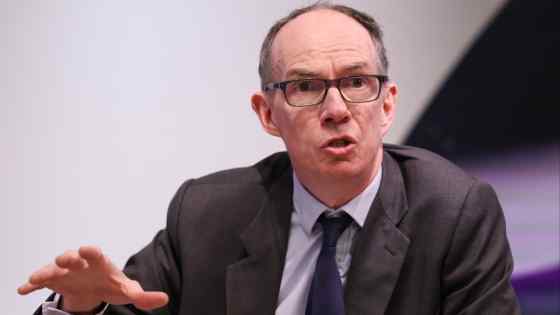
Welcome to our live coverage of Paul Tucker’s testimony to MPs probing the Libor scandal. The deputy governor of the Bank of England faces questions about his actions at the height of the financial crisis. By Tom Burgis and Ben Fenton in London with contributions from FT correspondents. All times are London time.
19.00 That’s that for our live blog. There are three main points from Tucker’s testimony.
- Did Labour ministers lean on him to get banks to lower Libor in the middle of the financial Crisis, as alleged by George Osborne? “Absolutely not.”
- Was Libor considered an ideal measure of interbank lending, even before the rigging revelations? Nope.
- Is the FSA board engaged in contingency plans should Libor collapse? Yes.
Thanks for reading. See FT.com through the evening for anaylsis of Tucker’s words. Tomorrow its the turn before the committee of Marcus Agius, Barclays’ outgoing chairman.
18.47: The last words are Tucker saying that he was not in a position to answer Tyrie’s question as to whether it was odd that Bob Diamond did not know what his staff were doing in the Libor markets. But deputy governor adds that he does think it strange that some of the situations the traders and senior managers found themselves in were not passed further up the managerial line.
18.44: Tucker says the UK is going to get a proper regulatory system for financial services “probably a quarter of a century too late”.
18.43: The committee moves on to discussion of the fact that Tucker sits as a non-executive director on the board of the Financial Services Authority, the City watchdog. It leads Tyrie to ask whether the FSA board has discussed Libor rigging. Tucker’s response is revealing.
“What has been discussed at board level is, what would the contingency plans be if Libor collapsed.”
18.40: Tyrie asks Tucker whether he is confident that Libor is not being rigged today.
“I can’t be confident of anything after learning of this cesspit.”
18.38: Tucker says the Bank did not realise that the credibility of Libor was going to be “torn up”. George Mudie expresses disbelief that the Bank could not stop this behaviour.
Mudie: “One eyebrow was enough to remove Mr Diamond”
Tucker: “Not one eyebrow.”
Mudie: “Oh, was it two then?”
18.37: George Mudie lists all those who did not accept responsibility for ensuring that “crookedness and market manipulation” did not take place. But there is no difficult question for Tucker at the end of it.
18.34: An interesting, and chill-inducing Tweet from the BBC Newsnight economics editor Paul Mason.
There was a problem with the blakbirdpie shortcode
18.30: The FT’s Ben Fenton, who watched numerous grillings by MPs’ committees, adds:
The Treasury committee members are very hard and to the point. It is noticeable that there are some very sharp MPs on this grouping including those who have worked in the industry. Then, just like in the culture, media and sport committee’s questioning of the Murdochs a year ago, it just takes one to ease the pressure off. George Mudie, the Labour MP, has just given a four minute question/speech and Tucker is much more relaxed.
18.26: Here is a taste of his discomfiture, as summarised by our own Chris Giles:
18.24: Commentators on Twitter are drawing comparisons between this session and Andy Murray’s Wimbledon final, in which it started well for the Scot, but turned sour later. Similarly, Tucker is now being spit-roasted over documents that make the Bank look lax and slow to react to demands for it to be transparent.
18.19: John Mann is clearly very angry that the Bank did not provide documentary evidence that had been requested by him under a Freedom of Information request which they wanted in time for their questioning of Bob Diamond last week.
By what authority is the Bank of England operating when it does not provide these emails to this committee when they were requested, Mr Tucker?
18.17: As Mark Garnier (a former investment banker whose political affiliations may be revealed by the fact that his Kidderminster, Worcs, home is called Margaret Thatcher House) presses Tucker hard about this November 2007 meeting, chairman Andrew Tyrie takes over.
This doesn’t look good Mr Tucker. It does not look good. We have in these minutes what appear to any reasonable person, a lowballing of rates.
Tucker looks a little uncomfortable. Tyrie’s headmasterly tone is ominous. But he defends himself.
We thought this was a dysfunctional system, not criminal behaviour.
18.08 Ed Balls has just issued a statement. As a reminder, the shadow chancellor was enraged last week by George Osborne’s attempts last week to link him to the manipulation of Libor. Balls says:
It is now absolutely clear that the Chancellor’s allegations last week were totally false and completely without foundation. George Osborne should now publicly withdraw these false allegations and apologise. With the economy in a double-dip recession and our banks in need of serious reform, the country needs a Chancellor who works full-time in the national economic interest.
18.07 Tucker is referred to minutes of a November 2007 meeting he attended at which he was told that Libor rates had been lower than actual trades. Tucker resists, saying that this was not necessarily a reference to “low-balling”, especially in a dysfunctional credit market.
18.02 Tucker says regulators were “worried about credibility of Libor as a piece of global financial infrastructure increasingly through the spring of 2008″. That is not to say he was aware of “low-balling”, which he says he wasn’t. All the same: “We underlined that to the BBA and to the banks.”
17.59 Kiran Stacey, FT political correspondent, writes:
Mr Tucker’s assertion that he had not been leaned on by Labour ministers to get Barclays to lower its Libor submissions is damaging for George Osborne, the chancellor. Mr Osborne told the Spectator magazine last week that Ed Balls, the shadow chancellor, who was then children’s minister, had “questions to answer” about his role in the Libor-rigging scandal. Mr Balls reacted with fury, accusing the chancellor of “impugning my integrity”. Mr Tucker’s account will only strengthen Labour’s calls for an apology from Mr Osborne, and reinforce the image held even by some on the Conservative benches that Mr Osborne overplayed his hand.
17.56 Tucker points out that the BoE used Libor to price its big intervention to try to ease the seizure in interbank lending in 2008 – and would not have done so had it had any inkling of manipulation.
We didn’t have suspicions of dishonesty and we thought the pattern of Libor movements made sense.
17.51 For all the doubts about Libor, Tucker says:
We thought that it was a reasonable indicator of what was going on … I think we all used it as a reasonably reliable summary statistic.
17.48 The inquiries by the US and UK regulators into Libor-rigging had been going on for some time before the Barclays revelations but, all the same, Tucker says what was exposed came as “a deep shock”.
He is asked whether it was right for Diamond to resign.
I think the events of the past two weeks showed that absolutely decisive action was needed to start a new chapter.
17.44 Tucker is now being taken through a few points from Diamond’s evidence — in particular Bob’s explanation that he thought Tucker might have been referring to messages from ministers about lowering Libor.
I certainly didn’t mention ministers. And I know that I didn’t because I wouldn’t.
He’s asked about Diamond’s evidence that he he had taken away from his conversation with Tucker a fear that Barclays might be nationalised.
I think I did mean to convey: “You’re now being talked about everywhere. There’s anxiety about whether you’re okay.”
17.40 Richard Partington of Financial News opines:
17.38 Tucker is pointedly referring to the committee members by honorific and surname, rather than the first name terms employed by Bob during his evidence
17.32 Tucker describes the Libor scandal as revealing the existence of a “cesspit” — seemingly borrowing the lexicon of Vince Cable, who recently spoke of a “massive cesspit in the banking system”.
Meanwhile, Ben Fenton, a veteran of the Wilson Room at the Commons — the same room where Rupert Murdoch gave evidence to the Leveson inquiry — observes:
Tucker is taking a bit from the playbook of Rupert Murdoch under aggressive questioning, ignoring Andrea Leadsom as she asks questions, carrying on answering the question before in full and punctuating his remarks with an occasional soft tap on his papers next to the microphone, making it sound rather more emphatic.
There is no sign, however, of the man who chucked a custard pie at Murdoch.
17.31 Here’s Sky’s economics editor, Ed Conway:
17.29 Tucker is sparring with Leadsom. She pushes him about why the penny about Libor didn’t drop when he spoke to Diamond (who apparently said many banks were submitting numbers not based on actual transactions).
I did not understand this conversation in any way as being Mr Diamond telling me about dishonesty or cheating.
17.24 Tucker says the Bank of England would much prefer Libor to be based on actual lending rates rather than banks’ estimation. But he points out that the BoE is not responsible for the rate — that is the British Bankers’ Association’s job.
He’s now being grilled by Andrea Leadsom (Conservative), who used to work for Barclays and wrote this recently for the FT’s op-ed pages.
17.22: The one area where the Bank and Tucker seem to be vulnerable is why he in particular did not interpret conversations he had with Diamond about the way the banks were treating Libor as a warning bell of what was happening with the market-setting process.
17.20: Tucker is being taken back in detail over his thoughts in his head at the time of this critical series of discussions with banks. It’s notable that his “recall” is rather better than other witnesses to recent inquiries.
17.18:
17.17: David Ruffley MP (Conservative) says that the evidence of Tucker makes it clear that Bob Diamond gave a “masterclass of ambiguity” in his evidence to the committee.
17.16: Faisal Islam of Channel 4 News tweets:
17.13: Tucker says he was focusing at that time on whether “the world was going to fall apart” or whether the measures taken by the Bank and government had worked. Within in a few days Barclays announced a capital raise from Qatar and “interest in Barclays just evaporated”.
17.12: Tucker says the essence of his conversation with Diamond was that it was important that Barclays did not give the impression it was desperate [for funding]. If so, it would mean that the package to keep the banks stable was not working.
17.11: There seems to be a consensus among political correspondents that this is a good session for Ed Balls and his colleagues. Here is Tom Newton Dunn, political editor of The Sun
17.09:
17.05: Tucker has told the MPs that at the time of communications with Bob Diamond:
Barclays was the next in line. HSBC and Abbey Santander were seen as relatively safe. Two banks had been taken under the wing [of the government] so Barclays were next in line.
He added that
the US DoJ found that there was no instruction given and there was no understanding [on the part of Barclays] that an instruction had been given.
17.00 Tucker confirms that he spoke to Sir Jeremy Heywood, cabinet secretary, about Libor. The person he spoke to most frequently was Tom Scholar at Treasury. There was also John Cunliff the Cabinet Office and Nick Macpherson, also at the Treasury.
There follows an exchange with committee-member Pat McFadden in which Tucker explicitly denies suggestions – very much like those made by George Osborne – of meddling by the previous Labour government.
Did Heywood or any other government official encourage you to lower Libor submissions?
Absolutely not.
Did ministers?
Absolutely not.
Did Shriti Vadera (Gordon brown’s City fixer)?
Absolutely not.
Ed Balls?
No.
16.51 Tyrie asks Tucker very clearly whether he refutes suggestions that in his conversation with Diamond he was inviting Barclays to “join the pack and under-report Libor”.
Absolutely.
16.47 Some meaty opening exchanges. Tucker says of the Diamond memo:
I think the last sentence gives the wrong impression.
That was the sentence appearing to suggest Tucker condoned the “lowballing” of Libor.
Asked what it should have read, Tucker says:
It should have said something along the lines of: “Are you ensuring that you, the senior management of Barclays, are following the day to day operations of your money markets desk your treasury? Are you ensuring that they don’t march you over the cliff inadvertently by signalling that you need to pay up for funds?”
16.40 Paul Tucker is taking his chair and pouring himself a very small glass of parliamentary water.
Andrew Tyrie, committee chairman, notes that Tucker is here at his own request, made after the Diamond memo was released. He kicks off asking about the BoE’s apparent lack of note-taking during the crisis. Tucker wishes that he, too, had kept a contemporaneous note of that conversation. But those were unusual times and the BoE’s recording system was “creaking”, he says.
16.29 If the committee is running on schedule, Paul Tucker will be slung in the stocks take his seat any minute now. Meanwhile, FT economics editor Chris Giles tweets:
16.08 Should anyone have missed it, this morning the FT’s comment pages carried a piece by former Barclays boss Martin Taylor headlined: “I too fell for the Diamond myth”.
In the spring of 1998 I was chief executive of Barclays and Mr Diamond was running Barclays Capital. The previous autumn we had sold the equities and merchant banking business of Barclays de Zoete Wedd in order to concentrate on debt capital markets. The sale had been necessary, difficult and bitterly controversial, inside as well as outside the bank. Now, six months later, Barclays Capital under his leadership was rapidly gaining the confidence of the Barclays board. But it needed bigger trading limits, if it was to develop its business. …
The full piece, a fascinating insight into the man whose reign at Barclays ended in his resignation last week (shortly before he dragged the Bank of England and Paul Tucker into Libor-gate), is here.
15.49: What is the difference between a nod – perhaps even a wink – and a responsible bit of crisis-management? That is the question MPs will be putting to Paul Tucker today, from about 16.30. We know that the deputy governor of the Bank of England spoke to Bob Diamond on October 29 2008, as the credit storm battered the pillars of the financial system. From the memo Barclays published last week, a day after Diamond resigned as its chief executive over the Libor-rigging scandal, we know that the then head of its investment bank recalled Tucker’s words to him thus:
Mr Tucker reiterated that he had received calls from a number of senior figures within Whitehall to question why Barclays was always towards the top end of Libor pricing.
Mr Tucker stated the levels of calls he was receiving from Whitehall were ‘senior’ and that while he was certain we did not need advice, that it did not always need to be the case that we appeared as high as we have recently.
Today’s hearing at the Treasury select committee will seek to shed some light on whether that amounted to a endorsement of Barclays submitting artificially low Libor figures, the rate at which banks lend to one another and a measure of their financial health. With some 20 institutions aside from Barclays under investigation for fiddling Libor submissions, MPs will also be keen to discover whether Tucker had similar conversations with other banks. And they will want to know more about who exactly in Whitehall was calling Tucker, even after confirmation that Sir Jeremy Heywood, cabinet secretary – and seemingly not, as George Osborne has sought to suggest, members of Gordon Brown’s team – was the official in question.
Tucker might, too, question Diamond’s version of events. For him, there is much at stake.
He is the frontrunner to succeed Sir Mervyn King as governor and has hitherto avoided the limelight – until Diamond lobbed his parting grenade last week. It is thus probably too much to hope that Tucker’s testimony will emulate his namesake Malcolm, the foul-mouthed fixer from The Thick of It, but, as FT economics editor Chris Giles makes clear in his pre-match analysis of today’s encounter at parliament, the deputy governor has clashed with MPs before.
Earlier today a series of emails between Tucker and Diamond, released by Labour MP and committee member John Mann, provided more context to the much-discussed phone conversation. Chris Giles has been digesting the emails and writes:
The impression given by the emails is one of concern from the central bank over Barclays’ ability to finance itself at a time of stress, without any tacit suggestion the bank should manipulate its Libor submissions.
Bob himself was in the hot-seat last week. This is what he said.


Jim Pickard
Kiran Stacey